Seki Kotetsu Nakiri VG-10 Migaki 165mm (6.5") [red pakkawood]
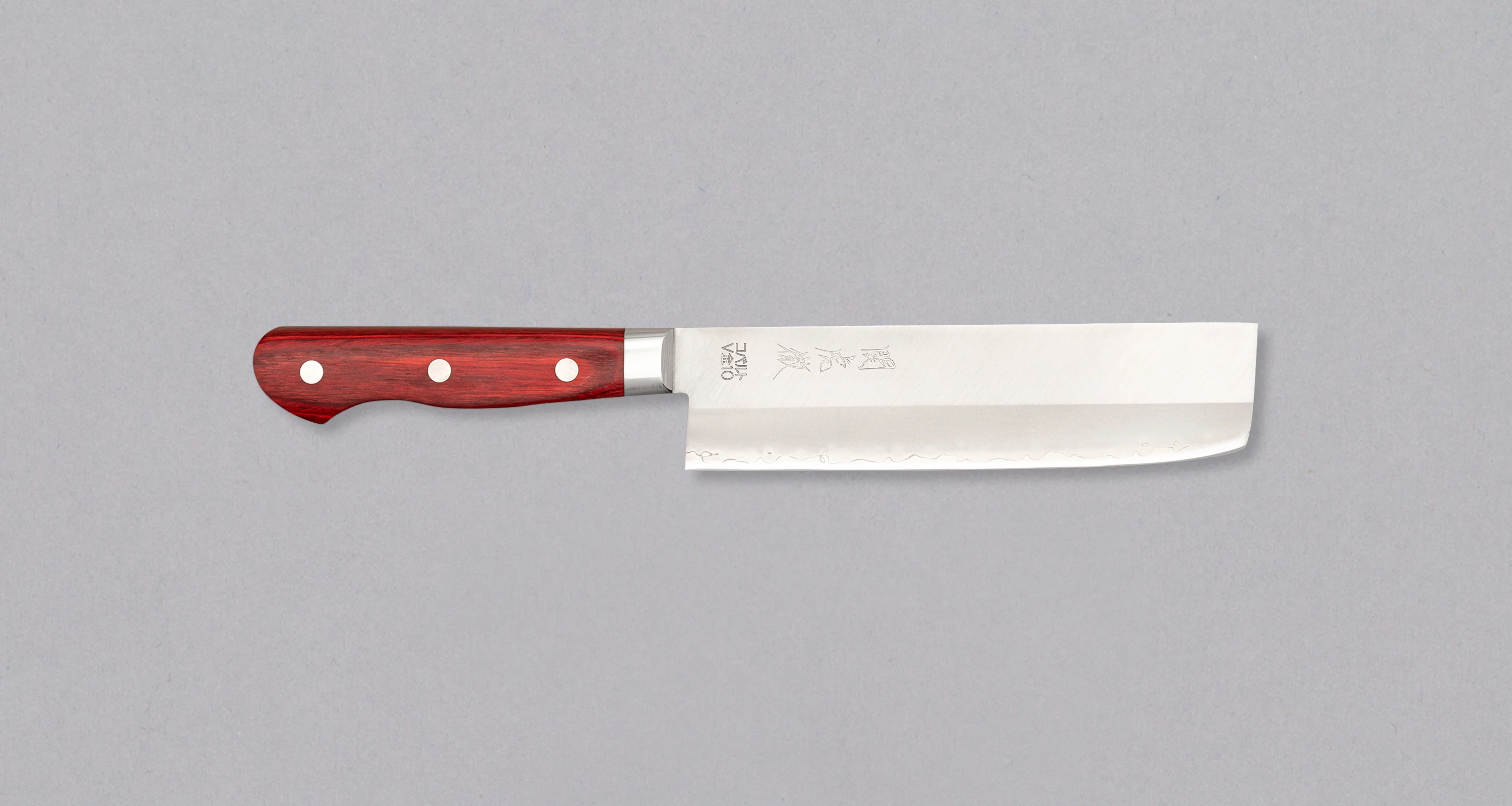
The Seki Kotetsu Nakiri VG-10 Migaki 165mm is a vegetable kitchen knife made from VG-10 steel, featuring an elegant migaki finish and a comfortable Western-style pakkawood handle. The knife is extremely thin so it will slide through ingredients with ease, and the choice of VG-10 stainless steel ensures rust resistance, durability, and wear resistance. Thin and precise, ideal for cutting meat, fish, vegetables, and herbs – perfect as a first Japanese knife or a thoughtful gift for your favorite cooking enthusiasts.
BLADE SHAPE:
The Nakiri Knife, also known as the Nakiri Bocho, is a traditional Japanese knife with a rectangular blade shape and a straight belly without curves with a square finish (so it has no front tip), so the entire blade comes into contact with the cutting surface, making it easy to chop on the kitchen board without using horizontal pushes and pulls. Due to its properties, it is especially recommended for preparing vegetables.
STEEL:
VG-10 is currently the most popular Japanese steel. When deciding between the steels from which we want to make a knife, we consider properties such as hardness, ability to maintain sharpness, ease of maintenance, grain of the steel, ease of sharpening, and, ultimately, price and availability. VG-10 (V for Vanadium, G for "gold", denoting superior quality) is produced by Takefu Special Steel Company, a relatively small company that managed to find just the right balance between the various elements that make up today's most popular Japanese steel. VG-10 is a relatively high (1%) carbon (C), 15% chromium (Cr), 1% molybdenum (Mo), 0.3% vanadium (V) and 1.5% cobalt (Co) stainless steel. The combination of Cr, Mo and V forms a lot of hard carbides, which gives the steel resistance to abrasion and consequently better retention of sharpness.
LAMINATION:
The blade consists of 3 layers of steel. Steels with high hardness have many advantages, but because of their hardness, they are more brittle and thus more susceptible to damage. Blades made of such steels are therefore laminated using the san-mai method, thereby improving their structural integrity and consequently resistance to various impacts and other physical factors that could lead to damage. San-mai means "three layers" in Japanese and refers to a blade that consists of a primary inner layer of harder steel (hagane) and two outer layers of softer steel (jigane) that are made up of multiple layers.
BLADE GEOMETRY:
The blade is double-bevel (symmetrical) and extremely thin, which is key to preparing food with minimal damage to the cell membranes of the ingredients. This enables greater preservation of the taste and appearance of the food.
The thickness of the blade largely determines the sharpness of the knife, as well as easier and faster sharpening.
BLADE FINISH:
The minimalistic-looking, highly polished (also called migaki finish - see article Blade Construction: Blade Finish for more) blade is extremely thin, which allows the user to work precisely even with the smallest pieces of ingredients.
HANDLE:
The knife features a classic Western-style pakkawood handle, designed for a stable and comfortable grip. Its ergonomic, slightly rounded shape fits nicely in the hand and allows natural control of the blade, improving cutting precision. The symmetrical design makes it suitable for both right- and left-handed users, while the durable pakkawood ensures long-lasting use and a reliable grip even during extended kitchen tasks.
SMITHY:
The Yasuda Hamono smithy has been operating since 1957. It is located in the city of Seki (Gifu Prefecture), which is the cradle of blacksmithing in Japan. They are dedicated to research and development, tirelessly perfecting heat treatment and grinding techniques to make the most of the unique characteristics of different steels when making knives. This dedication to knife making has carried over from the original "Sakusaku" brand to brands such as Seki Kotetsu, Gen Kotetsu, and Kotetsu. Knives are the work of dedicated hands of craftsmen who have a deep love and respect for their craft.
Due to its geographical location and natural resources, Seki has been a place where blacksmithing has been perfected for more than 800 years and is known throughout the world as the home of the modern Japanese knife industry. Namely, the blacksmiths of this area transferred the ancient knowledge of forging katanas into kitchen knives.
The Seki Kotetsu Nakiri VG-10 Migaki 165mm is a vegetable kitchen knife made from VG-10 steel, featuring an elegant migaki finish and a comfortable Western-style pakkawood handle. The knife is extremely thin so it will slide through ingredients with ease, and the choice of VG-10 stainless steel ensures rust resistance, durability, and wear resistance. Thin and precise, ideal for cutting meat, fish, vegetables, and herbs – perfect as a first Japanese knife or a thoughtful gift for your favorite cooking enthusiasts.
BLADE SHAPE:
The Nakiri Knife, also known as the Nakiri Bocho, is a traditional Japanese knife with a rectangular blade shape and a straight belly without curves with a square finish (so it has no front tip), so the entire blade comes into contact with the cutting surface, making it easy to chop on the kitchen board without using horizontal pushes and pulls. Due to its properties, it is especially recommended for preparing vegetables.
STEEL:
VG-10 is currently the most popular Japanese steel. When deciding between the steels from which we want to make a knife, we consider properties such as hardness, ability to maintain sharpness, ease of maintenance, grain of the steel, ease of sharpening, and, ultimately, price and availability. VG-10 (V for Vanadium, G for "gold", denoting superior quality) is produced by Takefu Special Steel Company, a relatively small company that managed to find just the right balance between the various elements that make up today's most popular Japanese steel. VG-10 is a relatively high (1%) carbon (C), 15% chromium (Cr), 1% molybdenum (Mo), 0.3% vanadium (V) and 1.5% cobalt (Co) stainless steel. The combination of Cr, Mo and V forms a lot of hard carbides, which gives the steel resistance to abrasion and consequently better retention of sharpness.
LAMINATION:
The blade consists of 3 layers of steel. Steels with high hardness have many advantages, but because of their hardness, they are more brittle and thus more susceptible to damage. Blades made of such steels are therefore laminated using the san-mai method, thereby improving their structural integrity and consequently resistance to various impacts and other physical factors that could lead to damage. San-mai means "three layers" in Japanese and refers to a blade that consists of a primary inner layer of harder steel (hagane) and two outer layers of softer steel (jigane) that are made up of multiple layers.
BLADE GEOMETRY:
The blade is double-bevel (symmetrical) and extremely thin, which is key to preparing food with minimal damage to the cell membranes of the ingredients. This enables greater preservation of the taste and appearance of the food.
The thickness of the blade largely determines the sharpness of the knife, as well as easier and faster sharpening.
BLADE FINISH:
The minimalistic-looking, highly polished (also called migaki finish - see article Blade Construction: Blade Finish for more) blade is extremely thin, which allows the user to work precisely even with the smallest pieces of ingredients.
HANDLE:
The knife features a classic Western-style pakkawood handle, designed for a stable and comfortable grip. Its ergonomic, slightly rounded shape fits nicely in the hand and allows natural control of the blade, improving cutting precision. The symmetrical design makes it suitable for both right- and left-handed users, while the durable pakkawood ensures long-lasting use and a reliable grip even during extended kitchen tasks.
SMITHY:
The Yasuda Hamono smithy has been operating since 1957. It is located in the city of Seki (Gifu Prefecture), which is the cradle of blacksmithing in Japan. They are dedicated to research and development, tirelessly perfecting heat treatment and grinding techniques to make the most of the unique characteristics of different steels when making knives. This dedication to knife making has carried over from the original "Sakusaku" brand to brands such as Seki Kotetsu, Gen Kotetsu, and Kotetsu. Knives are the work of dedicated hands of craftsmen who have a deep love and respect for their craft.
Due to its geographical location and natural resources, Seki has been a place where blacksmithing has been perfected for more than 800 years and is known throughout the world as the home of the modern Japanese knife industry. Namely, the blacksmiths of this area transferred the ancient knowledge of forging katanas into kitchen knives.
Original: $155.00
-70%$155.00
$46.50Description
The Seki Kotetsu Nakiri VG-10 Migaki 165mm is a vegetable kitchen knife made from VG-10 steel, featuring an elegant migaki finish and a comfortable Western-style pakkawood handle. The knife is extremely thin so it will slide through ingredients with ease, and the choice of VG-10 stainless steel ensures rust resistance, durability, and wear resistance. Thin and precise, ideal for cutting meat, fish, vegetables, and herbs – perfect as a first Japanese knife or a thoughtful gift for your favorite cooking enthusiasts.
BLADE SHAPE:
The Nakiri Knife, also known as the Nakiri Bocho, is a traditional Japanese knife with a rectangular blade shape and a straight belly without curves with a square finish (so it has no front tip), so the entire blade comes into contact with the cutting surface, making it easy to chop on the kitchen board without using horizontal pushes and pulls. Due to its properties, it is especially recommended for preparing vegetables.
STEEL:
VG-10 is currently the most popular Japanese steel. When deciding between the steels from which we want to make a knife, we consider properties such as hardness, ability to maintain sharpness, ease of maintenance, grain of the steel, ease of sharpening, and, ultimately, price and availability. VG-10 (V for Vanadium, G for "gold", denoting superior quality) is produced by Takefu Special Steel Company, a relatively small company that managed to find just the right balance between the various elements that make up today's most popular Japanese steel. VG-10 is a relatively high (1%) carbon (C), 15% chromium (Cr), 1% molybdenum (Mo), 0.3% vanadium (V) and 1.5% cobalt (Co) stainless steel. The combination of Cr, Mo and V forms a lot of hard carbides, which gives the steel resistance to abrasion and consequently better retention of sharpness.
LAMINATION:
The blade consists of 3 layers of steel. Steels with high hardness have many advantages, but because of their hardness, they are more brittle and thus more susceptible to damage. Blades made of such steels are therefore laminated using the san-mai method, thereby improving their structural integrity and consequently resistance to various impacts and other physical factors that could lead to damage. San-mai means "three layers" in Japanese and refers to a blade that consists of a primary inner layer of harder steel (hagane) and two outer layers of softer steel (jigane) that are made up of multiple layers.
BLADE GEOMETRY:
The blade is double-bevel (symmetrical) and extremely thin, which is key to preparing food with minimal damage to the cell membranes of the ingredients. This enables greater preservation of the taste and appearance of the food.
The thickness of the blade largely determines the sharpness of the knife, as well as easier and faster sharpening.
BLADE FINISH:
The minimalistic-looking, highly polished (also called migaki finish - see article Blade Construction: Blade Finish for more) blade is extremely thin, which allows the user to work precisely even with the smallest pieces of ingredients.
HANDLE:
The knife features a classic Western-style pakkawood handle, designed for a stable and comfortable grip. Its ergonomic, slightly rounded shape fits nicely in the hand and allows natural control of the blade, improving cutting precision. The symmetrical design makes it suitable for both right- and left-handed users, while the durable pakkawood ensures long-lasting use and a reliable grip even during extended kitchen tasks.
SMITHY:
The Yasuda Hamono smithy has been operating since 1957. It is located in the city of Seki (Gifu Prefecture), which is the cradle of blacksmithing in Japan. They are dedicated to research and development, tirelessly perfecting heat treatment and grinding techniques to make the most of the unique characteristics of different steels when making knives. This dedication to knife making has carried over from the original "Sakusaku" brand to brands such as Seki Kotetsu, Gen Kotetsu, and Kotetsu. Knives are the work of dedicated hands of craftsmen who have a deep love and respect for their craft.
Due to its geographical location and natural resources, Seki has been a place where blacksmithing has been perfected for more than 800 years and is known throughout the world as the home of the modern Japanese knife industry. Namely, the blacksmiths of this area transferred the ancient knowledge of forging katanas into kitchen knives.