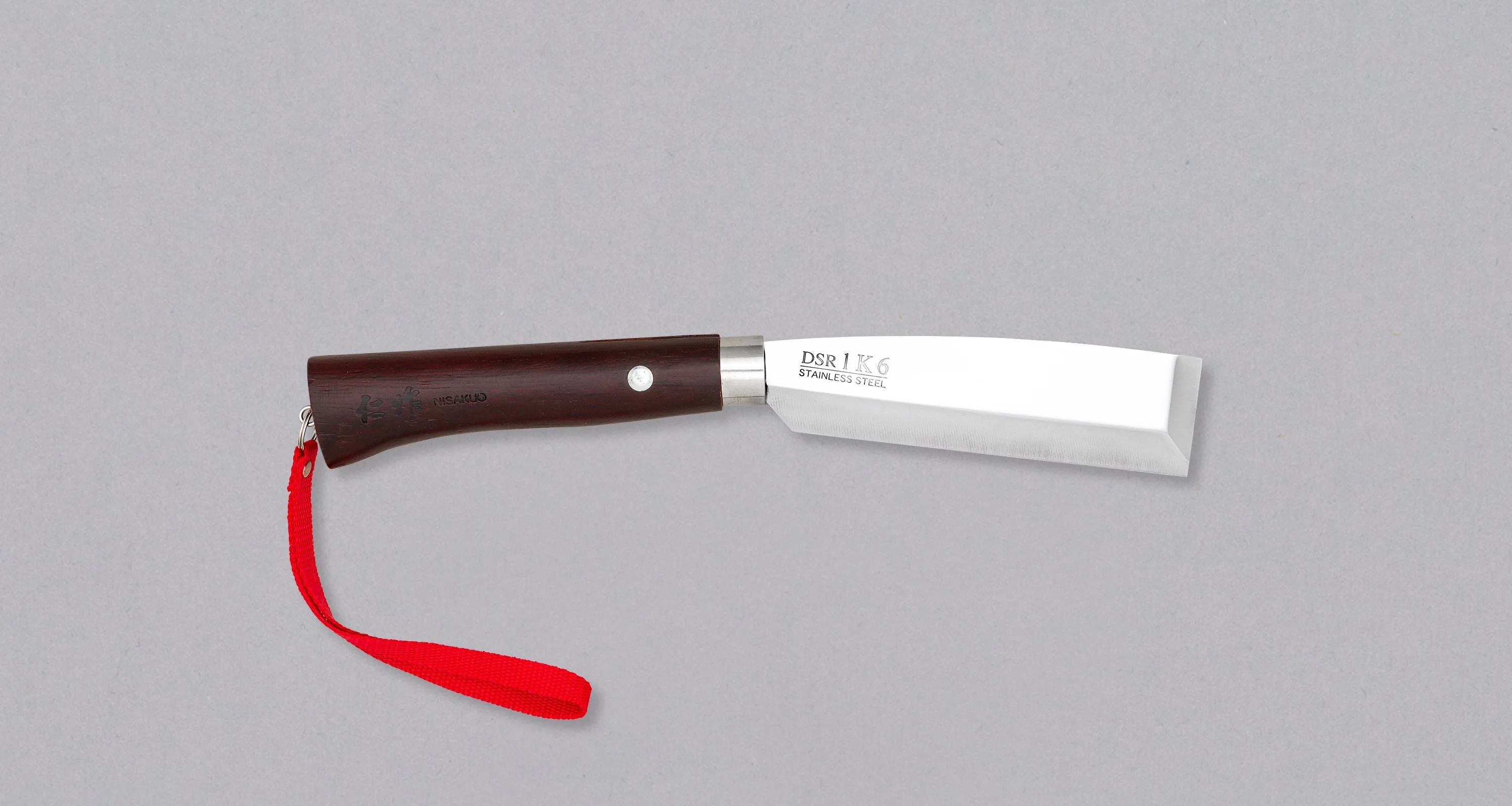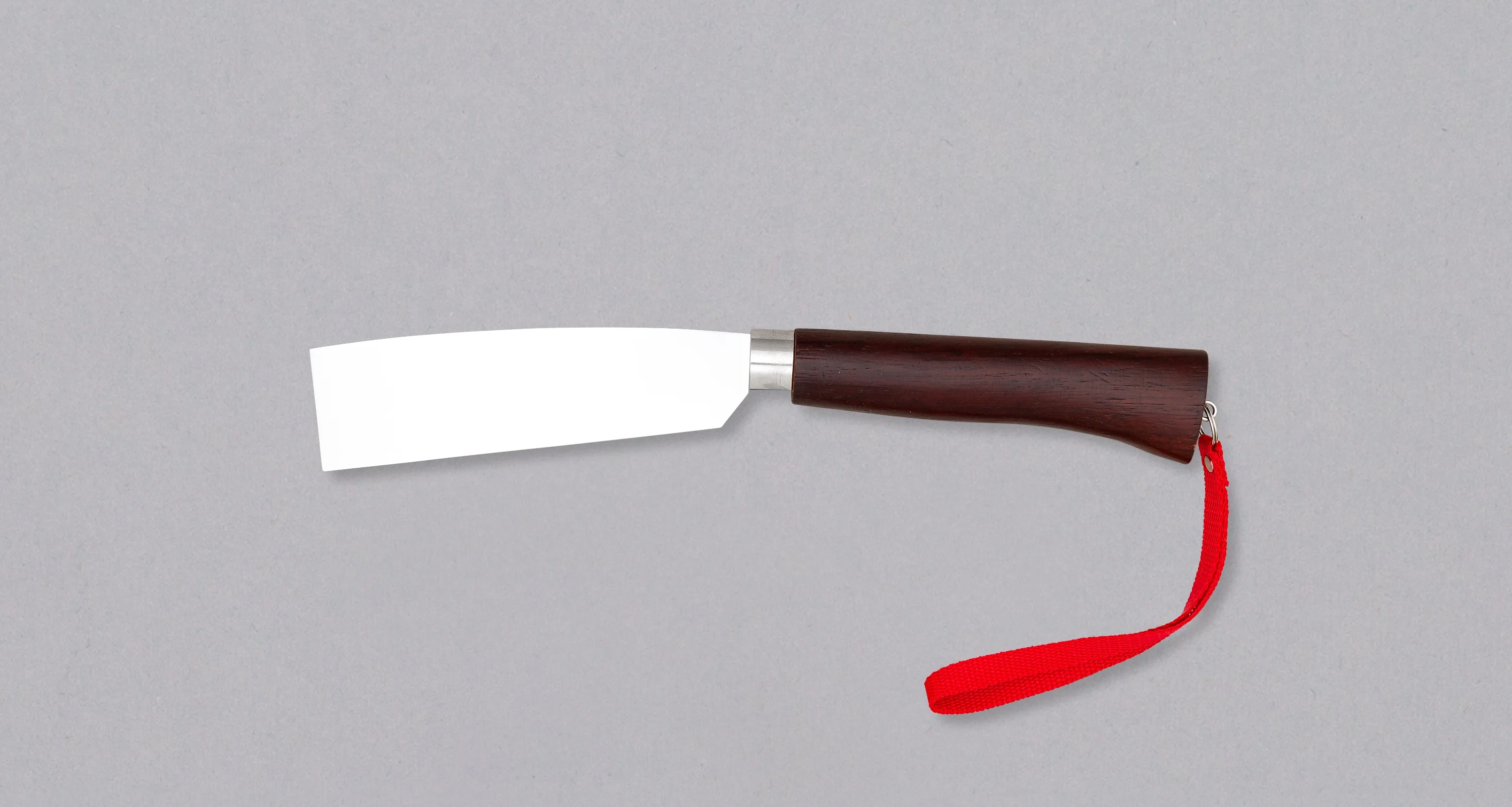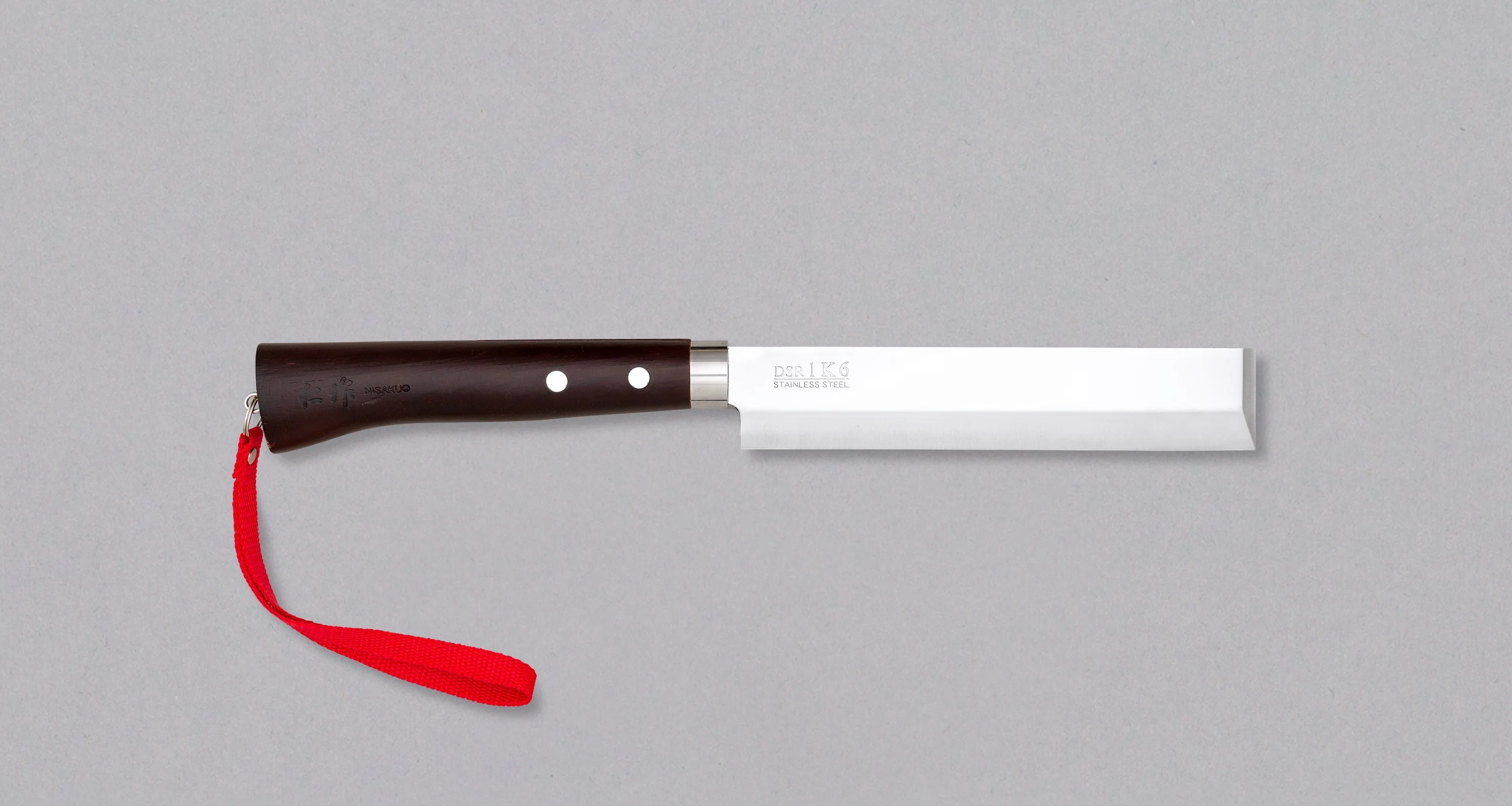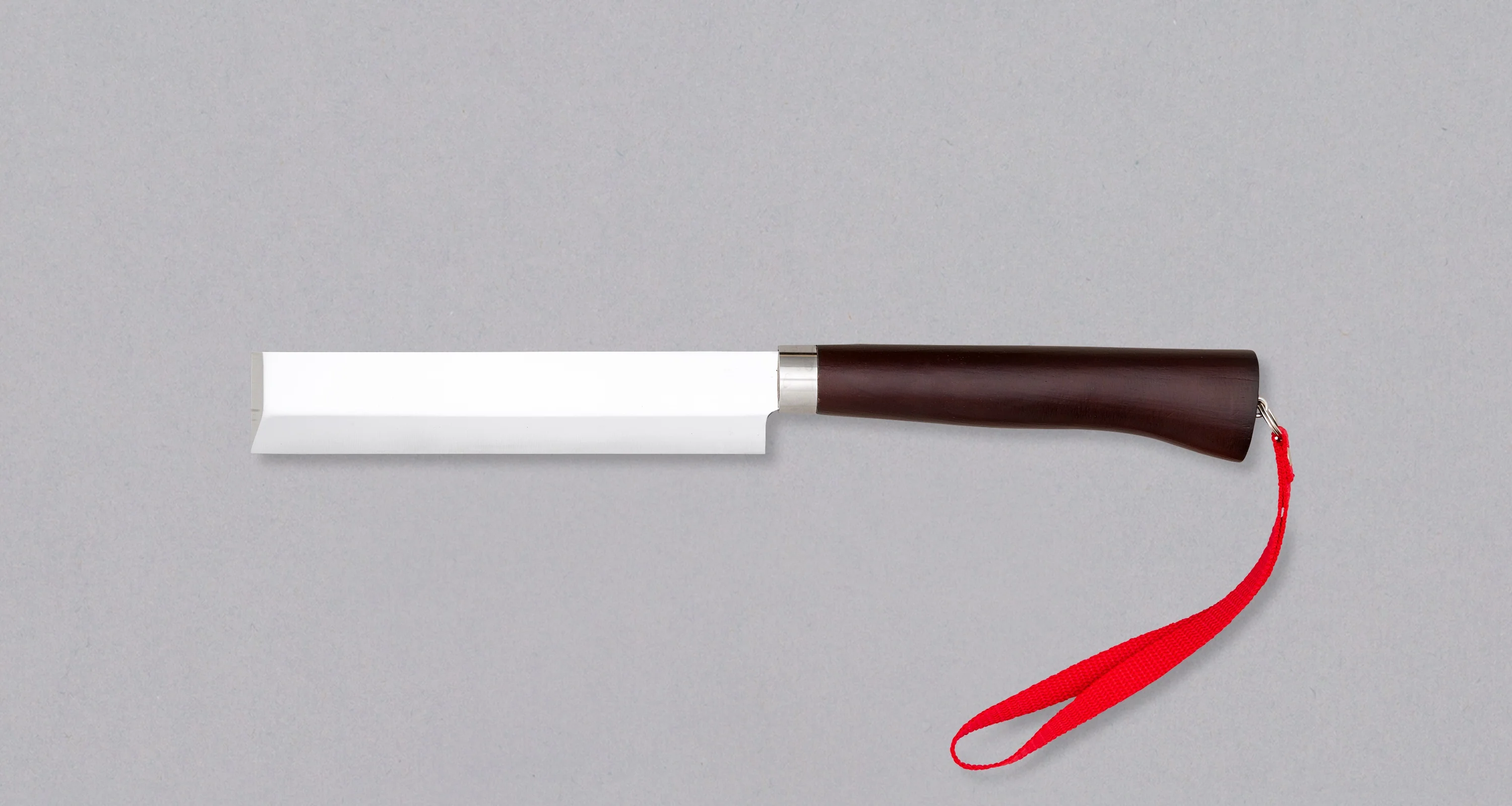
Hatsukokoro Ginrei Kiri-Petty Ginsanko Nashiji Ebony 125mm (4.9")
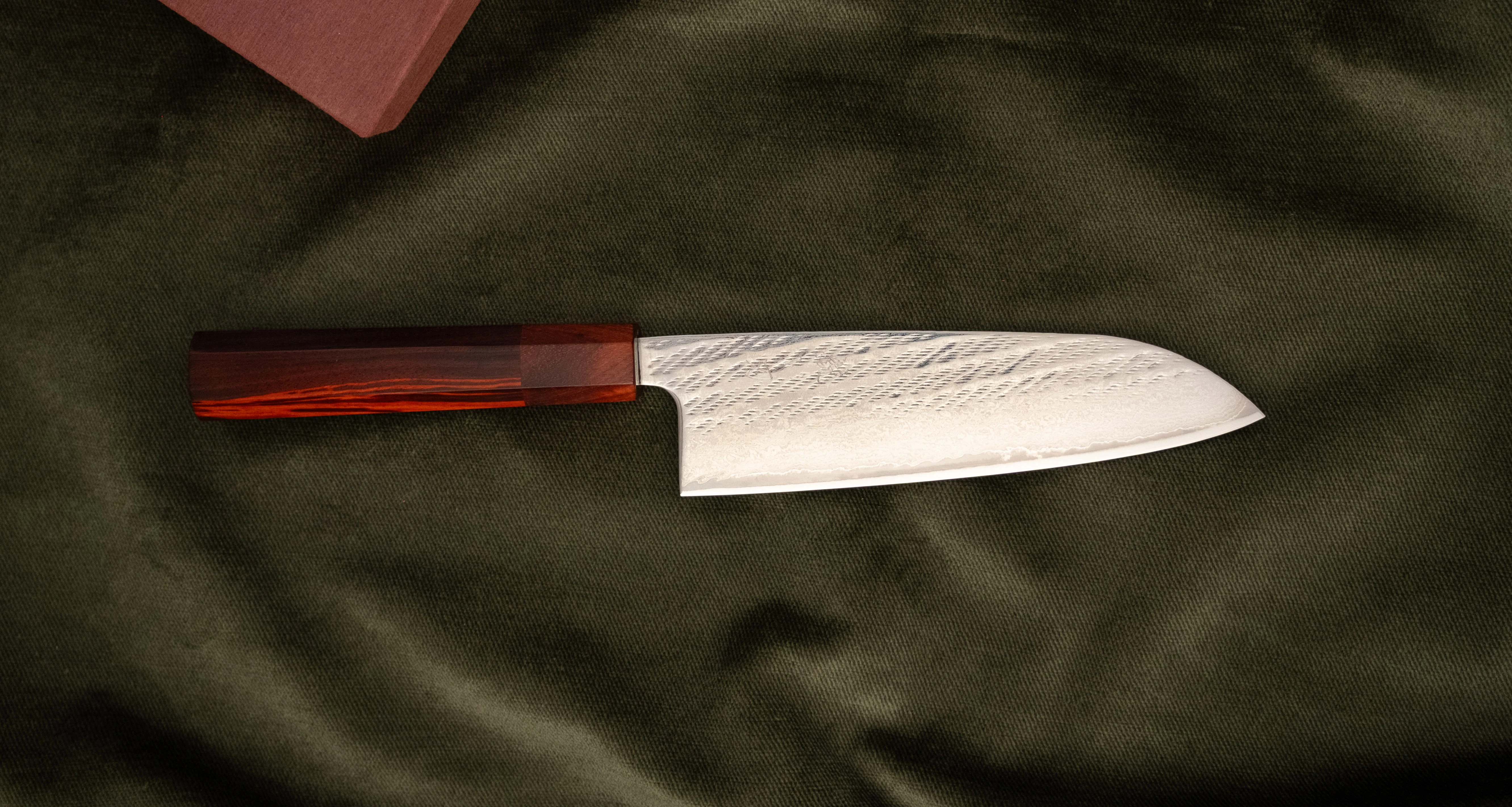
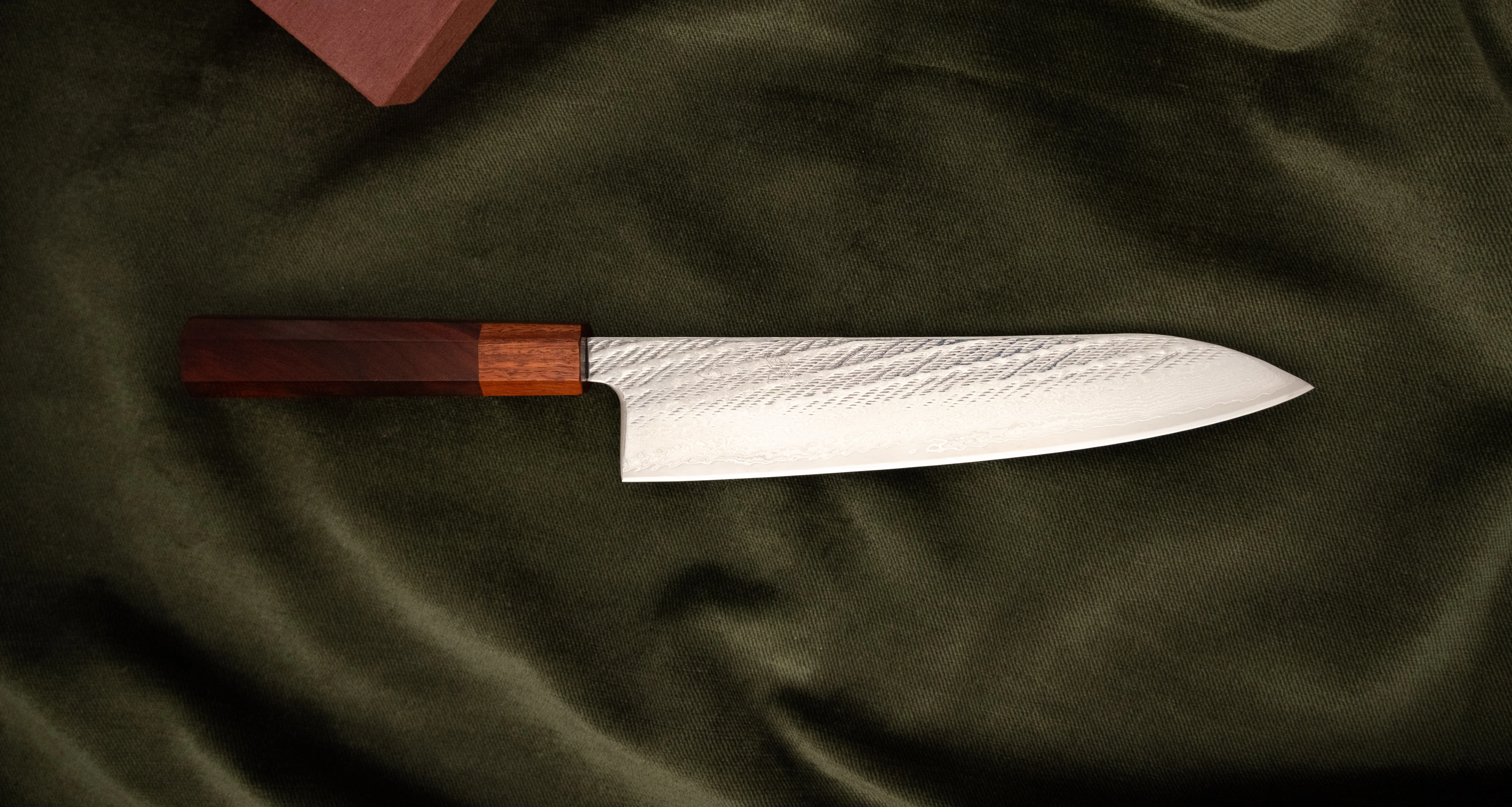
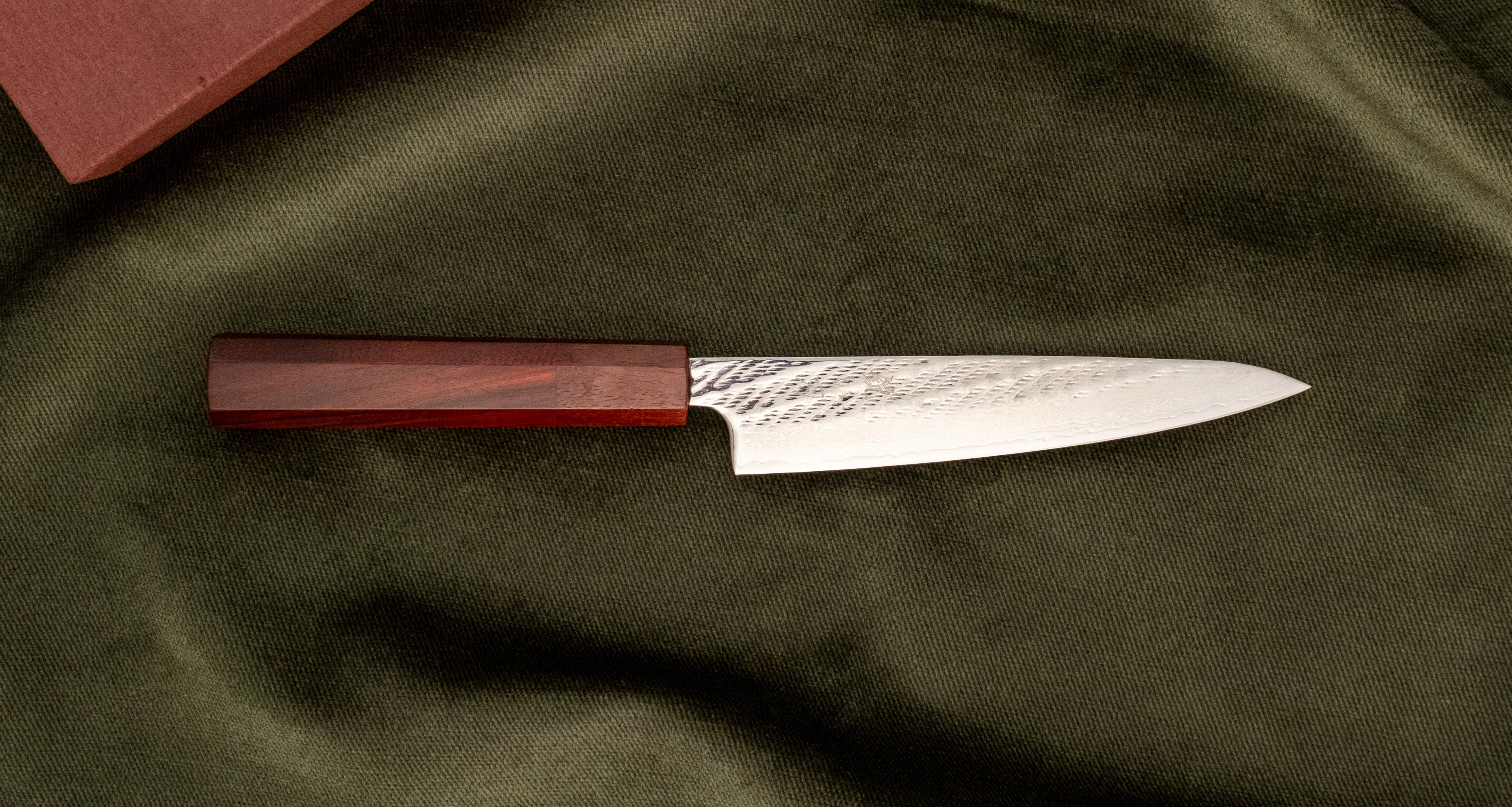
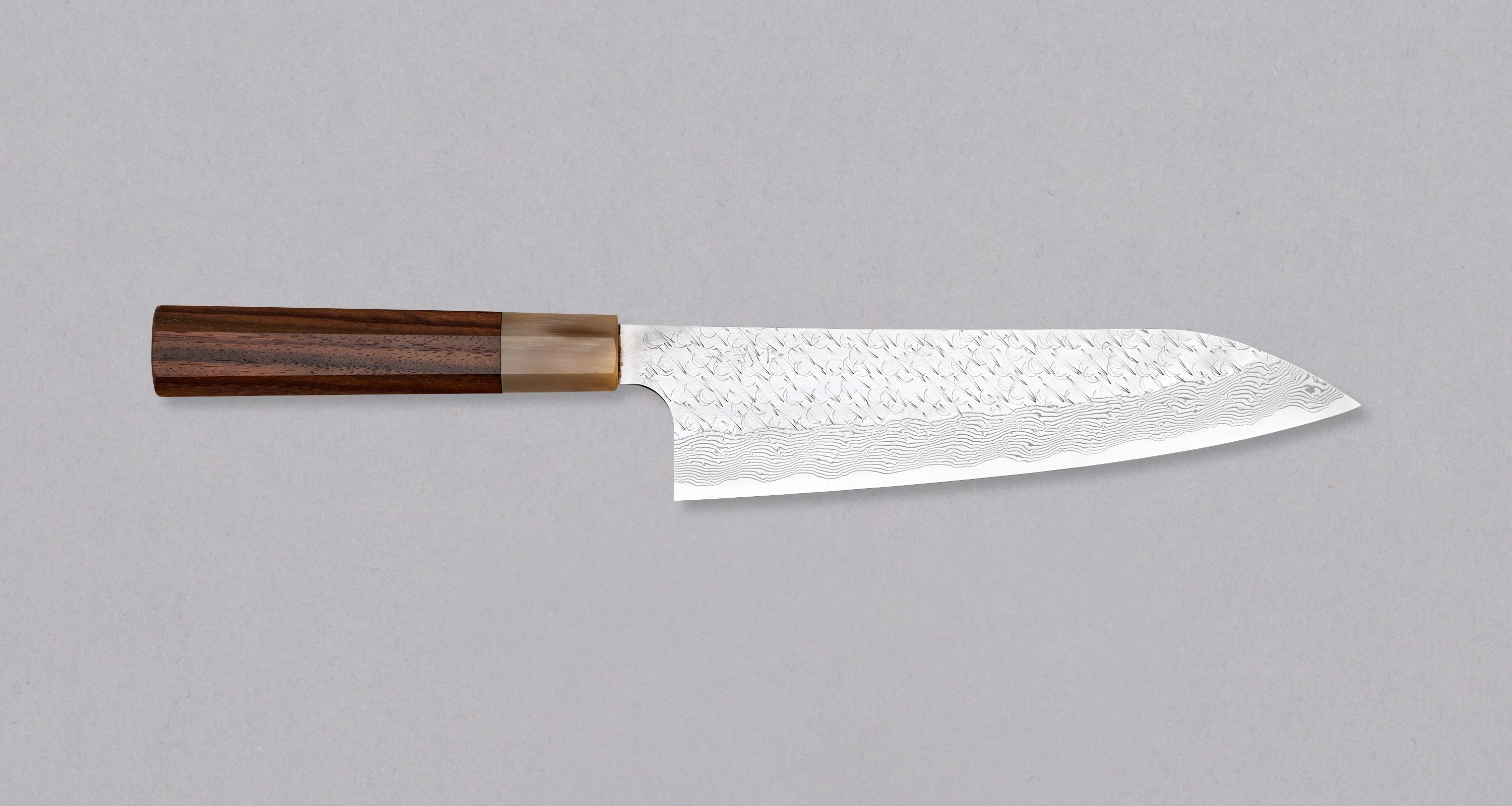
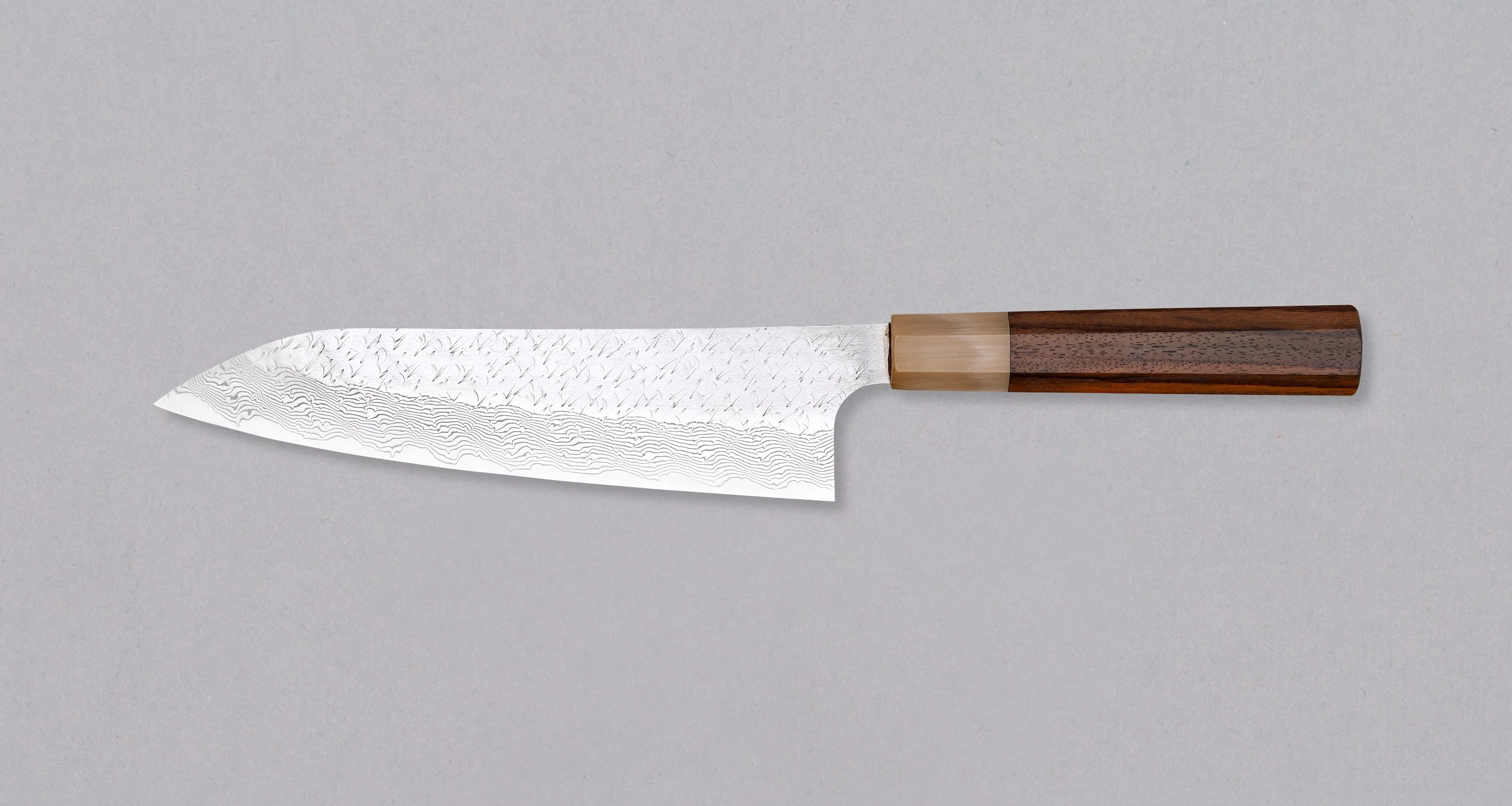
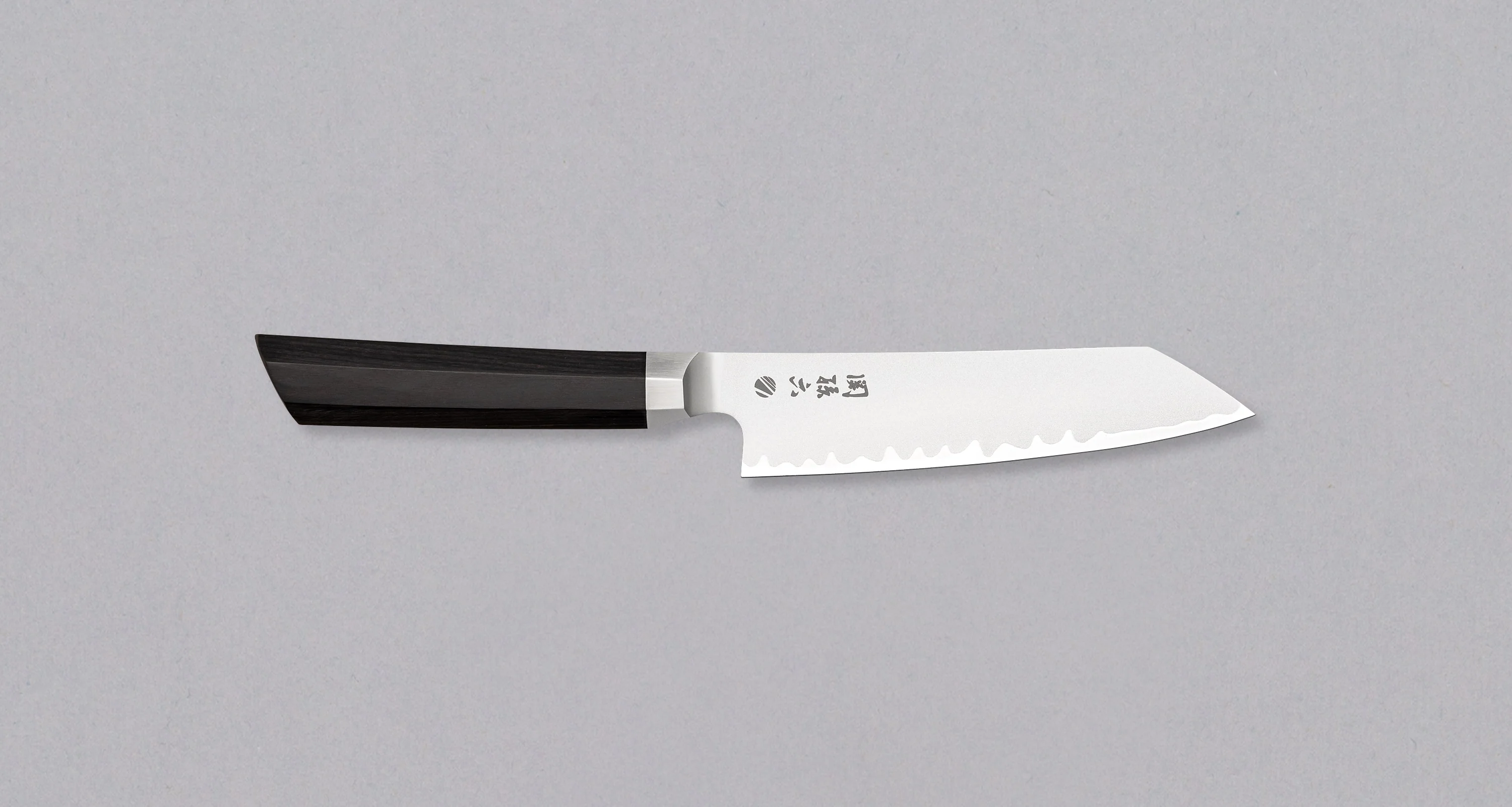
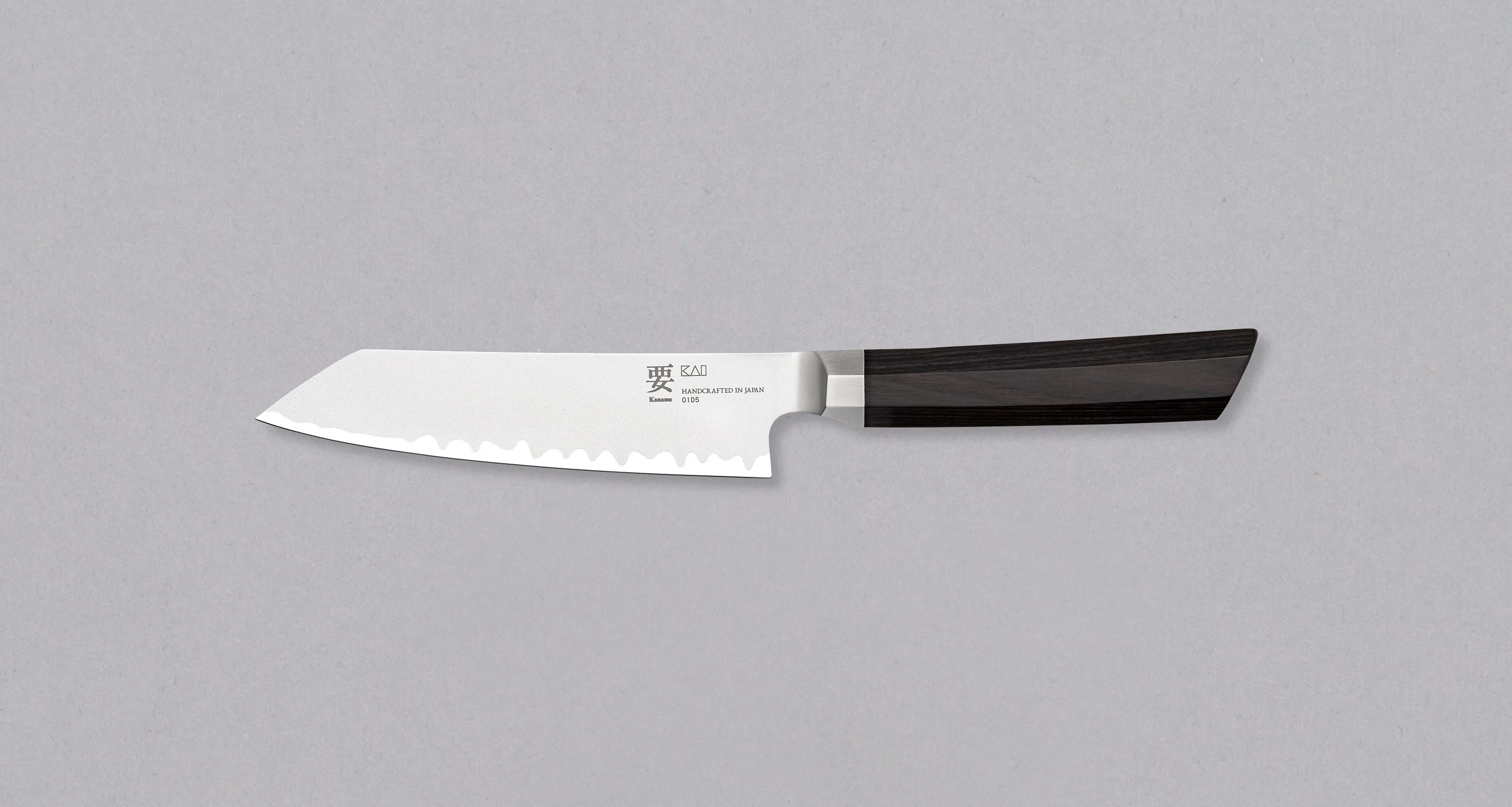
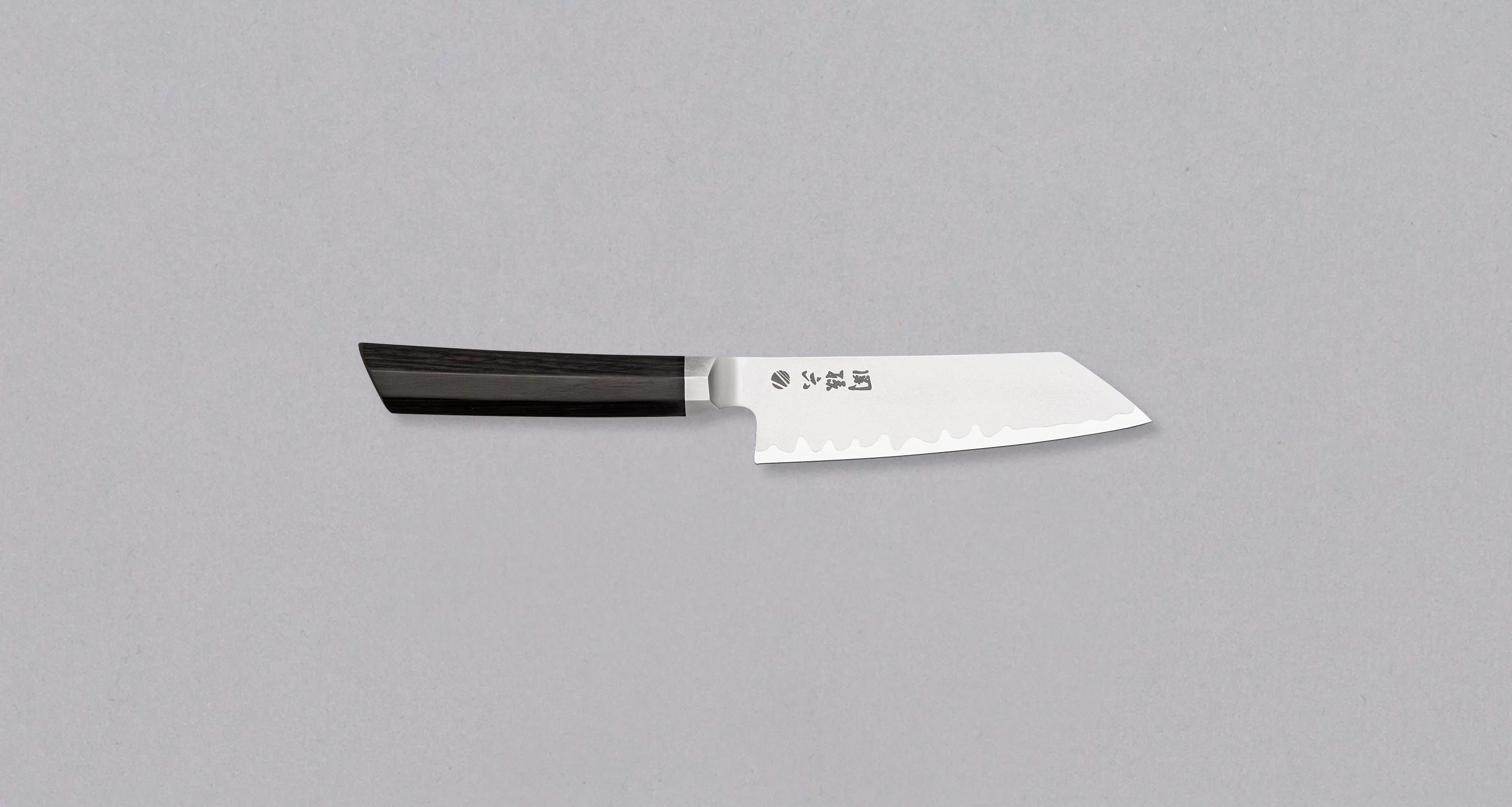
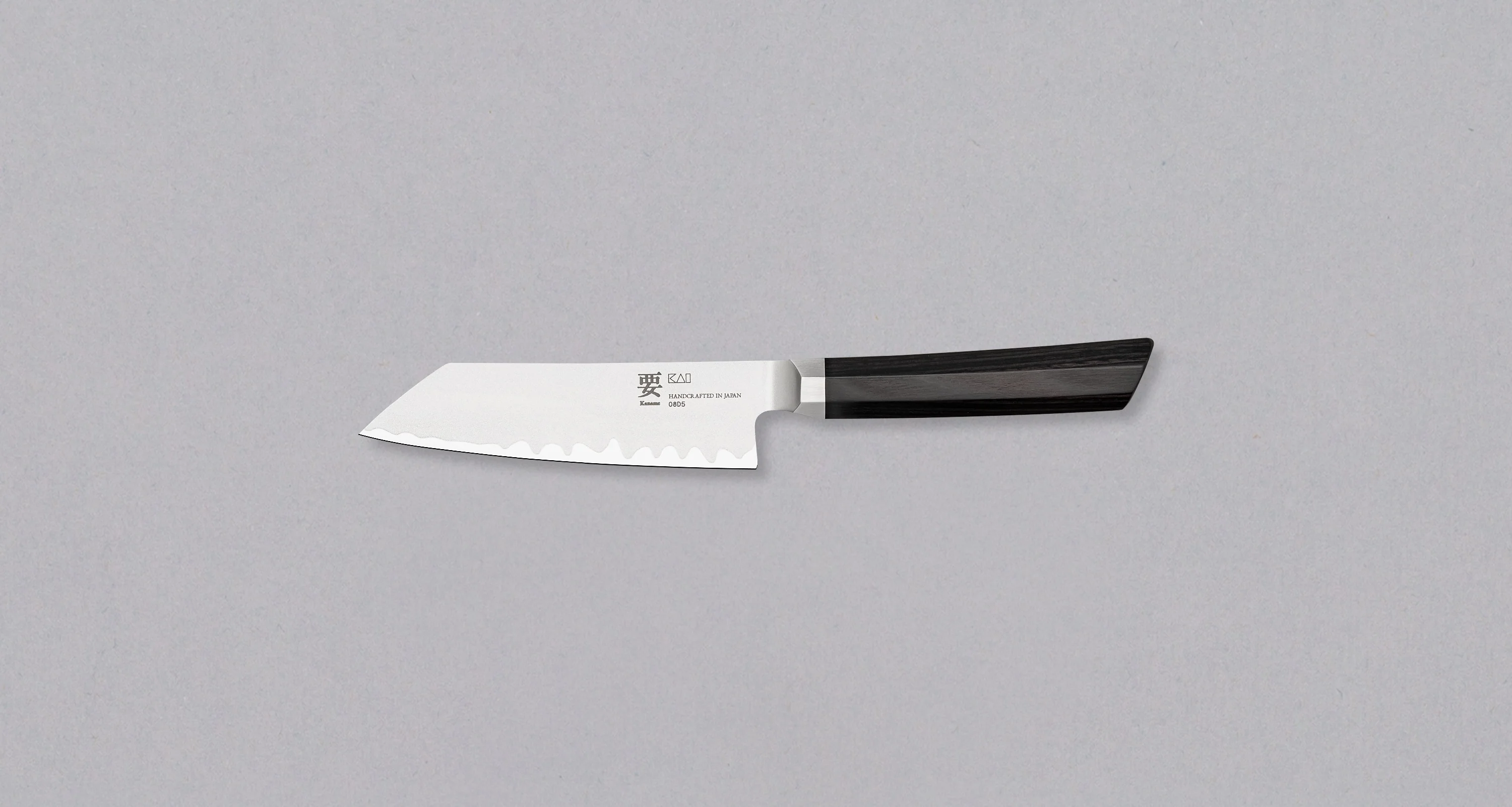
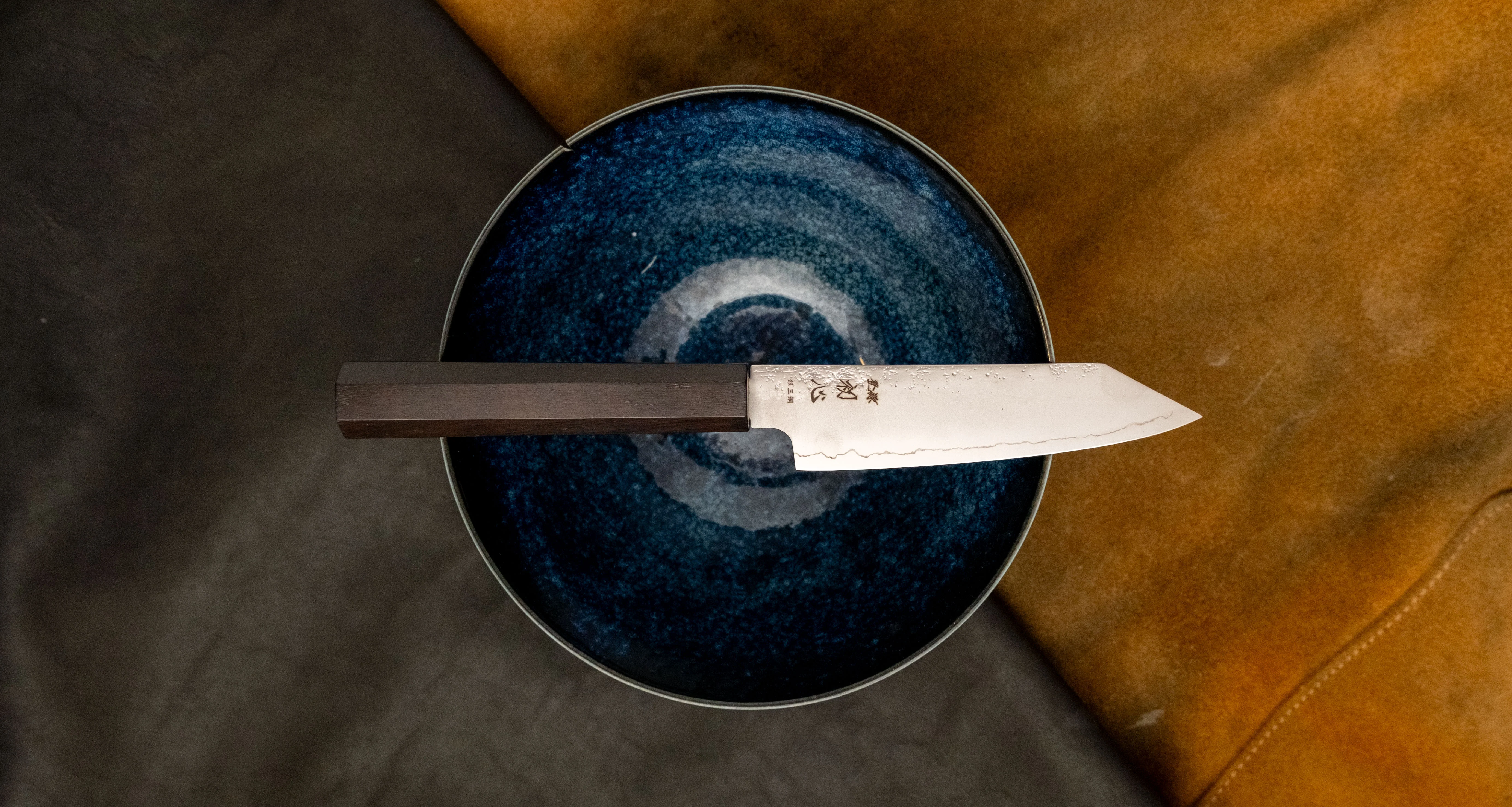
The Hatsukokoro Ginrei Kiri-Petty Ginsanko Nashiji Ebony 125mm is a compact Japanese utility knife built for precision prep work. Perfect for peeling, paring, trimming, and other in-hand tasks—from coring apples to removing potato eyes—it excels in every fine-detail operation. The pronounced “K-tip” allows for precise decorative cuts, intricate garnishes, and delicate work with vegetables and fruit, while also piercing and trimming meat with surgical accuracy. Think of it as your go-to prep knife, ideal for mise-en-place and the fine work that elevates every dish.
Designed with both professional chefs and first-time Japanese knife buyers in mind, it also makes a thoughtful, high-quality gift for culinary enthusiasts.
BLADE SHAPE:
Petty knives are designed for smaller tasks on and off the cutting board. It's an indispensable knife in any kitchen and can be used for peeling, mincing, paring, and decorating food. The spine slopes downward toward the reverse-tanto tip, also known as a “K-tip”, providing excellent practicality for precise, effortless work with the tip. The fine, slender tip excels at drawing cuts, making it ideal for precision work. It allows for clean, slim slices and delivers closer, more accurate cuts with excellent control. The overall blade is smaller than a standard, flatter Kiritsuke, creating a Kiritsuke-Petty hybrid that combines versatility, control, and precision in a compact form. A must-have knife in every kitchen!
*The length of the cutting edge is 115mm (heel to point), but with this knife the length is measured from the edge of the handle to the tip of the blade, amounting to 125mm.
STEEL:
Hitachi's Silver III steel, also named Ginsan steel or Ginsanko, was hardened to around 63 HRC. Due to its high content of Chromium (Cr), Ginsan steel will resist corrosion very well. Despite it being a stainless steel, it feels and behaves very similarly to carbon steels, due to its extremely pure composition.
LAMINATION:
The core layer consisting of the harder Ginsan steel was sandwiched between two layers of softer steel. This technique is called san-mai and is used to protect the hard (but delicate) core from outside factors and physical impacts, which could lead to breakage.
GEOMETRY:
It has a double bevel (symmetrical) blade. The cutting edge is sharpened to a 50/50 angle and stays sharp even after hours of constant use.
BLADE FINISH:
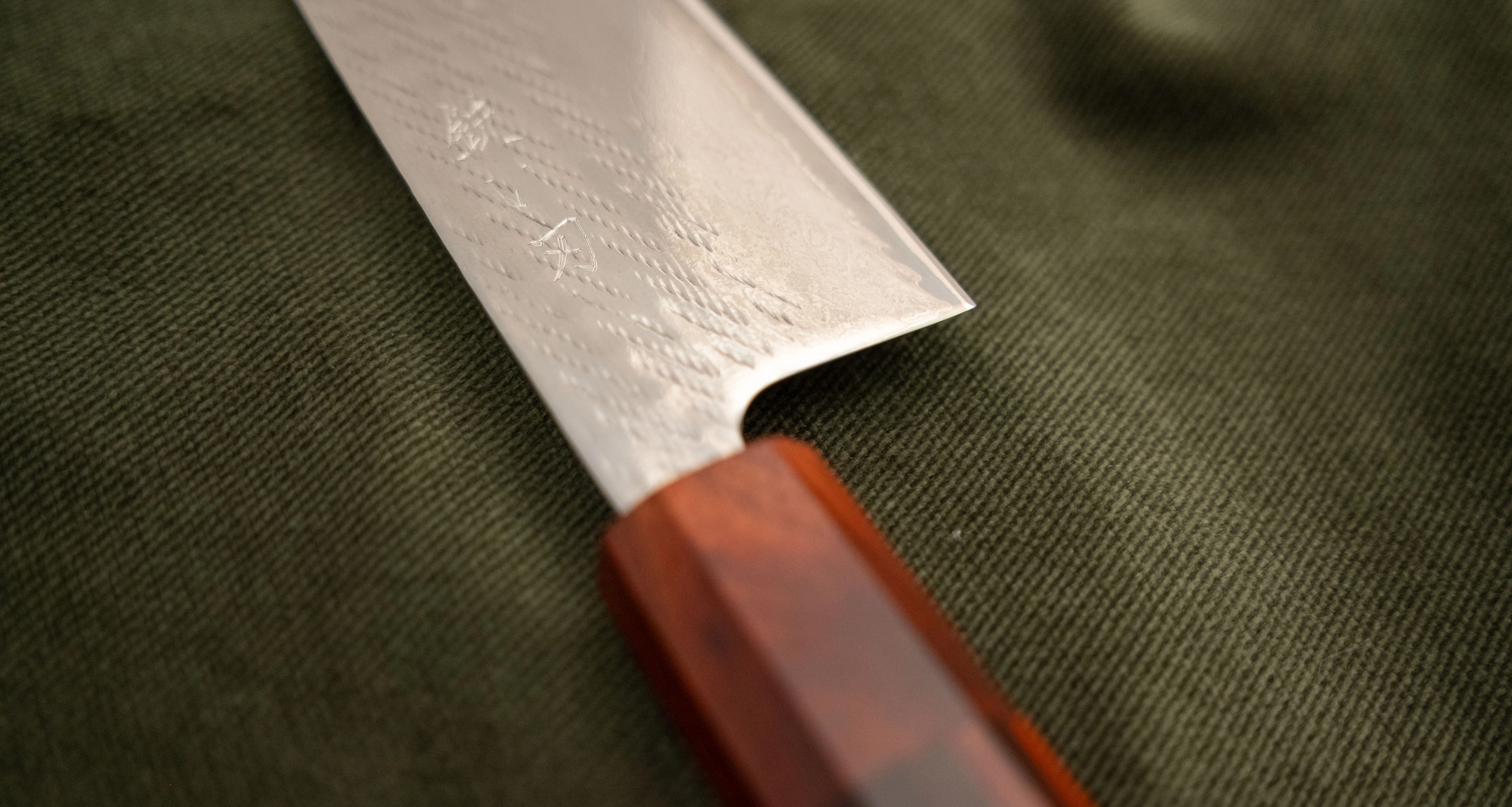
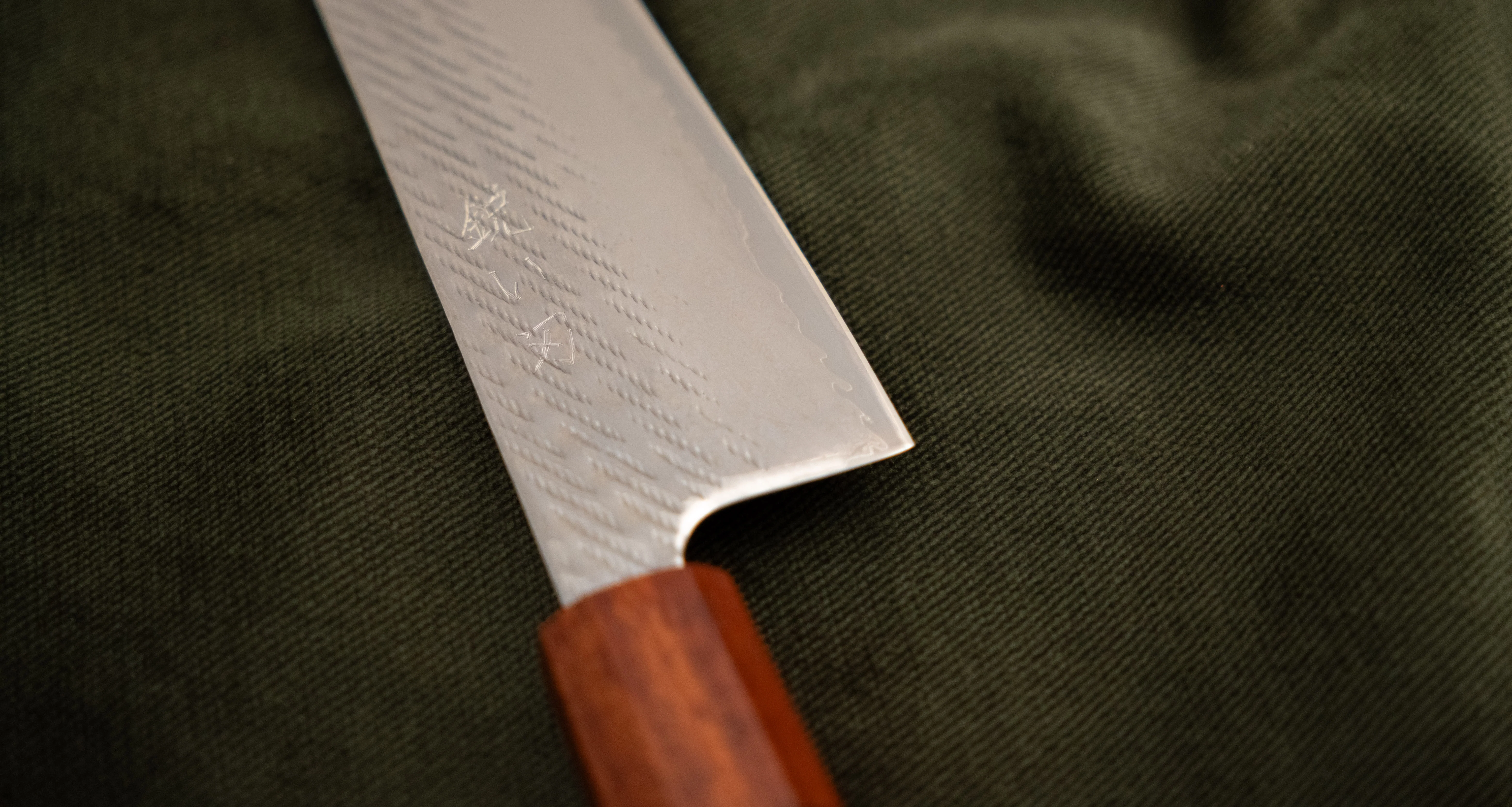
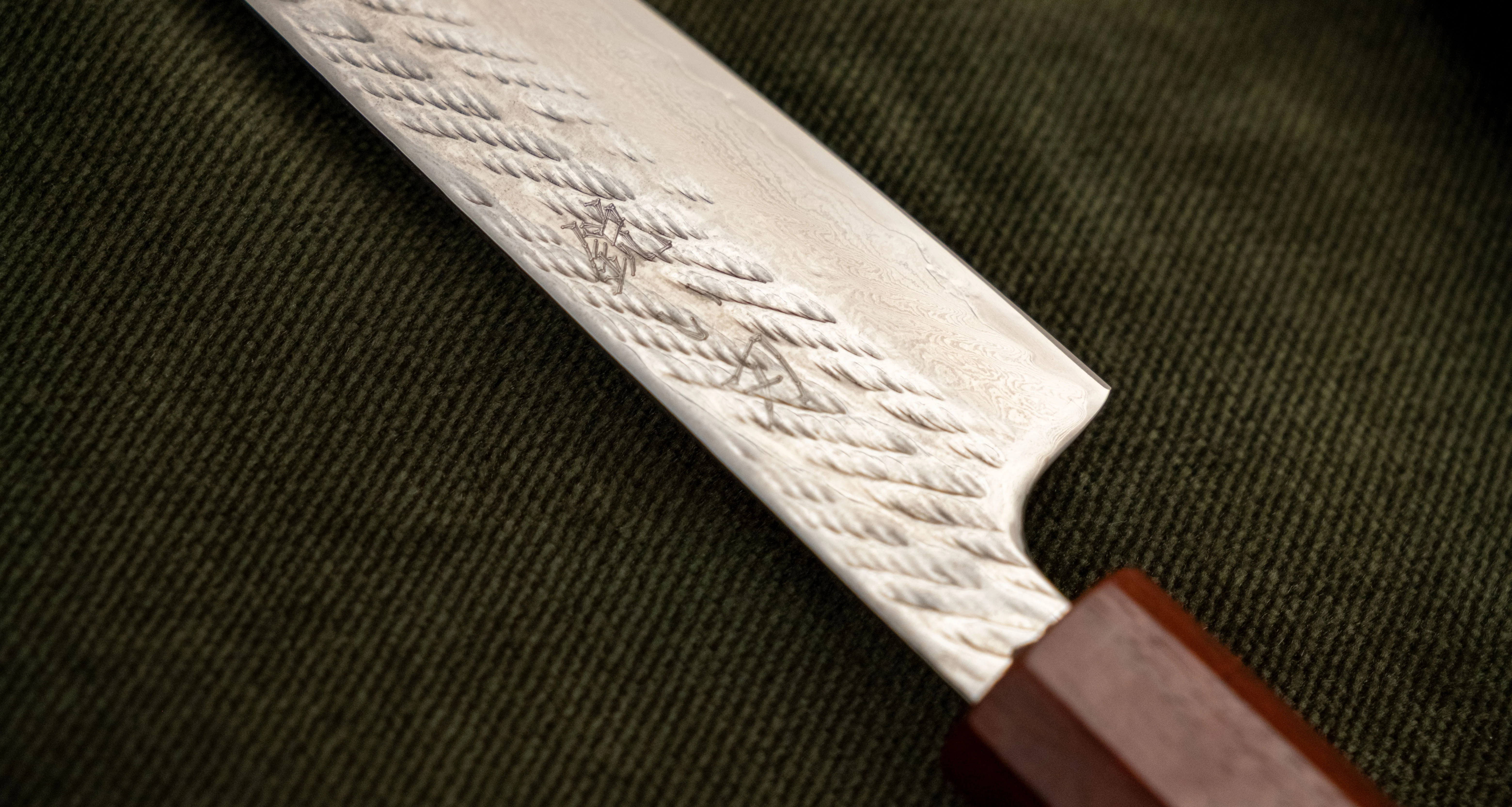
The minimalistic-looking, highly polished (also called migaki finish - see article Blade Construction: Blade Finish for more) blade is extremely thin, which allows the user to work precisely even with the smallest pieces of ingredients.
HANDLE:
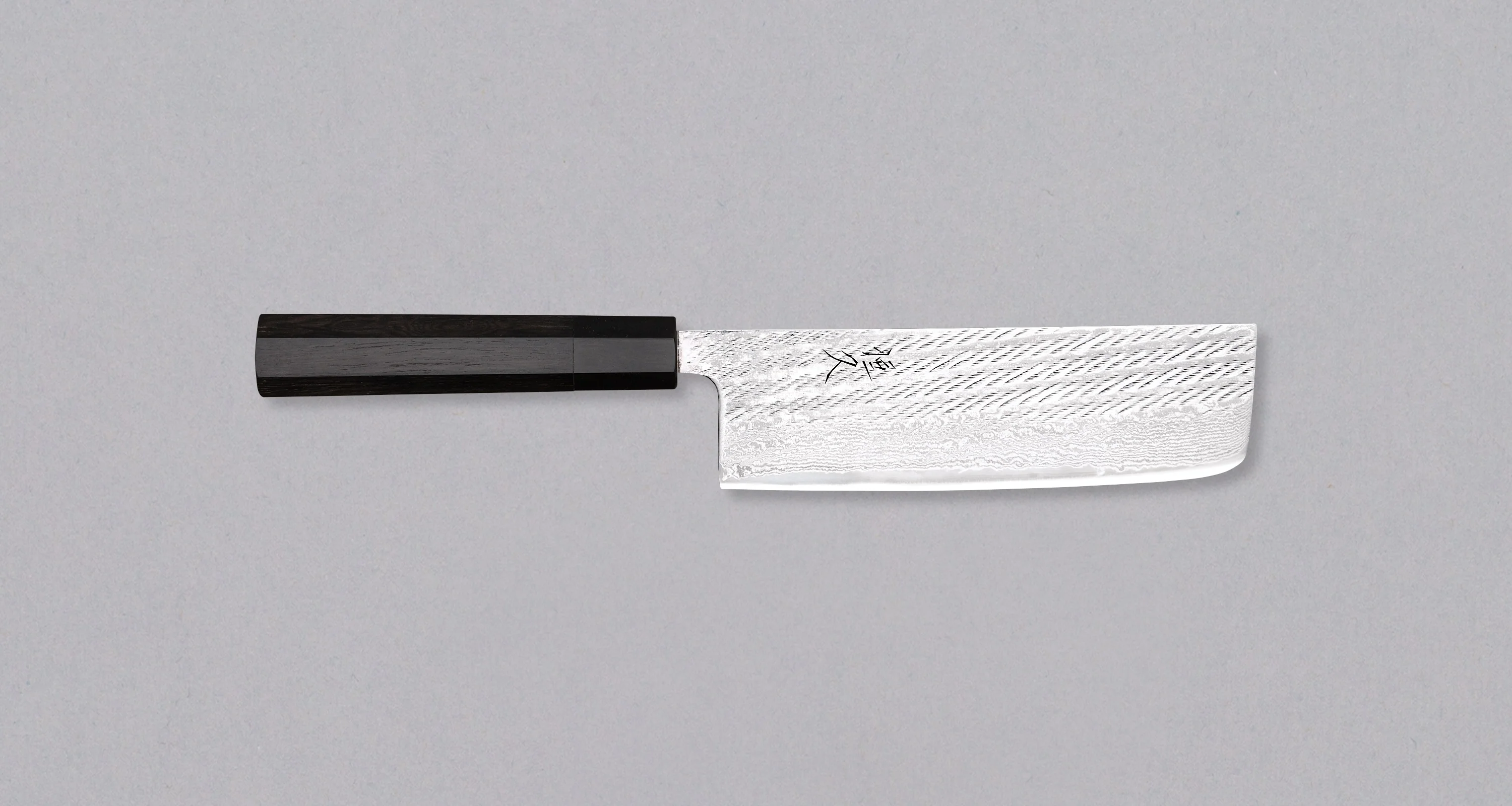
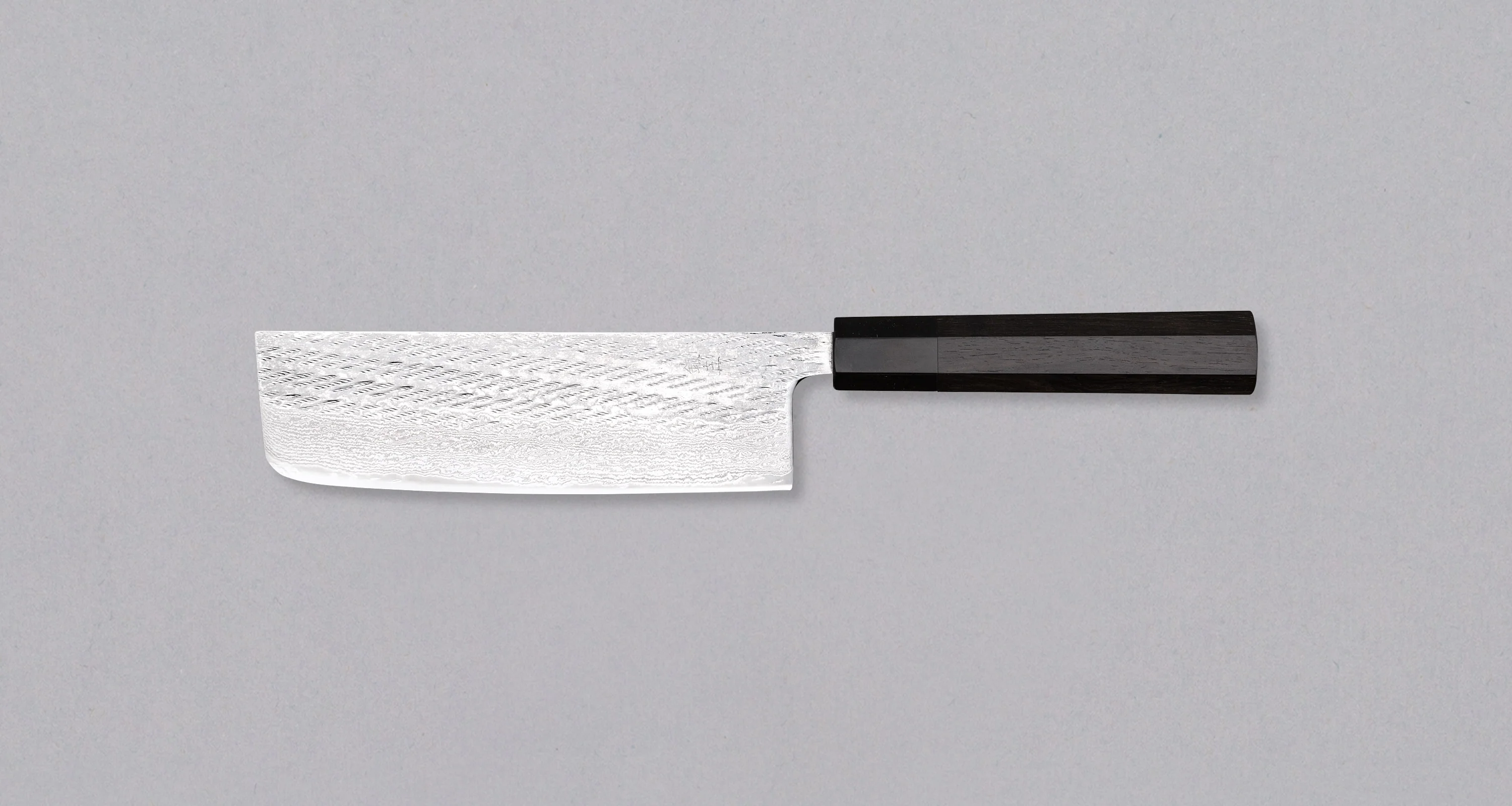
The knife features an octagon Japanese (Wa) style handle made out of ebony wood. The octagon shape of the handle provides a comfortable and secure grip, allowing for precise control during use.
The Hatsukokoro Ginrei Kiri-Petty Ginsanko Nashiji Ebony 125mm is a compact Japanese utility knife built for precision prep work. Perfect for peeling, paring, trimming, and other in-hand tasks—from coring apples to removing potato eyes—it excels in every fine-detail operation. The pronounced “K-tip” allows for precise decorative cuts, intricate garnishes, and delicate work with vegetables and fruit, while also piercing and trimming meat with surgical accuracy. Think of it as your go-to prep knife, ideal for mise-en-place and the fine work that elevates every dish.
Designed with both professional chefs and first-time Japanese knife buyers in mind, it also makes a thoughtful, high-quality gift for culinary enthusiasts.
BLADE SHAPE:
Petty knives are designed for smaller tasks on and off the cutting board. It's an indispensable knife in any kitchen and can be used for peeling, mincing, paring, and decorating food. The spine slopes downward toward the reverse-tanto tip, also known as a “K-tip”, providing excellent practicality for precise, effortless work with the tip. The fine, slender tip excels at drawing cuts, making it ideal for precision work. It allows for clean, slim slices and delivers closer, more accurate cuts with excellent control. The overall blade is smaller than a standard, flatter Kiritsuke, creating a Kiritsuke-Petty hybrid that combines versatility, control, and precision in a compact form. A must-have knife in every kitchen!
*The length of the cutting edge is 115mm (heel to point), but with this knife the length is measured from the edge of the handle to the tip of the blade, amounting to 125mm.
STEEL:
Hitachi's Silver III steel, also named Ginsan steel or Ginsanko, was hardened to around 63 HRC. Due to its high content of Chromium (Cr), Ginsan steel will resist corrosion very well. Despite it being a stainless steel, it feels and behaves very similarly to carbon steels, due to its extremely pure composition.
LAMINATION:
The core layer consisting of the harder Ginsan steel was sandwiched between two layers of softer steel. This technique is called san-mai and is used to protect the hard (but delicate) core from outside factors and physical impacts, which could lead to breakage.
GEOMETRY:
It has a double bevel (symmetrical) blade. The cutting edge is sharpened to a 50/50 angle and stays sharp even after hours of constant use.
BLADE FINISH:
The minimalistic-looking, highly polished (also called migaki finish - see article Blade Construction: Blade Finish for more) blade is extremely thin, which allows the user to work precisely even with the smallest pieces of ingredients.
HANDLE:
The knife features an octagon Japanese (Wa) style handle made out of ebony wood. The octagon shape of the handle provides a comfortable and secure grip, allowing for precise control during use.
Original: $125.00
-70%$125.00
$37.50Description
The Hatsukokoro Ginrei Kiri-Petty Ginsanko Nashiji Ebony 125mm is a compact Japanese utility knife built for precision prep work. Perfect for peeling, paring, trimming, and other in-hand tasks—from coring apples to removing potato eyes—it excels in every fine-detail operation. The pronounced “K-tip” allows for precise decorative cuts, intricate garnishes, and delicate work with vegetables and fruit, while also piercing and trimming meat with surgical accuracy. Think of it as your go-to prep knife, ideal for mise-en-place and the fine work that elevates every dish.
Designed with both professional chefs and first-time Japanese knife buyers in mind, it also makes a thoughtful, high-quality gift for culinary enthusiasts.
BLADE SHAPE:
Petty knives are designed for smaller tasks on and off the cutting board. It's an indispensable knife in any kitchen and can be used for peeling, mincing, paring, and decorating food. The spine slopes downward toward the reverse-tanto tip, also known as a “K-tip”, providing excellent practicality for precise, effortless work with the tip. The fine, slender tip excels at drawing cuts, making it ideal for precision work. It allows for clean, slim slices and delivers closer, more accurate cuts with excellent control. The overall blade is smaller than a standard, flatter Kiritsuke, creating a Kiritsuke-Petty hybrid that combines versatility, control, and precision in a compact form. A must-have knife in every kitchen!
*The length of the cutting edge is 115mm (heel to point), but with this knife the length is measured from the edge of the handle to the tip of the blade, amounting to 125mm.
STEEL:
Hitachi's Silver III steel, also named Ginsan steel or Ginsanko, was hardened to around 63 HRC. Due to its high content of Chromium (Cr), Ginsan steel will resist corrosion very well. Despite it being a stainless steel, it feels and behaves very similarly to carbon steels, due to its extremely pure composition.
LAMINATION:
The core layer consisting of the harder Ginsan steel was sandwiched between two layers of softer steel. This technique is called san-mai and is used to protect the hard (but delicate) core from outside factors and physical impacts, which could lead to breakage.
GEOMETRY:
It has a double bevel (symmetrical) blade. The cutting edge is sharpened to a 50/50 angle and stays sharp even after hours of constant use.
BLADE FINISH:
The minimalistic-looking, highly polished (also called migaki finish - see article Blade Construction: Blade Finish for more) blade is extremely thin, which allows the user to work precisely even with the smallest pieces of ingredients.
HANDLE:
The knife features an octagon Japanese (Wa) style handle made out of ebony wood. The octagon shape of the handle provides a comfortable and secure grip, allowing for precise control during use.