Tsunehisa Nakiri Ginsanko Nawame Damascus 165mm (6.5")
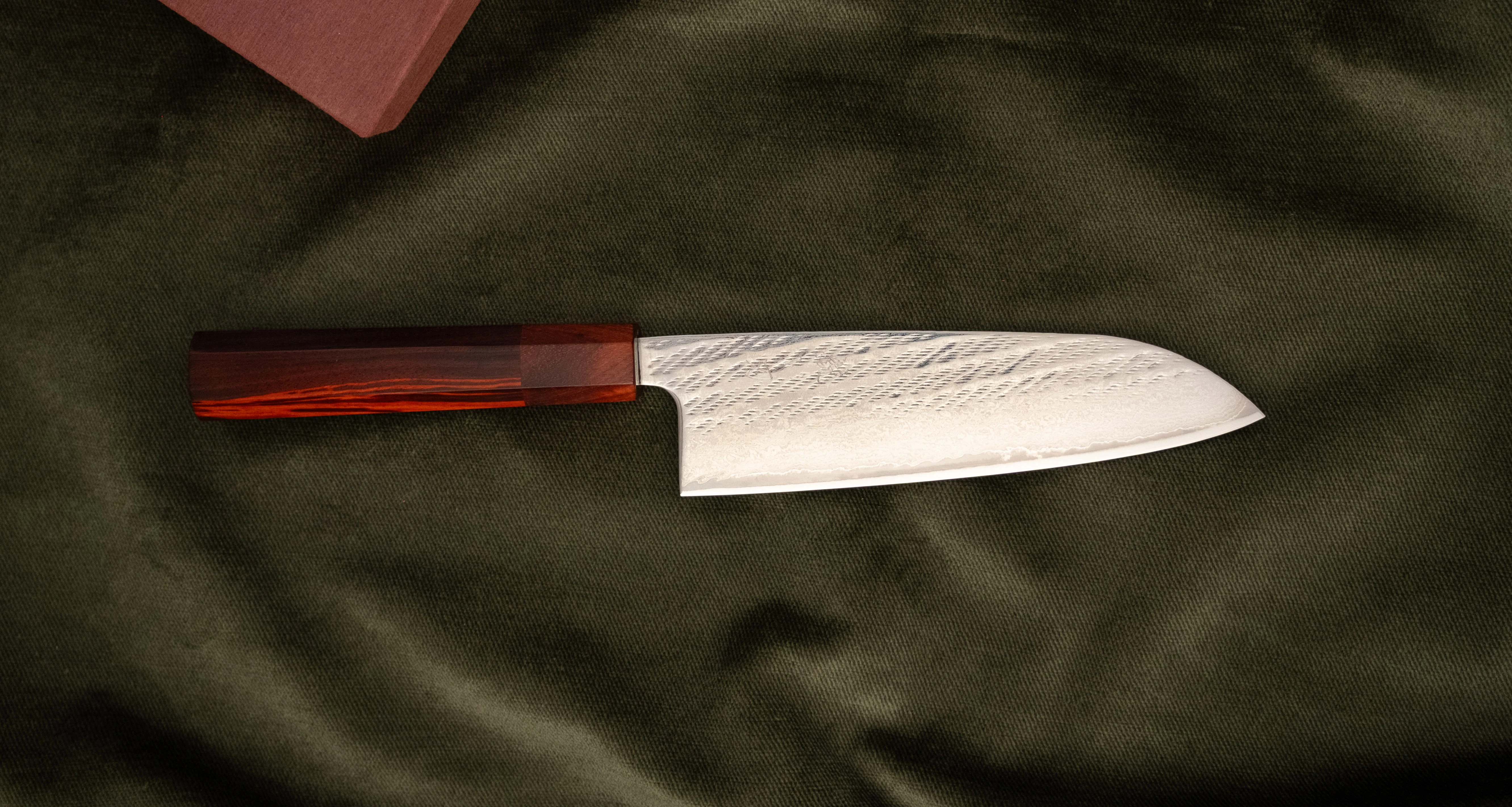
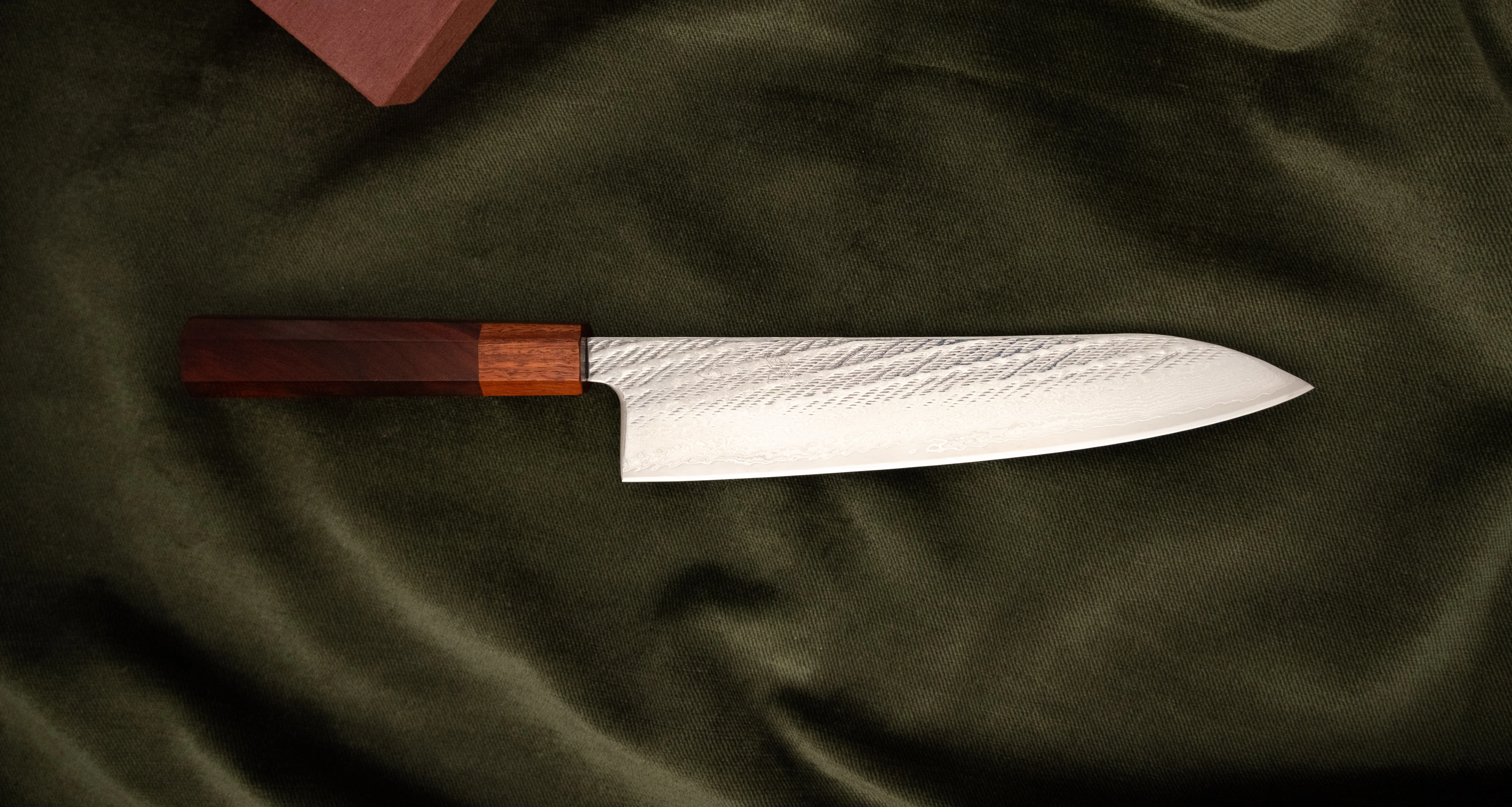
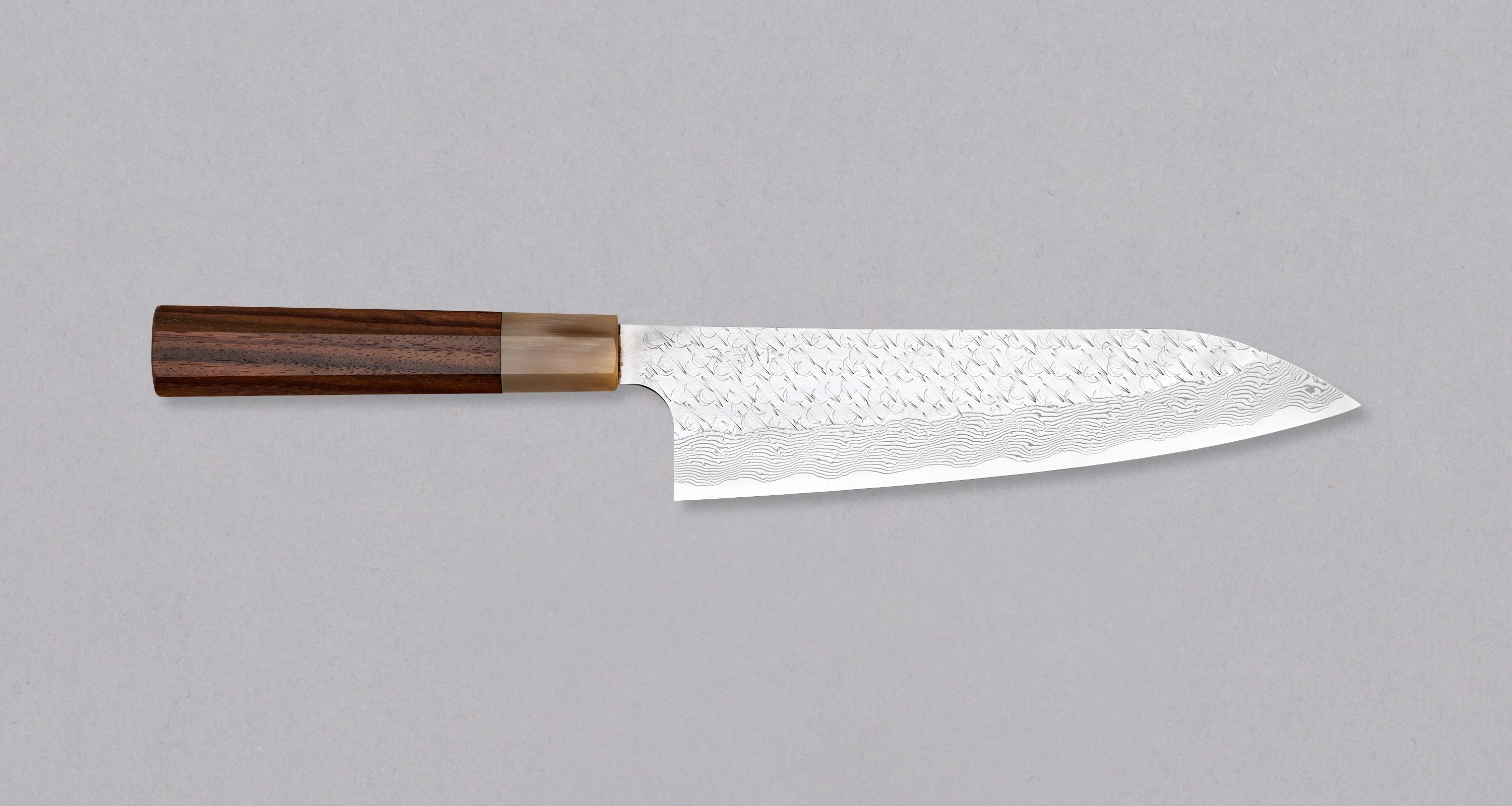
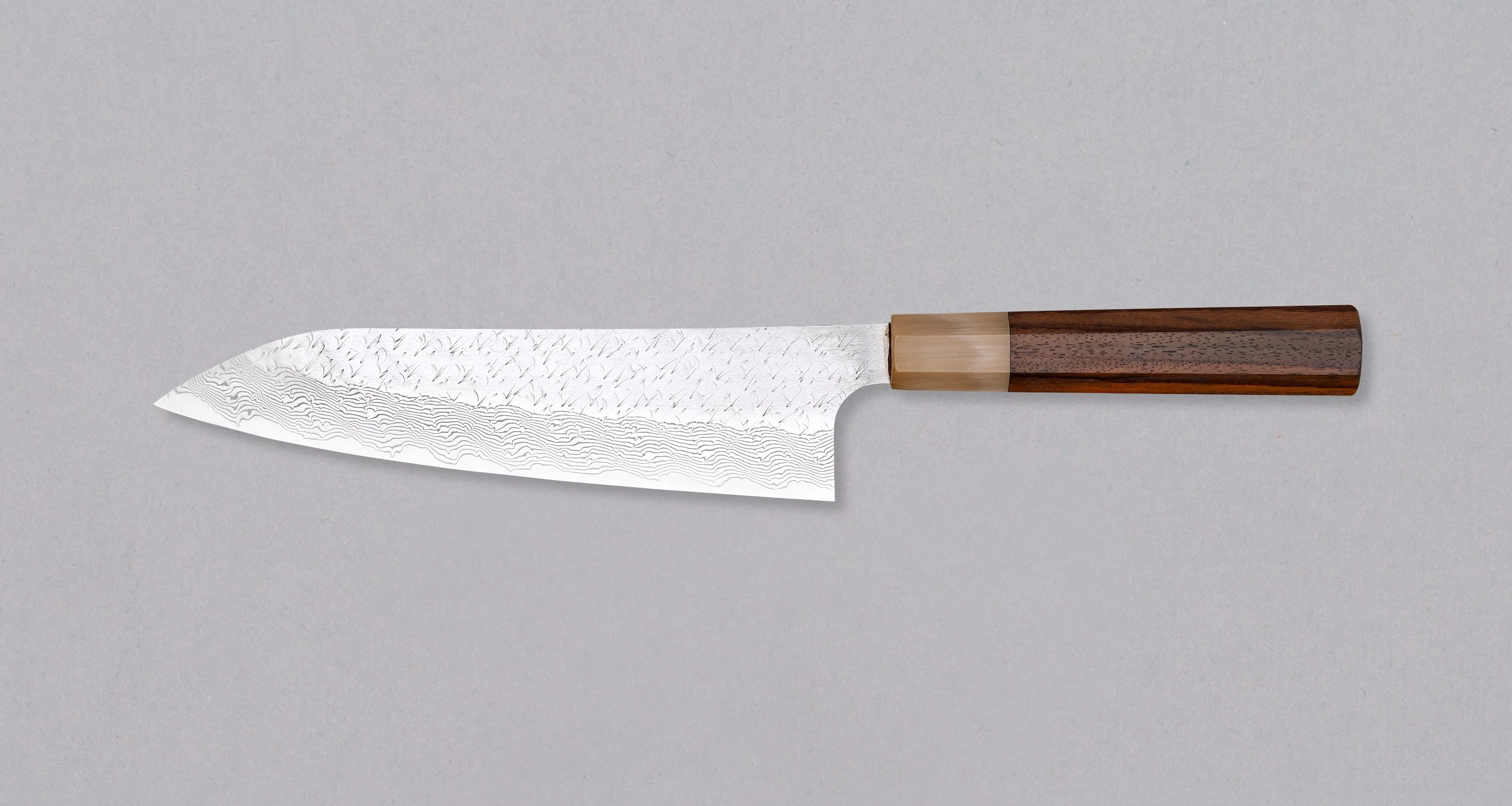
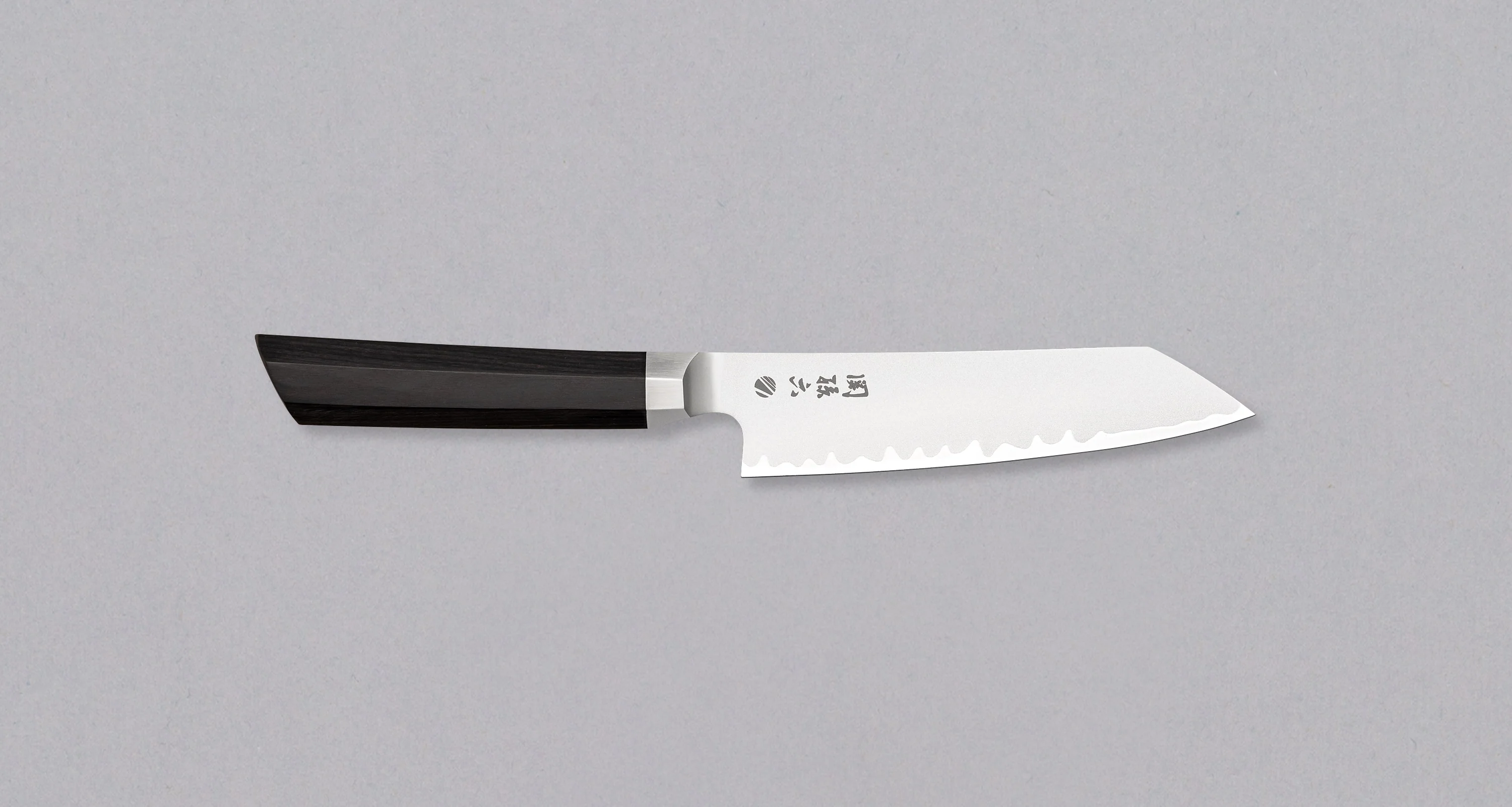
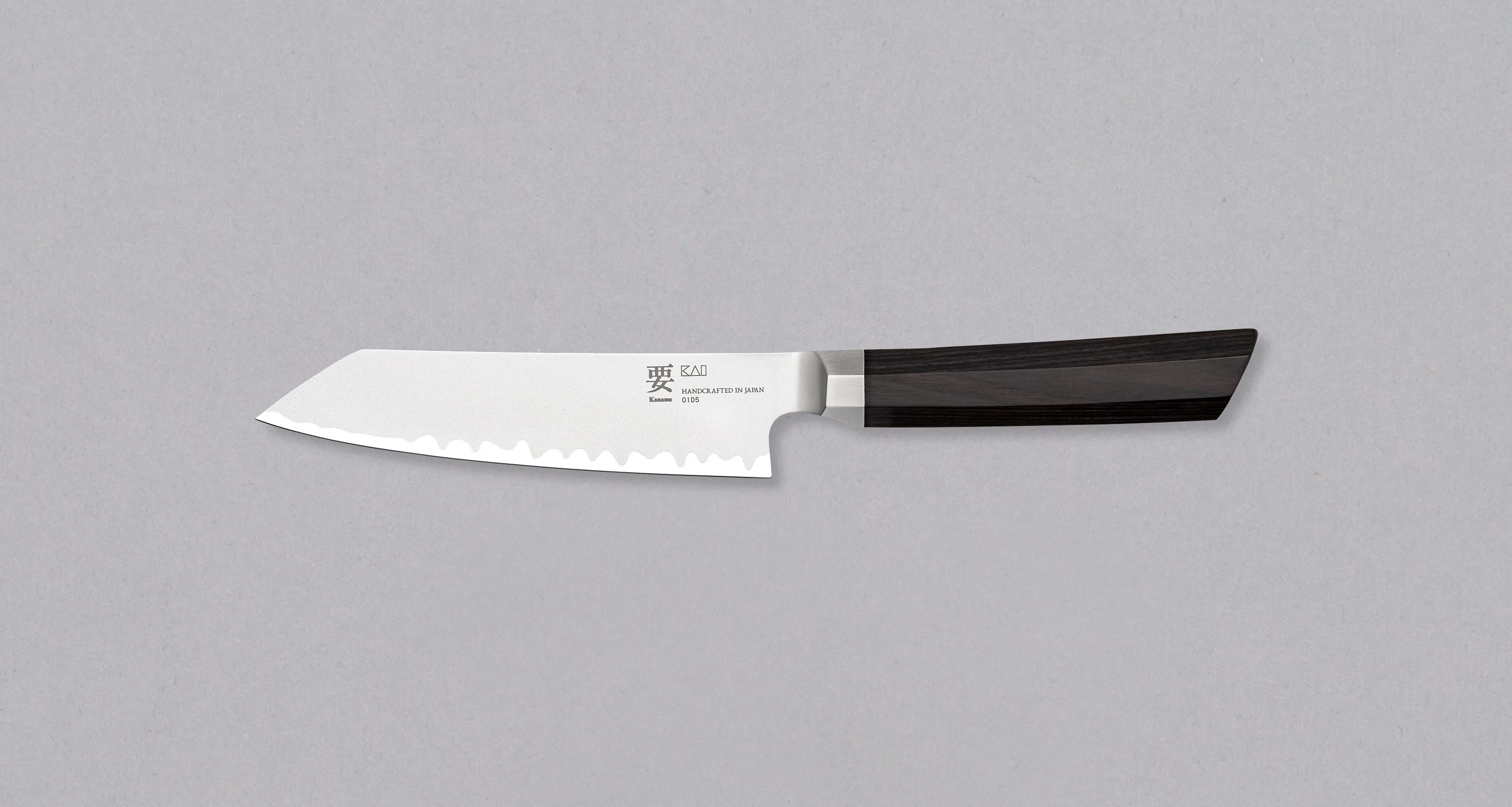
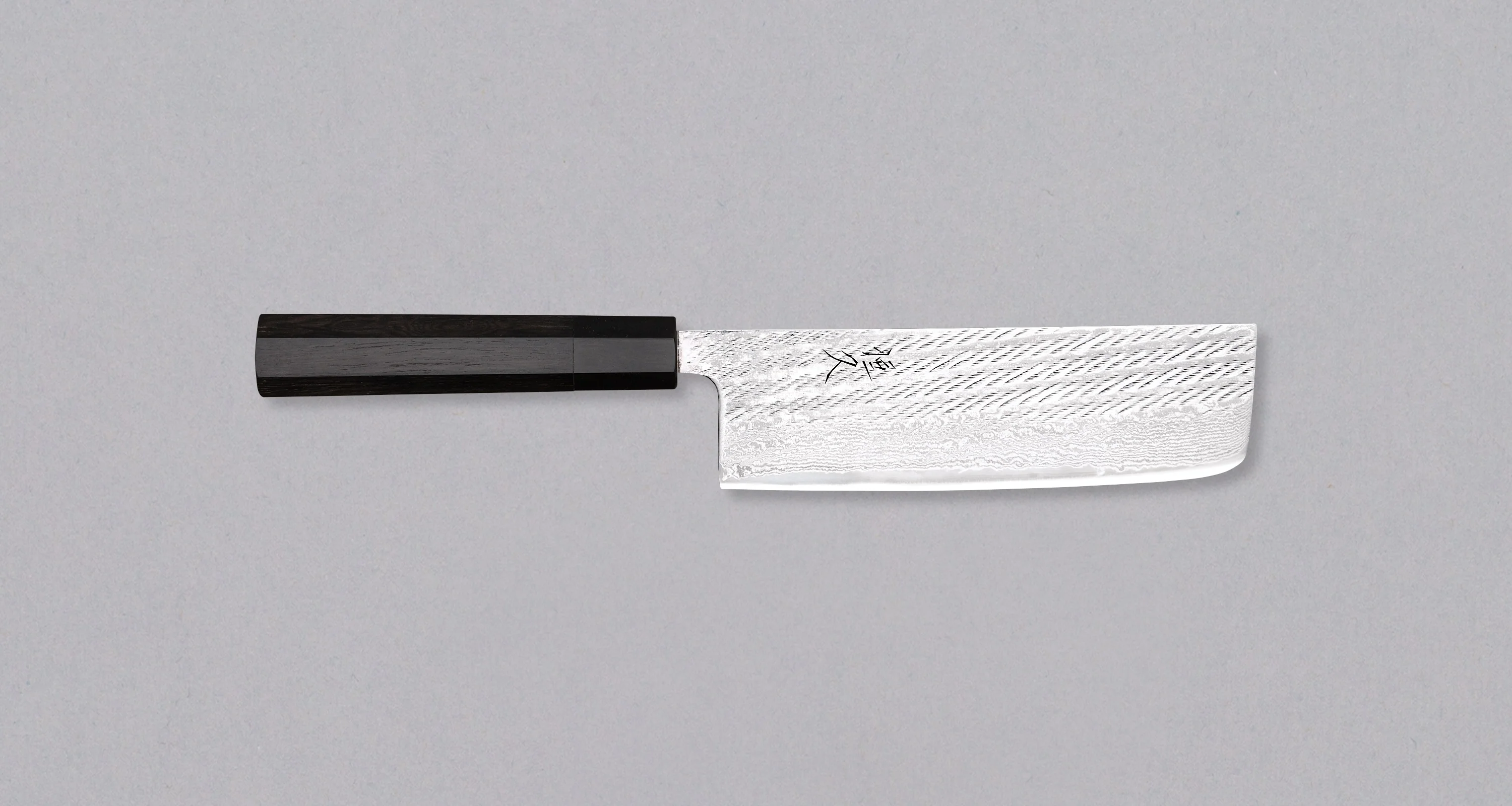
The Tsunehisa Nakiri Ginsanko Nawame Damascus 165mm is a classic Japanese vegetable knife with a straight, tall profile that’s made for fast, precise chopping. Effortless to maintain, holds a razor-sharp edge, and hones beautifully on whetstones.
Suitable for first-time buyers of a Japanese kitchen knife. It can also serve as a wonderful gift!
BLADE SHAPE:
The Nakiri blade, a traditional Japanese knife shape, is specifically designed for cutting vegetables. Its flat edge and squared-off tip allow for efficient chopping and slicing, making it a preferred choice for prep cooks who handle a substantial volume of vegetables daily. The blade's straight edge provides optimal and stable contact with the cutting board and allows for fluid movement, providing the user with enhanced control and maneuverability. Takefu blade is wide and has no upward curve at the tip—giving it maximum contact with the cutting board for clean, efficient cuts.
STEEL:
Hitachi's Silver III steel, also named Ginsan steel or Ginsanko, was hardened to around 63 HRC. Due to its high content of Chromium (Cr), Ginsan steel will resist corrosion very well. Despite it being a stainless steel, it feels and behaves very similarly to carbon steels, due to its extremely pure composition.
LAMINATION:
The hard Ginsanko steel core is clad in softer stainless steel using the traditional san-mai technique. This method enhances durability and protects the core from external stresses and chipping.
BLADE FINISH:
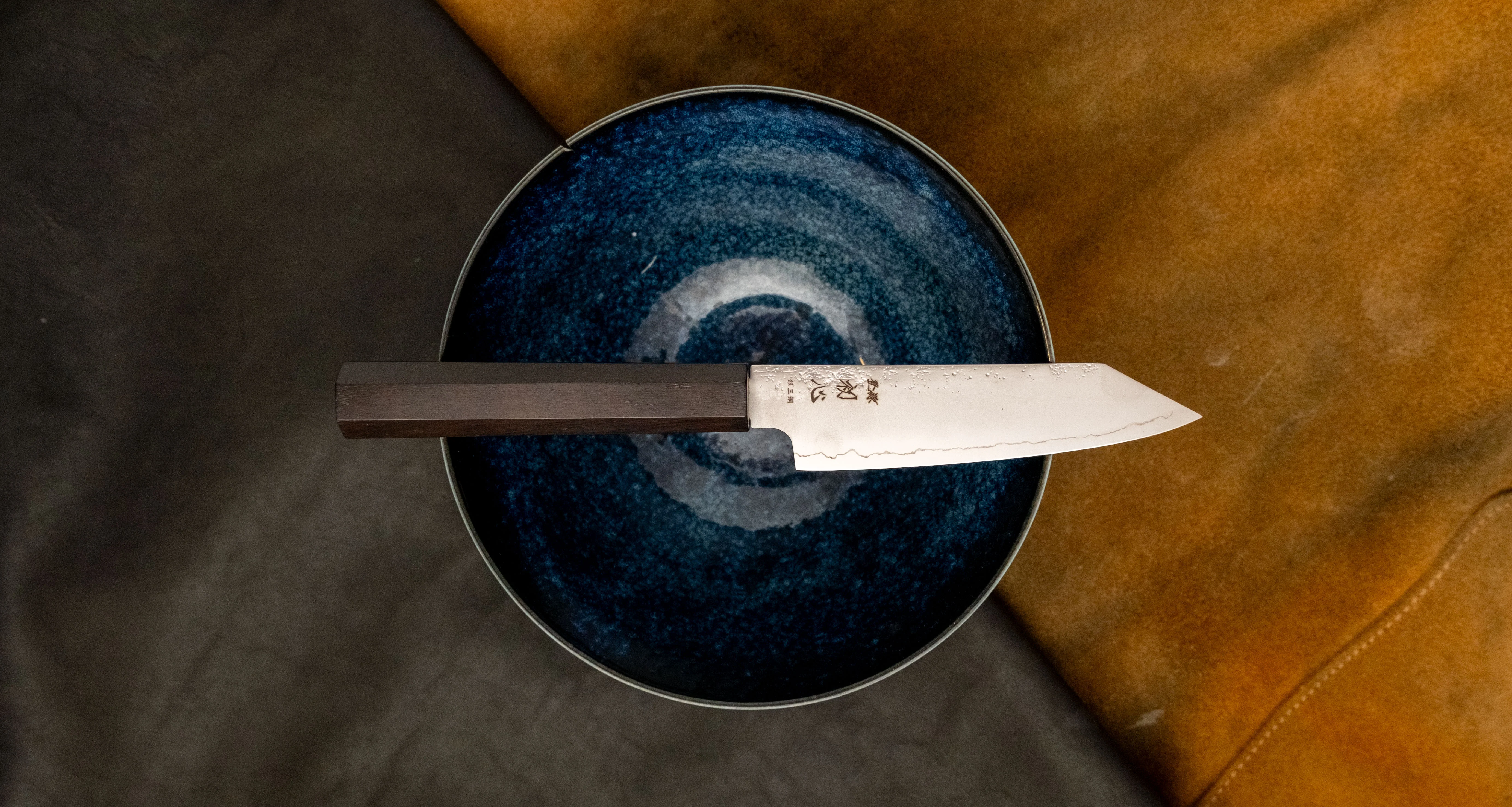
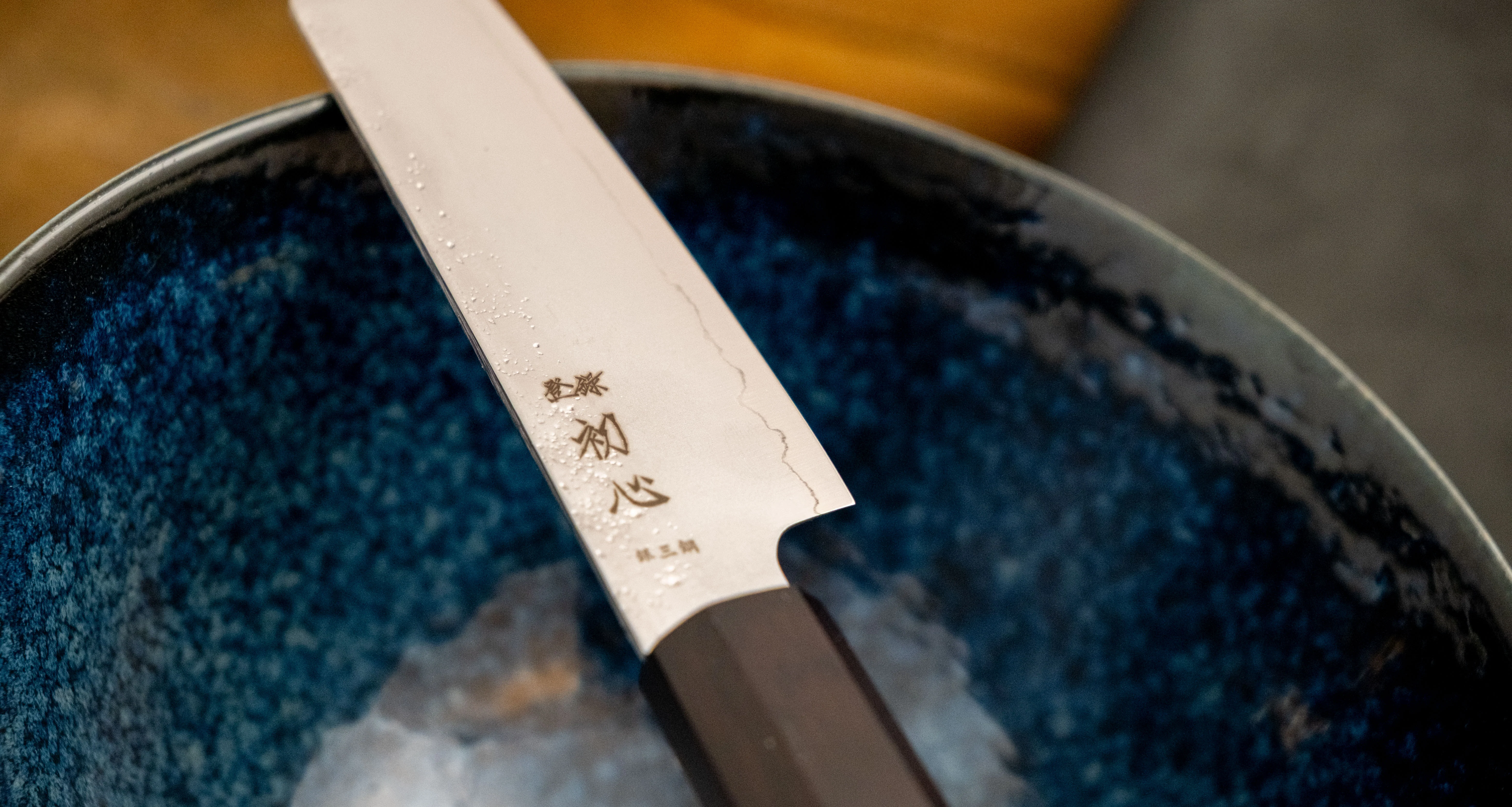
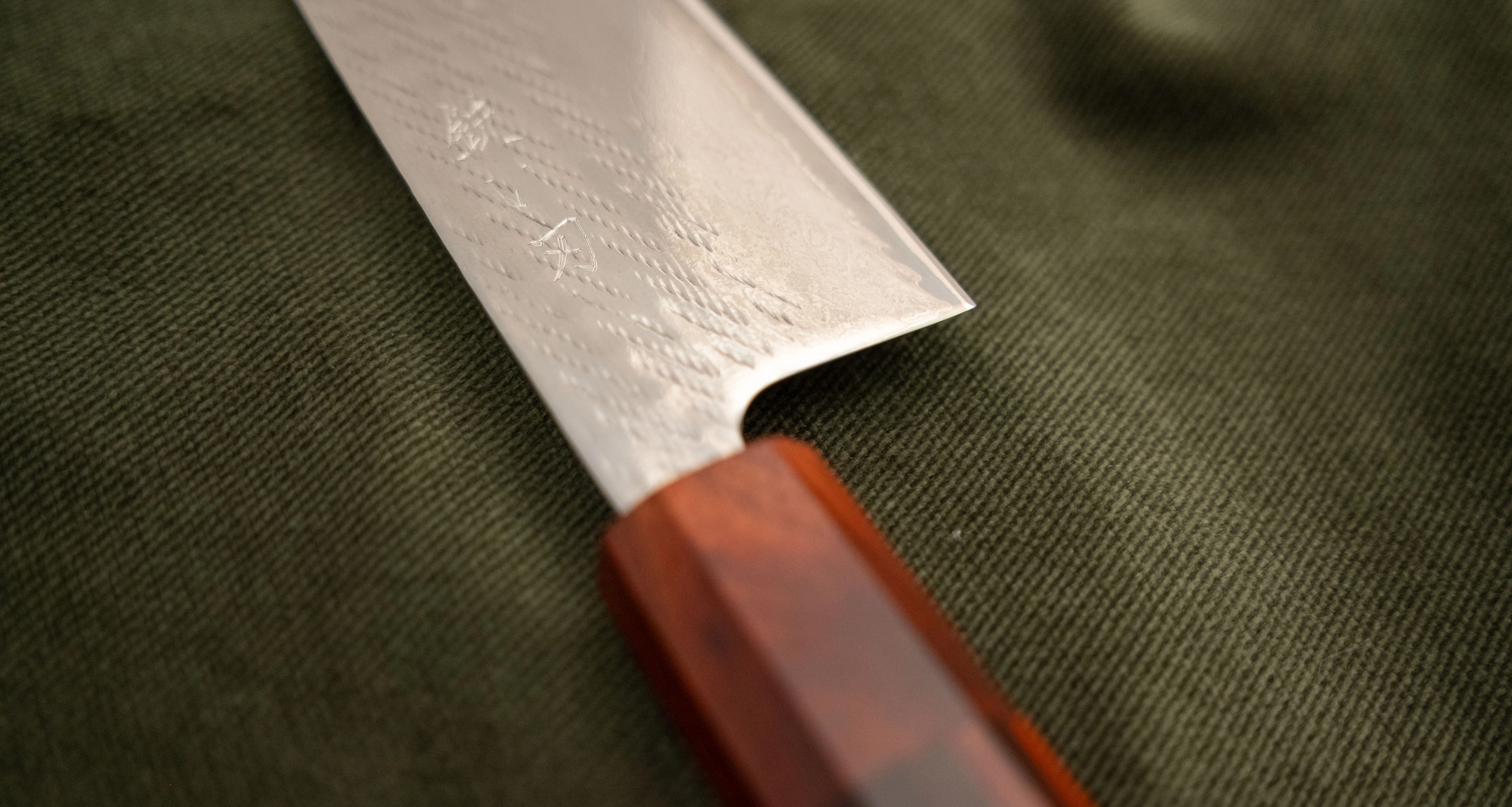
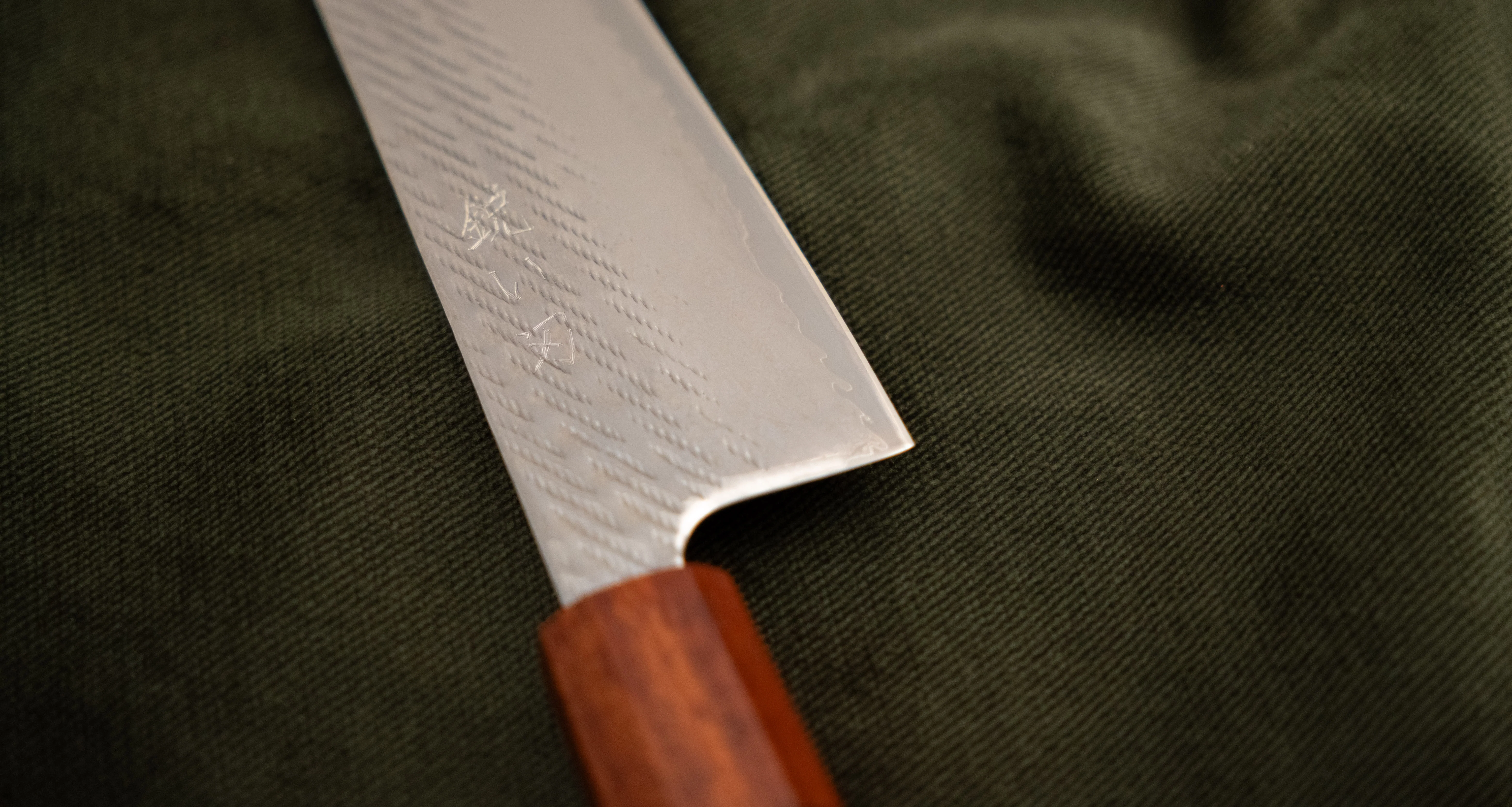
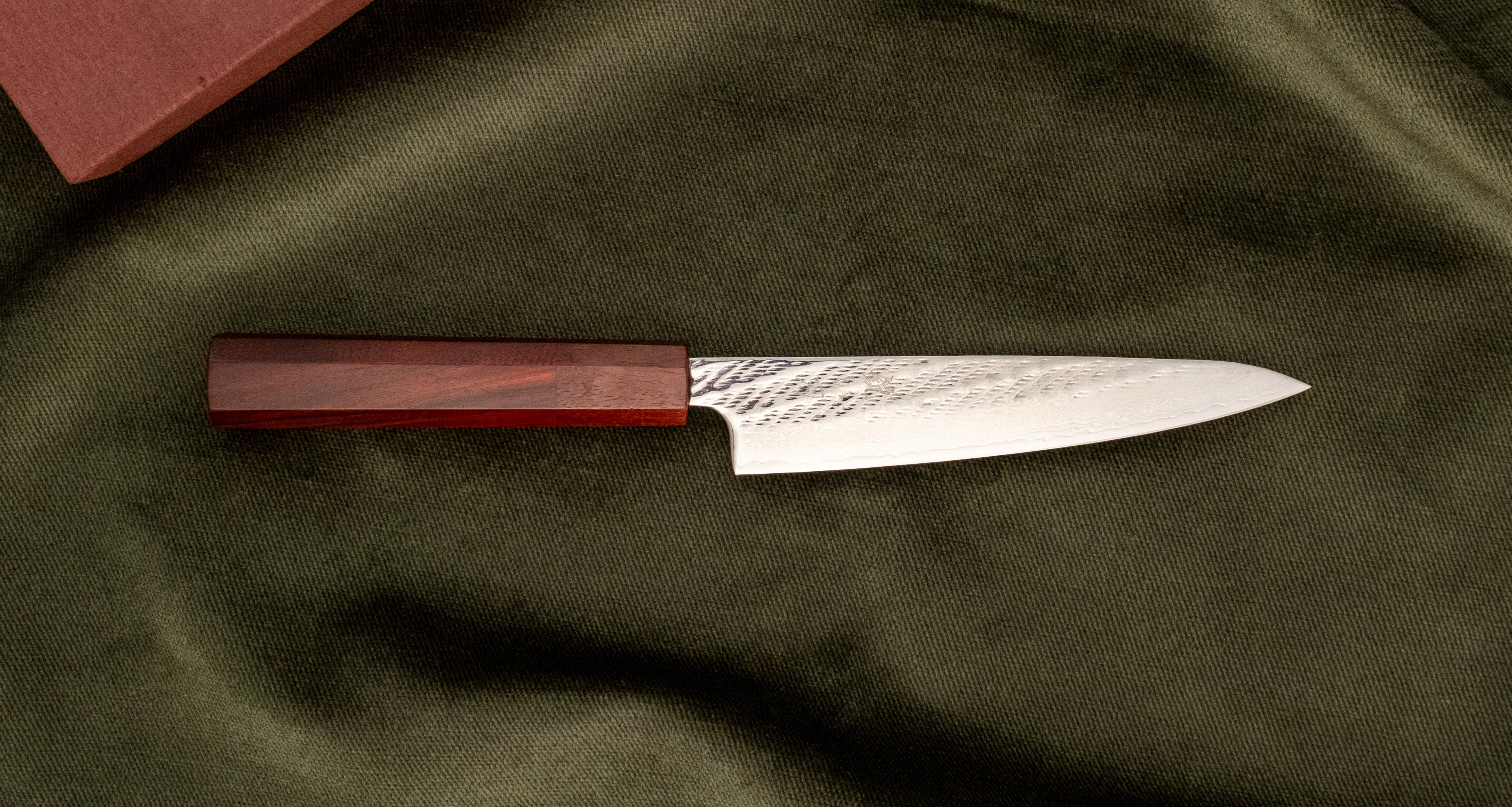
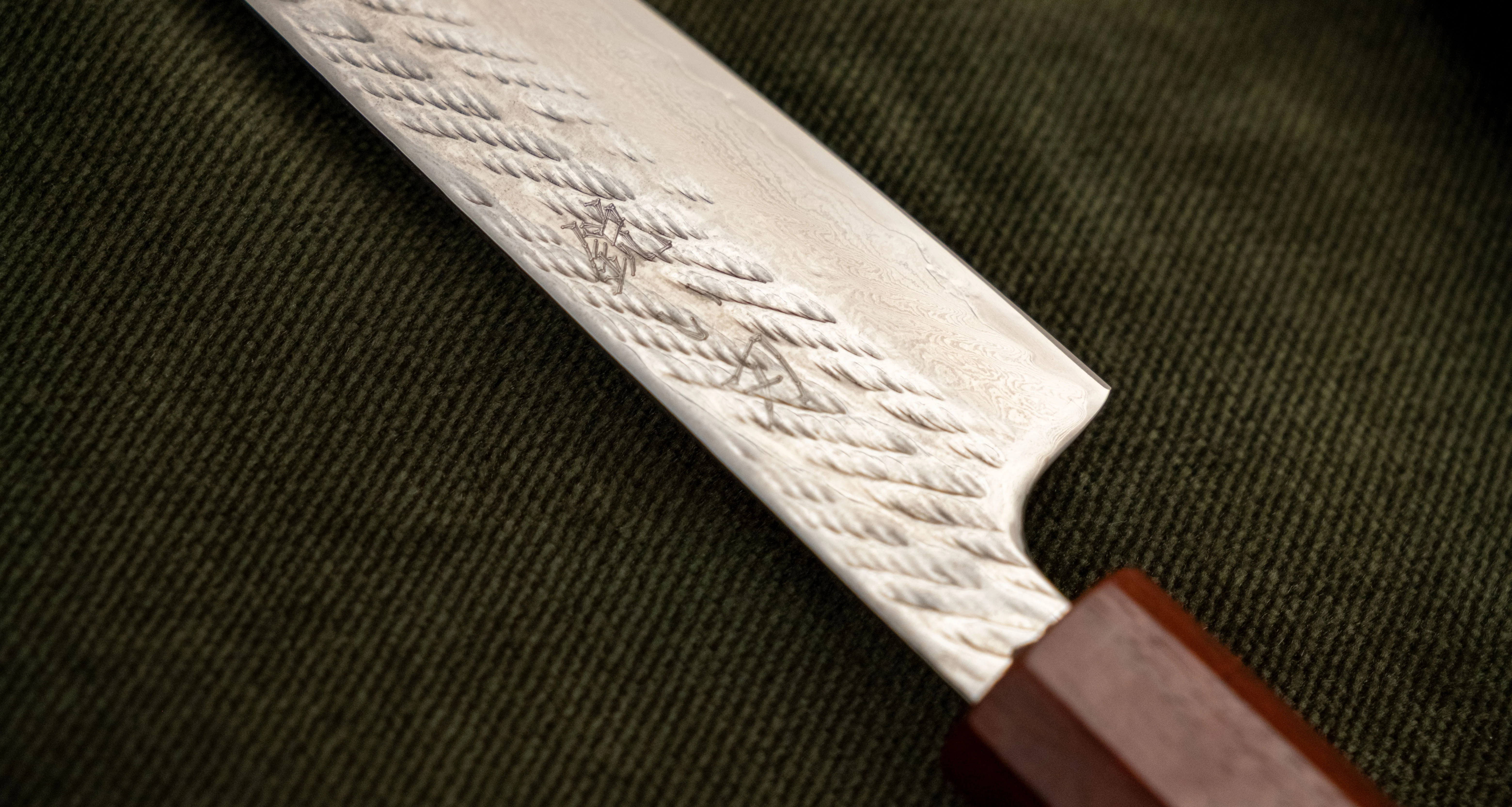
The blade combines a refined damascus pattern with a hand-forged tsuchime finish, which gives the knife a distinctive texture and depth. The tsuchime pattern on the blade is designed in a rope or sailor's knot motif, reminiscent of intertwined threads.
The term nawame (縄目) literally means “rope mark” or “rope imprint” in Japanese. In the context of knives, it refers to a pattern that resembles twisted rope or knots, traditionally associated with maritime and craft symbolism.
The nawame pattern is not only a visual accent but also a functional finish, as it reduces food adhesion and improves the cutting process. The texture gives the blade a distinctive character and subtle three-dimensionality.
HANDLE:
The knife features an octagon Japanese (Wa) style handle made out of ebony wood. The octagon shape of the handle provides a comfortable and secure grip, allowing for precise control during use.
BLACKSMITH:
Tsunehisa is a curated brand that brings together high-quality knives from Japan’s top smithing regions—Tosa, Seki, and Sakai. Each area specializes in distinct steels and techniques: Tosa is known for Ginsanko and AUS-8; Seki for the V-Gold series; and Sakai for its traditional single-bevel Honyaki knives.
The Tsunehisa Nakiri Ginsanko Nawame Damascus 165mm is a classic Japanese vegetable knife with a straight, tall profile that’s made for fast, precise chopping. Effortless to maintain, holds a razor-sharp edge, and hones beautifully on whetstones.
Suitable for first-time buyers of a Japanese kitchen knife. It can also serve as a wonderful gift!
BLADE SHAPE:
The Nakiri blade, a traditional Japanese knife shape, is specifically designed for cutting vegetables. Its flat edge and squared-off tip allow for efficient chopping and slicing, making it a preferred choice for prep cooks who handle a substantial volume of vegetables daily. The blade's straight edge provides optimal and stable contact with the cutting board and allows for fluid movement, providing the user with enhanced control and maneuverability. Takefu blade is wide and has no upward curve at the tip—giving it maximum contact with the cutting board for clean, efficient cuts.
STEEL:
Hitachi's Silver III steel, also named Ginsan steel or Ginsanko, was hardened to around 63 HRC. Due to its high content of Chromium (Cr), Ginsan steel will resist corrosion very well. Despite it being a stainless steel, it feels and behaves very similarly to carbon steels, due to its extremely pure composition.
LAMINATION:
The hard Ginsanko steel core is clad in softer stainless steel using the traditional san-mai technique. This method enhances durability and protects the core from external stresses and chipping.
BLADE FINISH:
The blade combines a refined damascus pattern with a hand-forged tsuchime finish, which gives the knife a distinctive texture and depth. The tsuchime pattern on the blade is designed in a rope or sailor's knot motif, reminiscent of intertwined threads.
The term nawame (縄目) literally means “rope mark” or “rope imprint” in Japanese. In the context of knives, it refers to a pattern that resembles twisted rope or knots, traditionally associated with maritime and craft symbolism.
The nawame pattern is not only a visual accent but also a functional finish, as it reduces food adhesion and improves the cutting process. The texture gives the blade a distinctive character and subtle three-dimensionality.
HANDLE:
The knife features an octagon Japanese (Wa) style handle made out of ebony wood. The octagon shape of the handle provides a comfortable and secure grip, allowing for precise control during use.
BLACKSMITH:
Tsunehisa is a curated brand that brings together high-quality knives from Japan’s top smithing regions—Tosa, Seki, and Sakai. Each area specializes in distinct steels and techniques: Tosa is known for Ginsanko and AUS-8; Seki for the V-Gold series; and Sakai for its traditional single-bevel Honyaki knives.
Original: $235.00
-70%$235.00
$70.50Description
The Tsunehisa Nakiri Ginsanko Nawame Damascus 165mm is a classic Japanese vegetable knife with a straight, tall profile that’s made for fast, precise chopping. Effortless to maintain, holds a razor-sharp edge, and hones beautifully on whetstones.
Suitable for first-time buyers of a Japanese kitchen knife. It can also serve as a wonderful gift!
BLADE SHAPE:
The Nakiri blade, a traditional Japanese knife shape, is specifically designed for cutting vegetables. Its flat edge and squared-off tip allow for efficient chopping and slicing, making it a preferred choice for prep cooks who handle a substantial volume of vegetables daily. The blade's straight edge provides optimal and stable contact with the cutting board and allows for fluid movement, providing the user with enhanced control and maneuverability. Takefu blade is wide and has no upward curve at the tip—giving it maximum contact with the cutting board for clean, efficient cuts.
STEEL:
Hitachi's Silver III steel, also named Ginsan steel or Ginsanko, was hardened to around 63 HRC. Due to its high content of Chromium (Cr), Ginsan steel will resist corrosion very well. Despite it being a stainless steel, it feels and behaves very similarly to carbon steels, due to its extremely pure composition.
LAMINATION:
The hard Ginsanko steel core is clad in softer stainless steel using the traditional san-mai technique. This method enhances durability and protects the core from external stresses and chipping.
BLADE FINISH:
The blade combines a refined damascus pattern with a hand-forged tsuchime finish, which gives the knife a distinctive texture and depth. The tsuchime pattern on the blade is designed in a rope or sailor's knot motif, reminiscent of intertwined threads.
The term nawame (縄目) literally means “rope mark” or “rope imprint” in Japanese. In the context of knives, it refers to a pattern that resembles twisted rope or knots, traditionally associated with maritime and craft symbolism.
The nawame pattern is not only a visual accent but also a functional finish, as it reduces food adhesion and improves the cutting process. The texture gives the blade a distinctive character and subtle three-dimensionality.
HANDLE:
The knife features an octagon Japanese (Wa) style handle made out of ebony wood. The octagon shape of the handle provides a comfortable and secure grip, allowing for precise control during use.
BLACKSMITH:
Tsunehisa is a curated brand that brings together high-quality knives from Japan’s top smithing regions—Tosa, Seki, and Sakai. Each area specializes in distinct steels and techniques: Tosa is known for Ginsanko and AUS-8; Seki for the V-Gold series; and Sakai for its traditional single-bevel Honyaki knives.