Hokiyama Petty Ginsanko Nawame Damascus 135mm (5.3") [Kaotan/Rosewood]
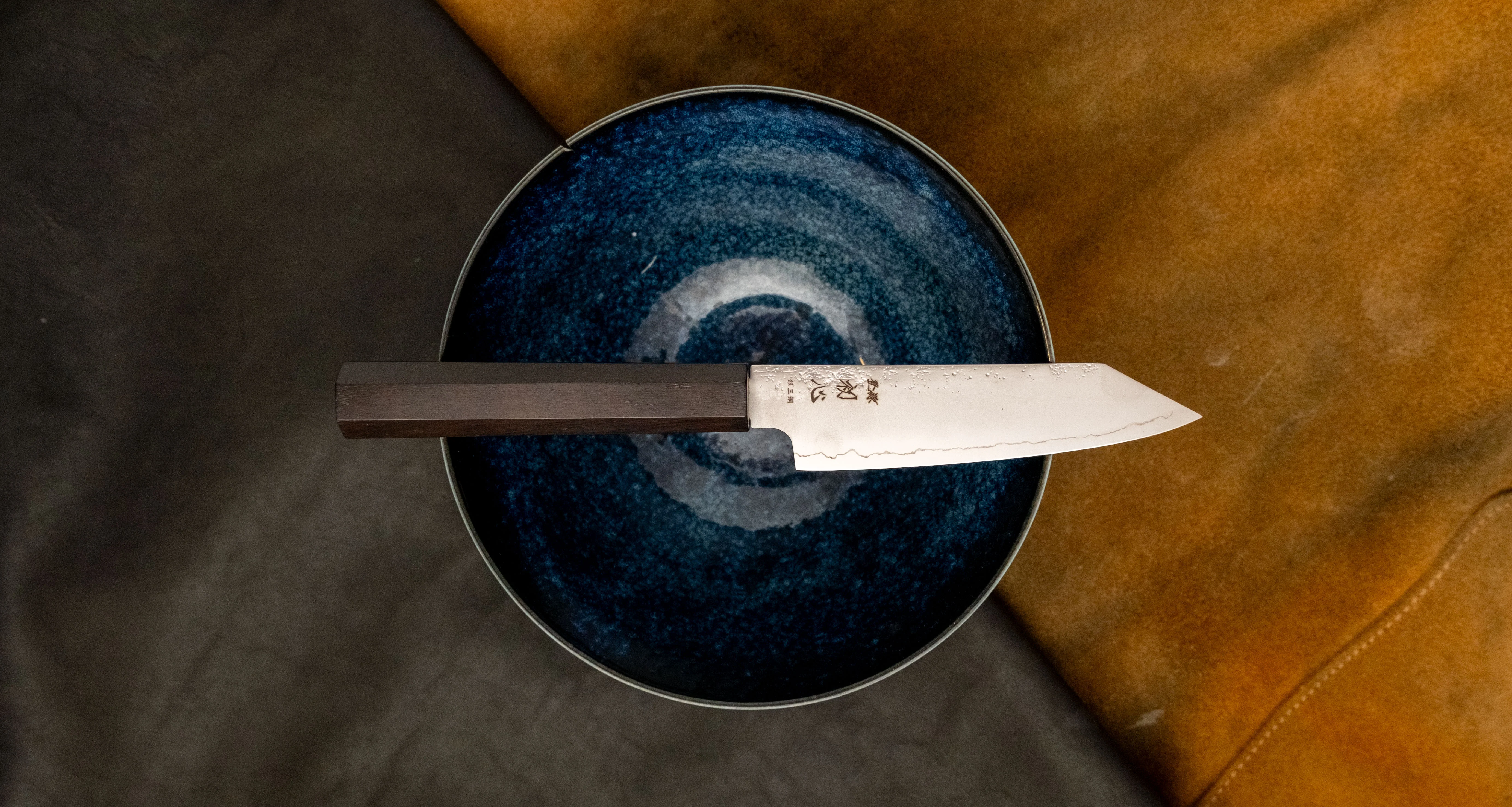
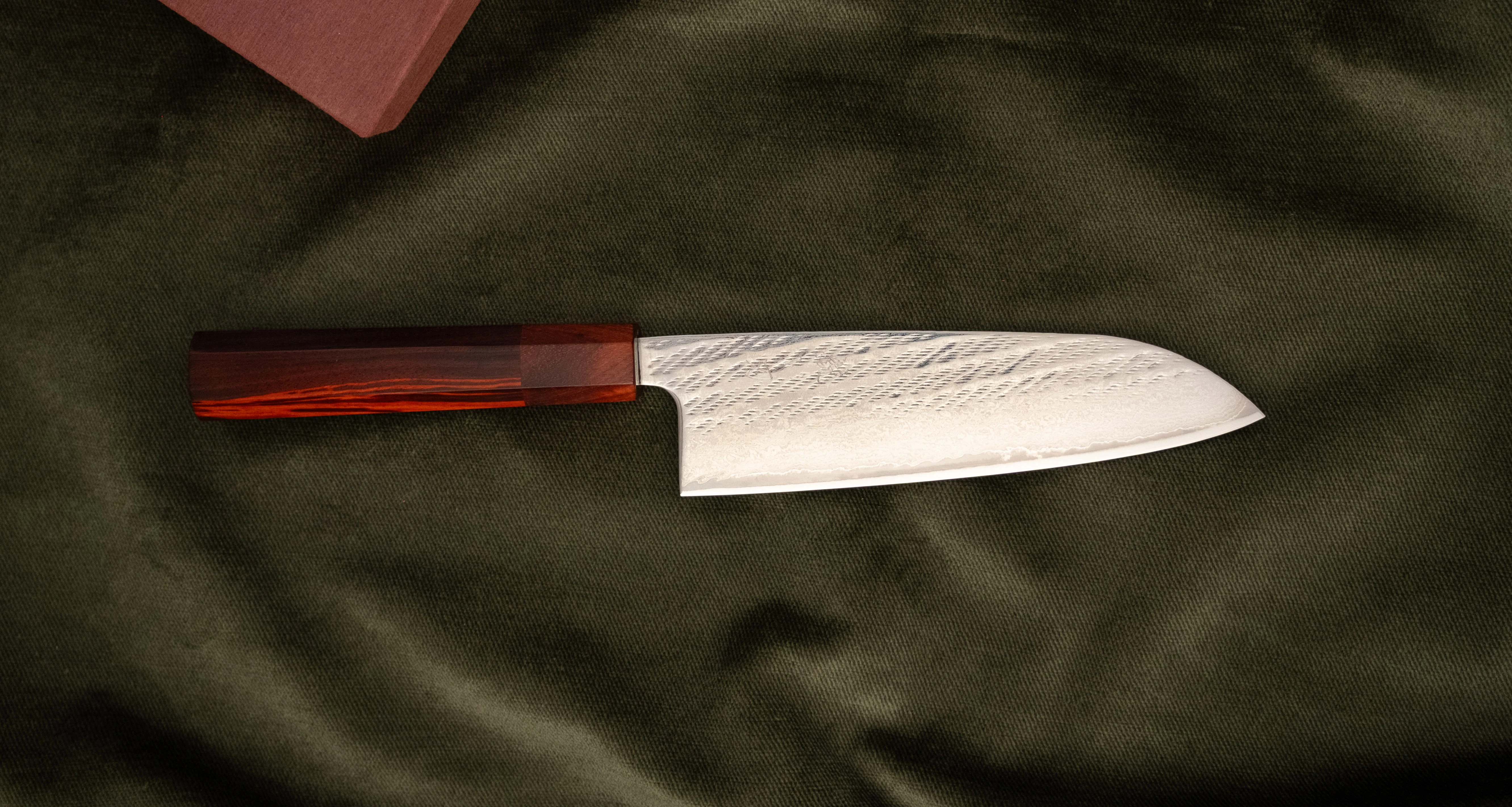
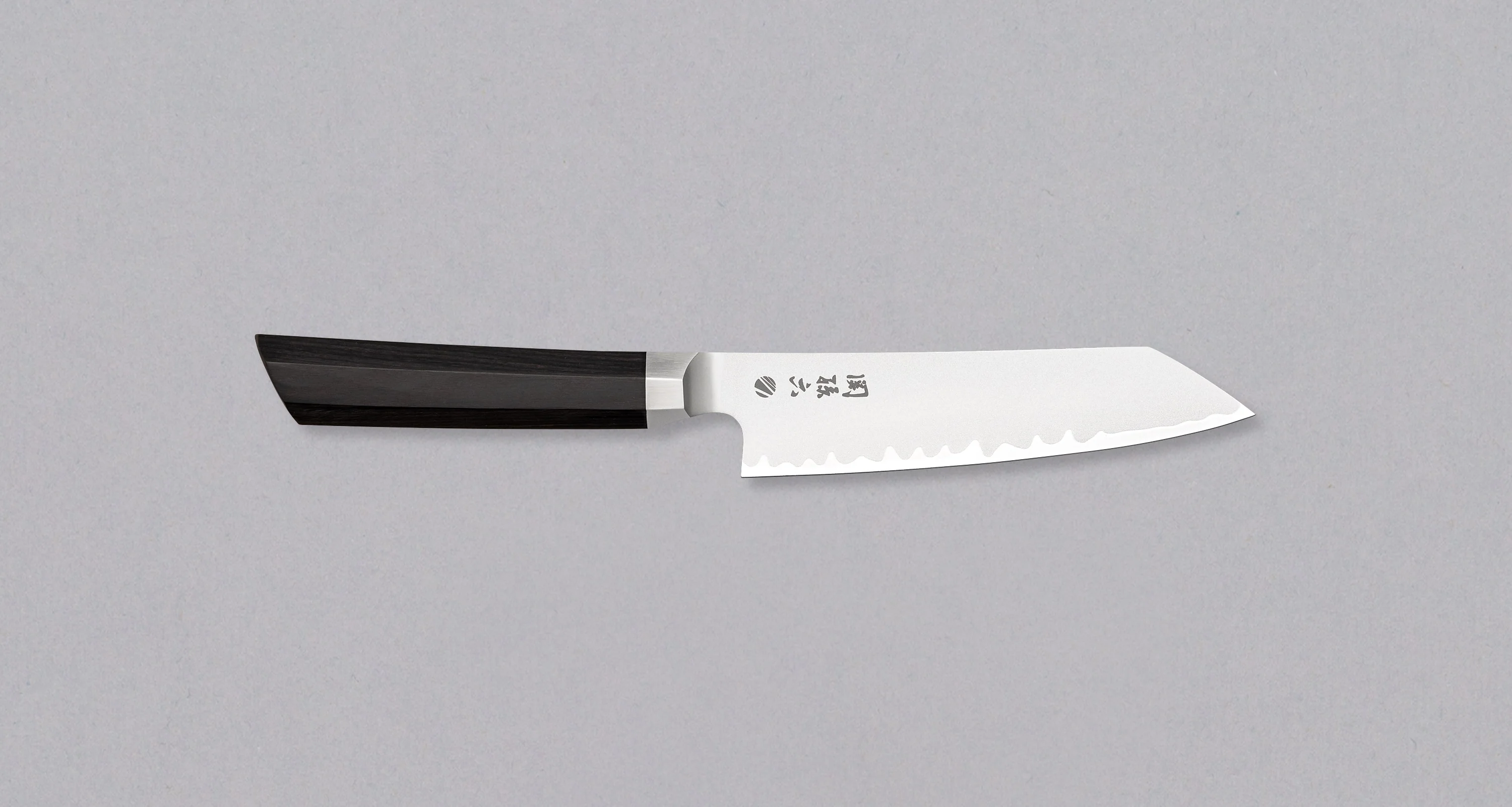
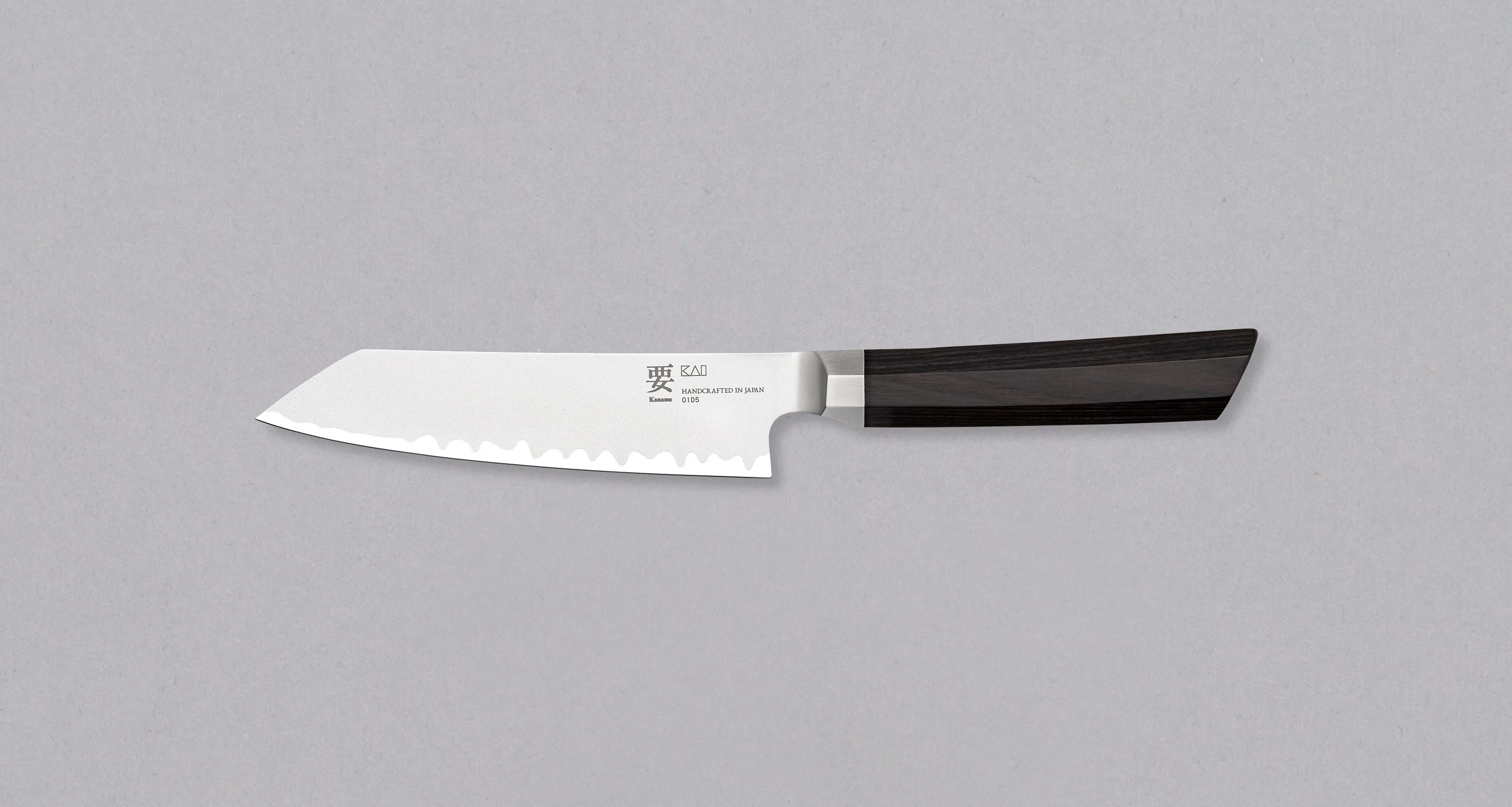
The Hokiyama Petty Ginsanko Nawame Damascus 135mm is a versatile, compact Japanese knife perfect for precision tasks. Smaller than standard Japanese knives, it excels at coring, peeling, and other detailed prep work that larger knives can’t handle comfortably. Think of it as your go-to prep knife—ideal for the fine work that sets up every meal.
! The knife handle is made from dark red sandalwood (camwood), a dense and highly textured wood with natural color variation. Each piece is unique—shades range from deep red to vivid red—meaning every knife is a one-of-a-kind, individual piece.
BLADE SHAPE:
A petty knife is a multi-purpose knife that is smaller in size than other Japanese knives, so it also allows for in-hand work such as coring and peeling, as well as other smaller tasks for which larger knives are deemed unwieldy. It is seen as one of the most important knives to have in the kitchen, coming second only to gyuto (the Japanese version of the Western chef’s knife).
The reason for its popularity lies in its small size and sturdy spine—it can handle most small and intricate tasks that other knives are too big or fragile for, including in-hand work such as peeling, or cutting meat at the tendons. Its smallness is also the source of its name petty, which comes from the French word “petit”.
STEEL:
Hitachi's Silver III steel, also named Ginsan steel or Ginsanko, was hardened to around 63 HRC. Due to its high content of Chromium (Cr), Ginsan steel will resist corrosion very well. Despite it being a stainless steel, it feels and behaves very similarly to carbon steels, due to its extremely pure composition.
LAMINATION:
The hard Ginsanko steel core is clad in softer stainless steel using the traditional san-mai technique. This method enhances durability and protects the core from external stresses and chipping.
BLADE FINISH:
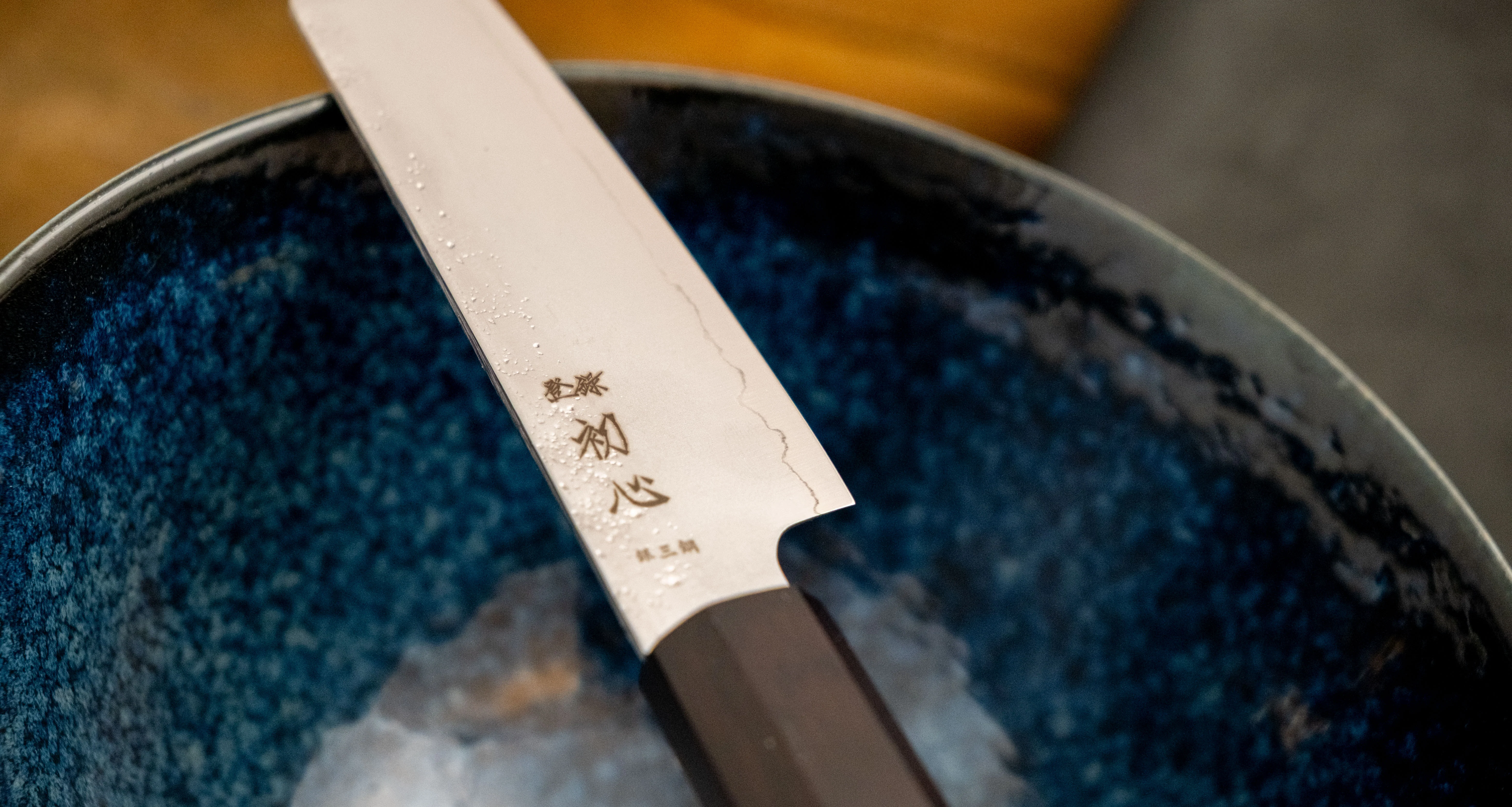
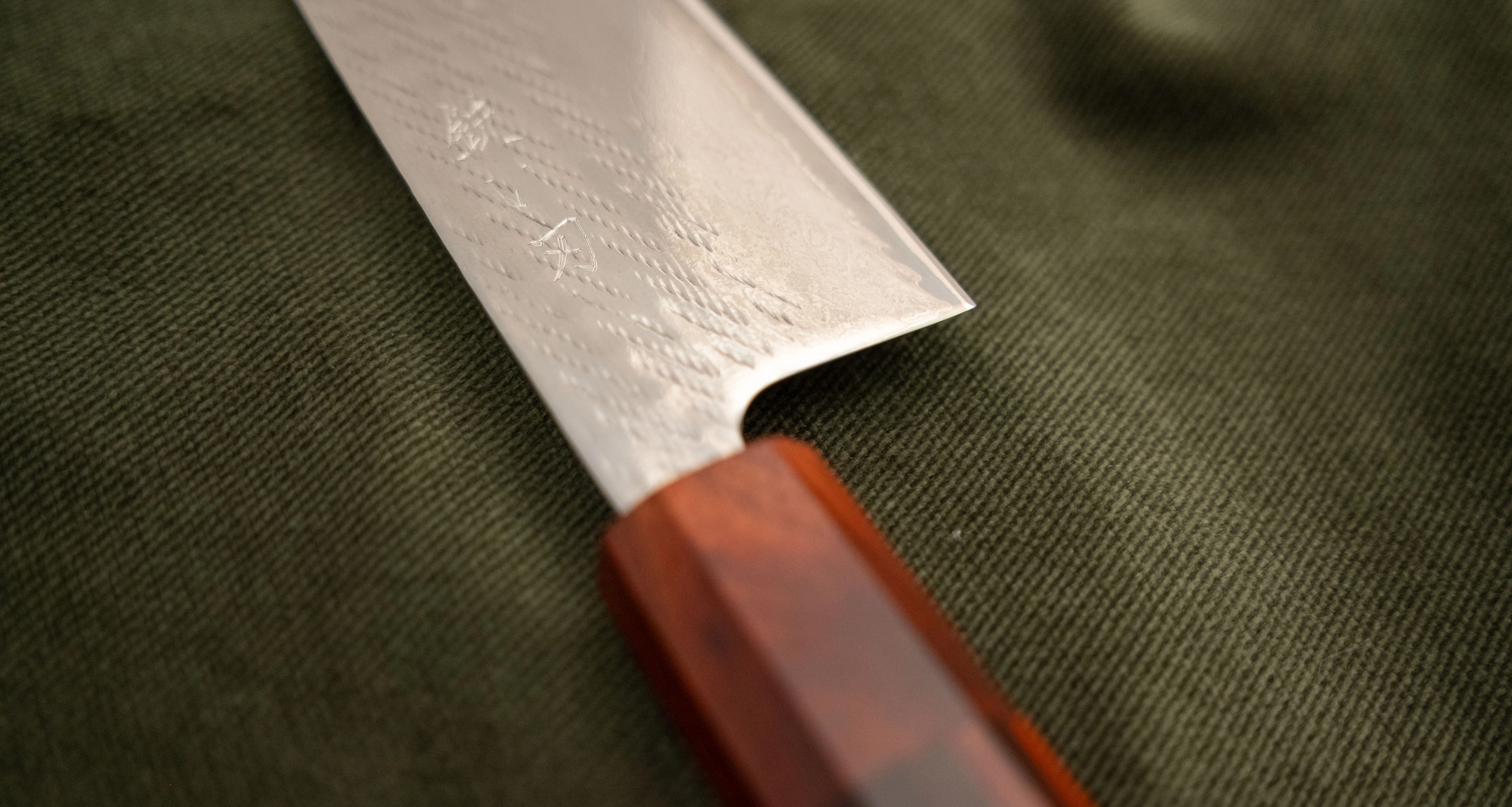
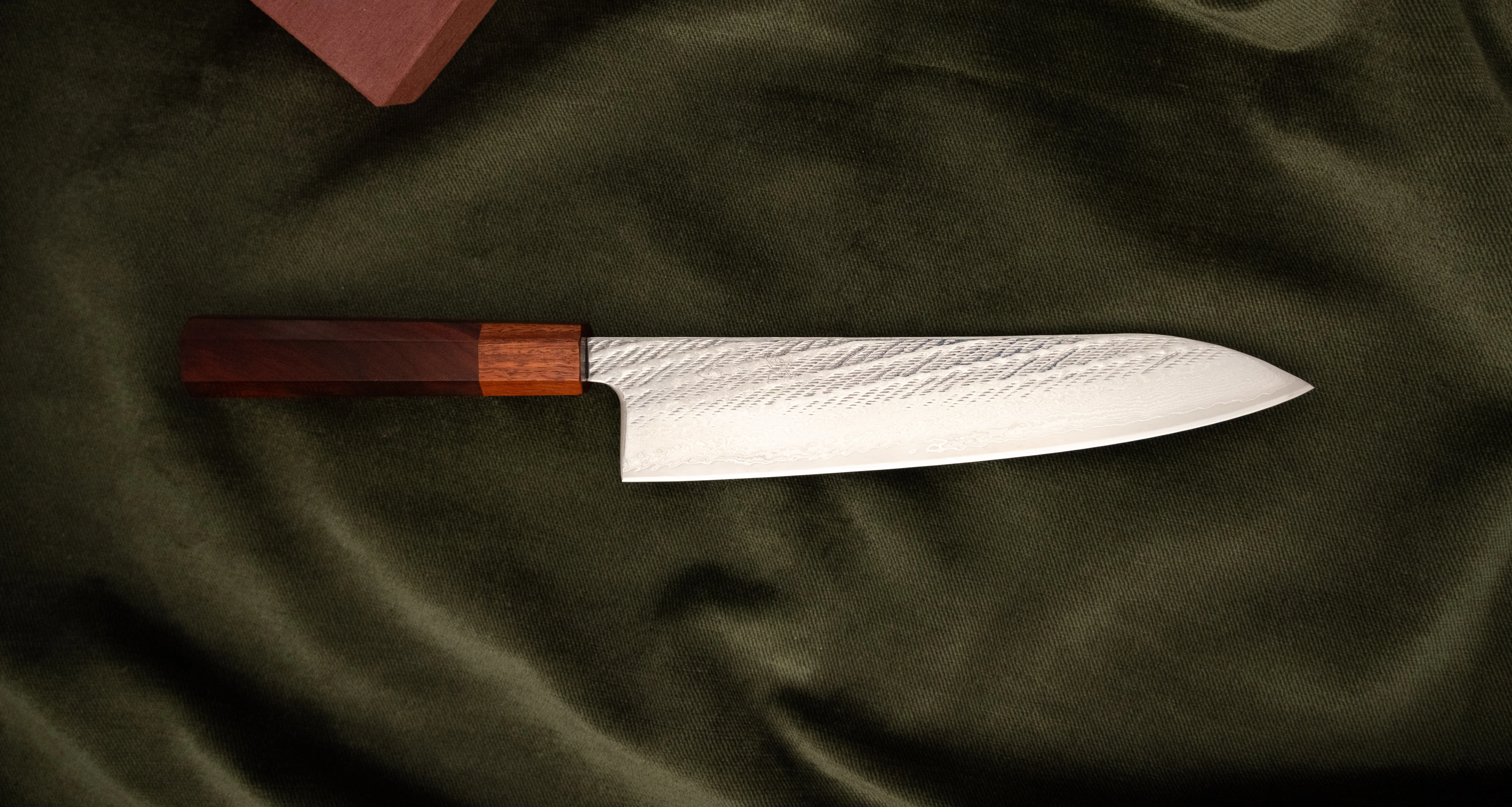
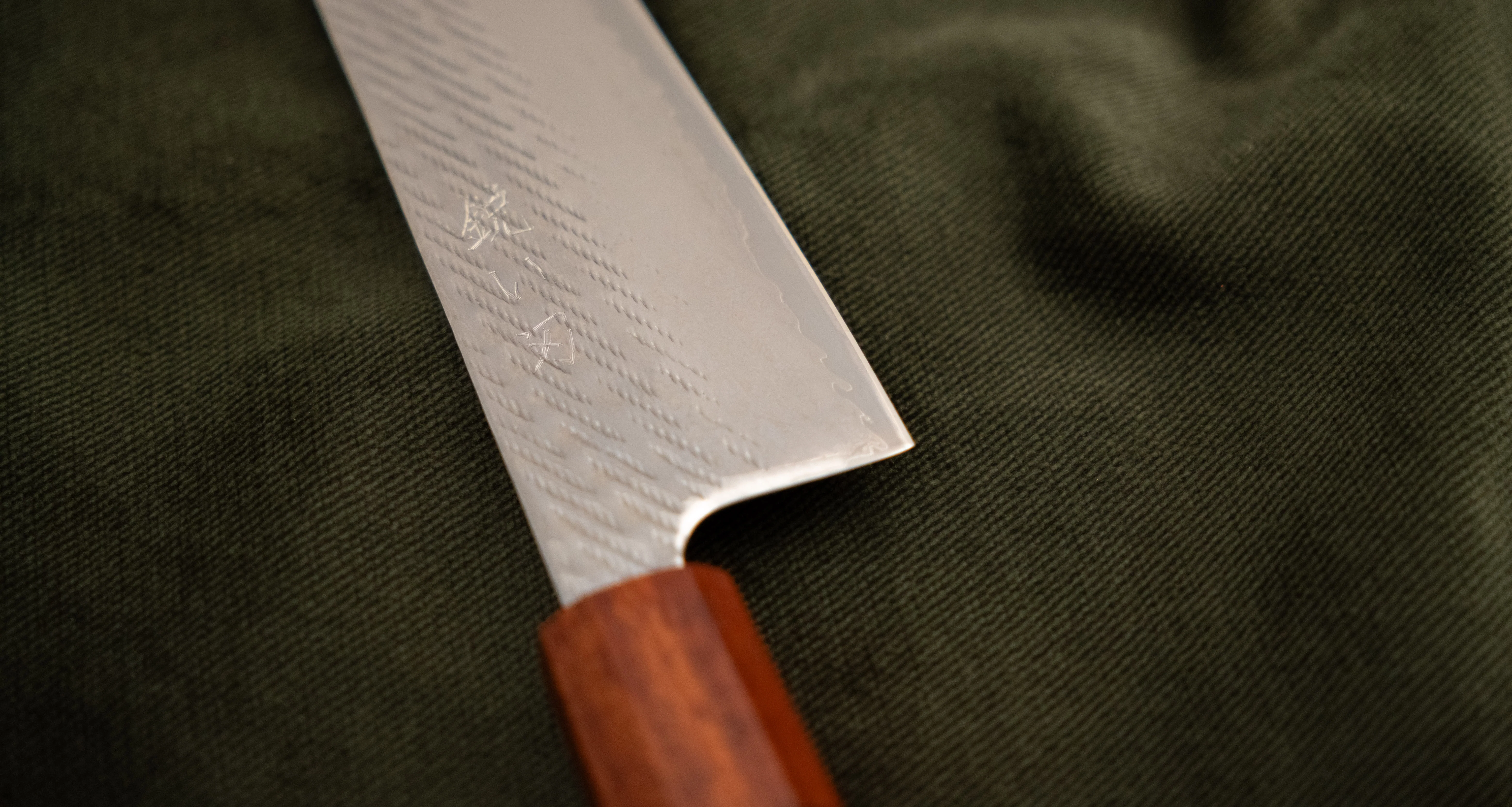
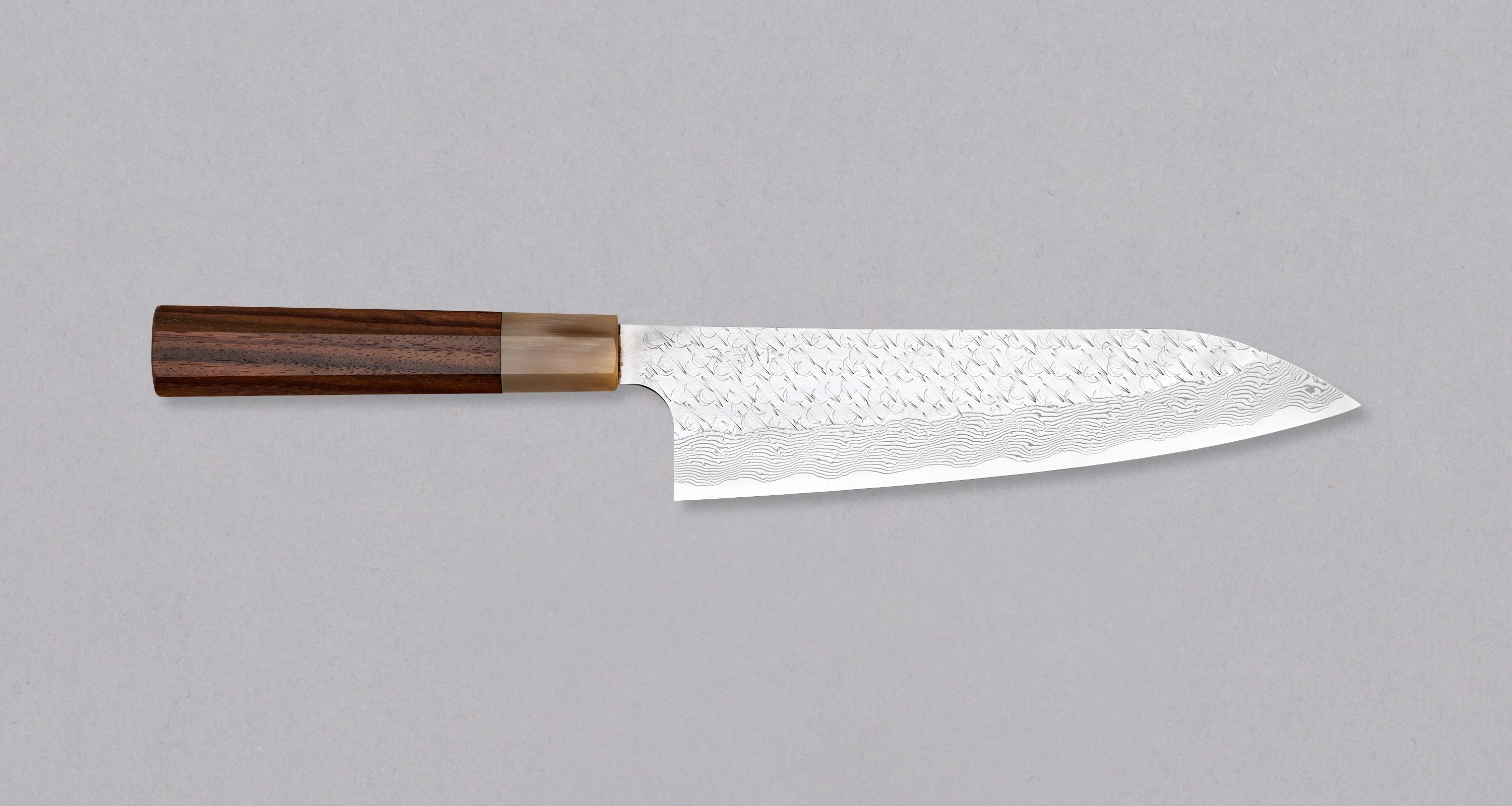
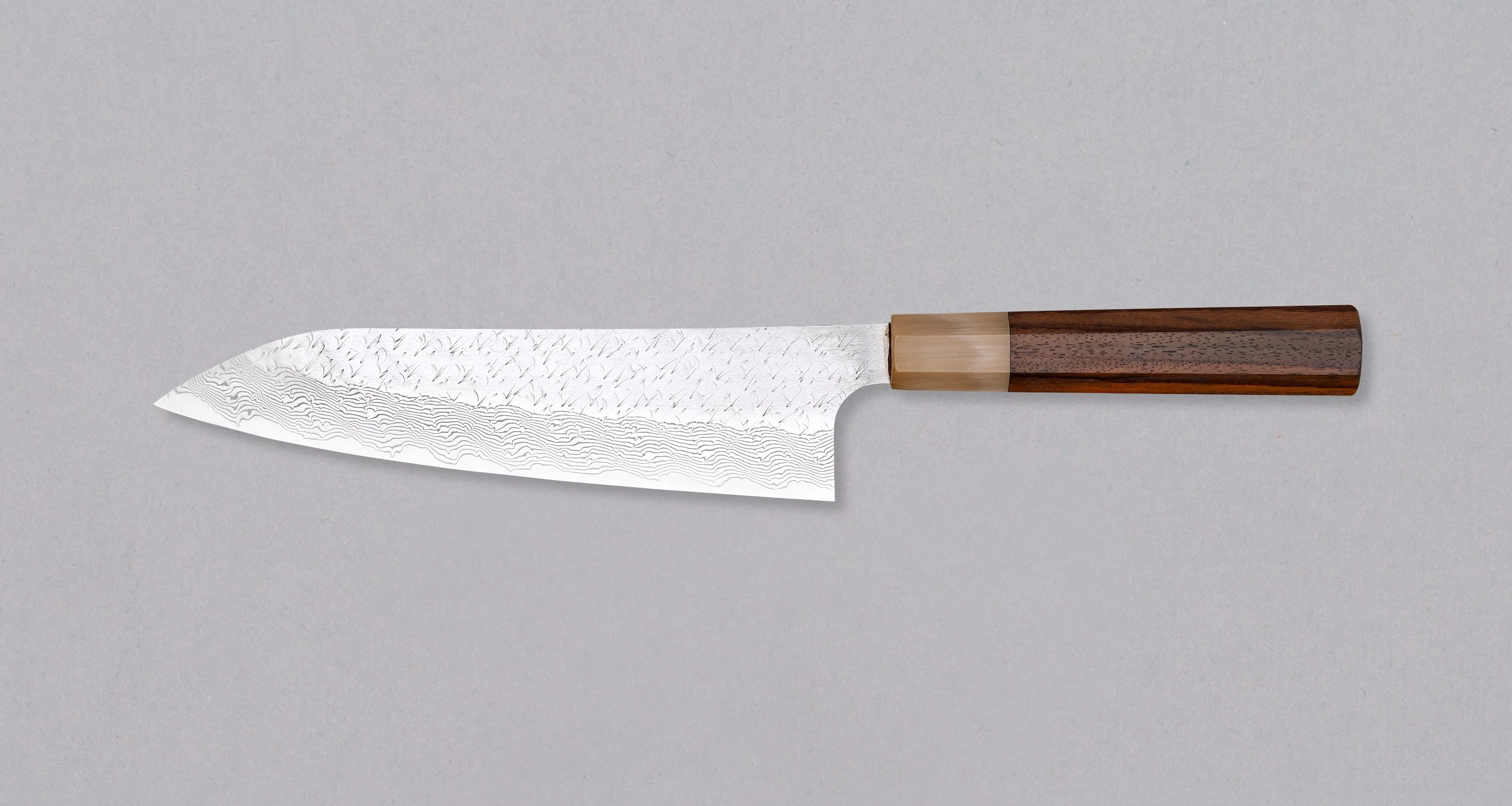
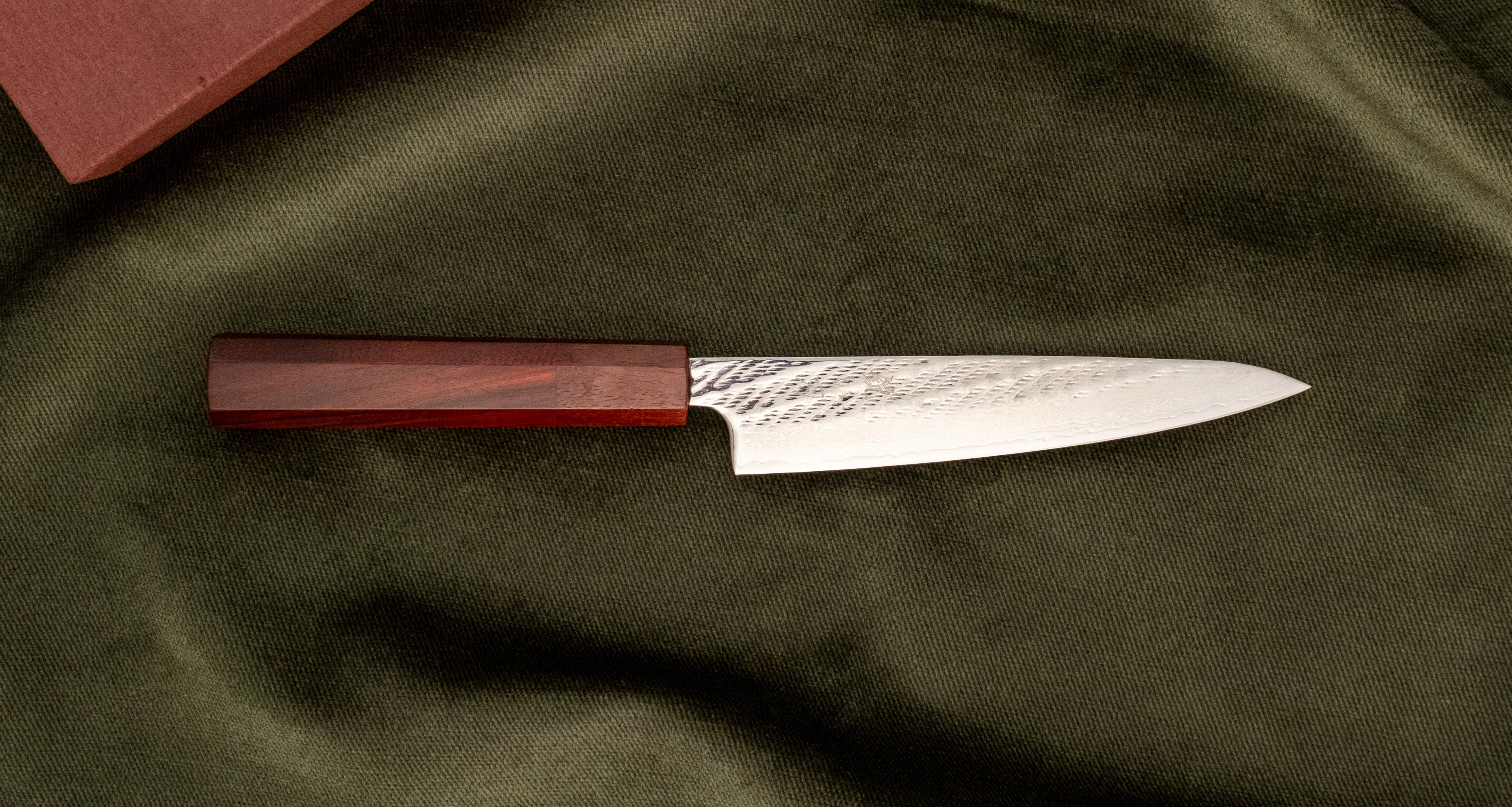
The blade combines a refined damascus pattern with a hand-forged tsuchime finish, which gives the knife a distinctive texture and depth. The tsuchime pattern on the blade is designed in a rope or sailor's knot motif, reminiscent of intertwined threads.
The term nawame (縄目) literally means “rope mark” or “rope imprint” in Japanese. In the context of knives, it refers to a pattern that resembles twisted rope or knots, traditionally associated with maritime and craft symbolism.
The nawame pattern is not only a visual accent but also a functional finish, as it reduces food adhesion and improves the cutting process. The texture gives the blade a distinctive character and subtle three-dimensionality.
HANDLE:
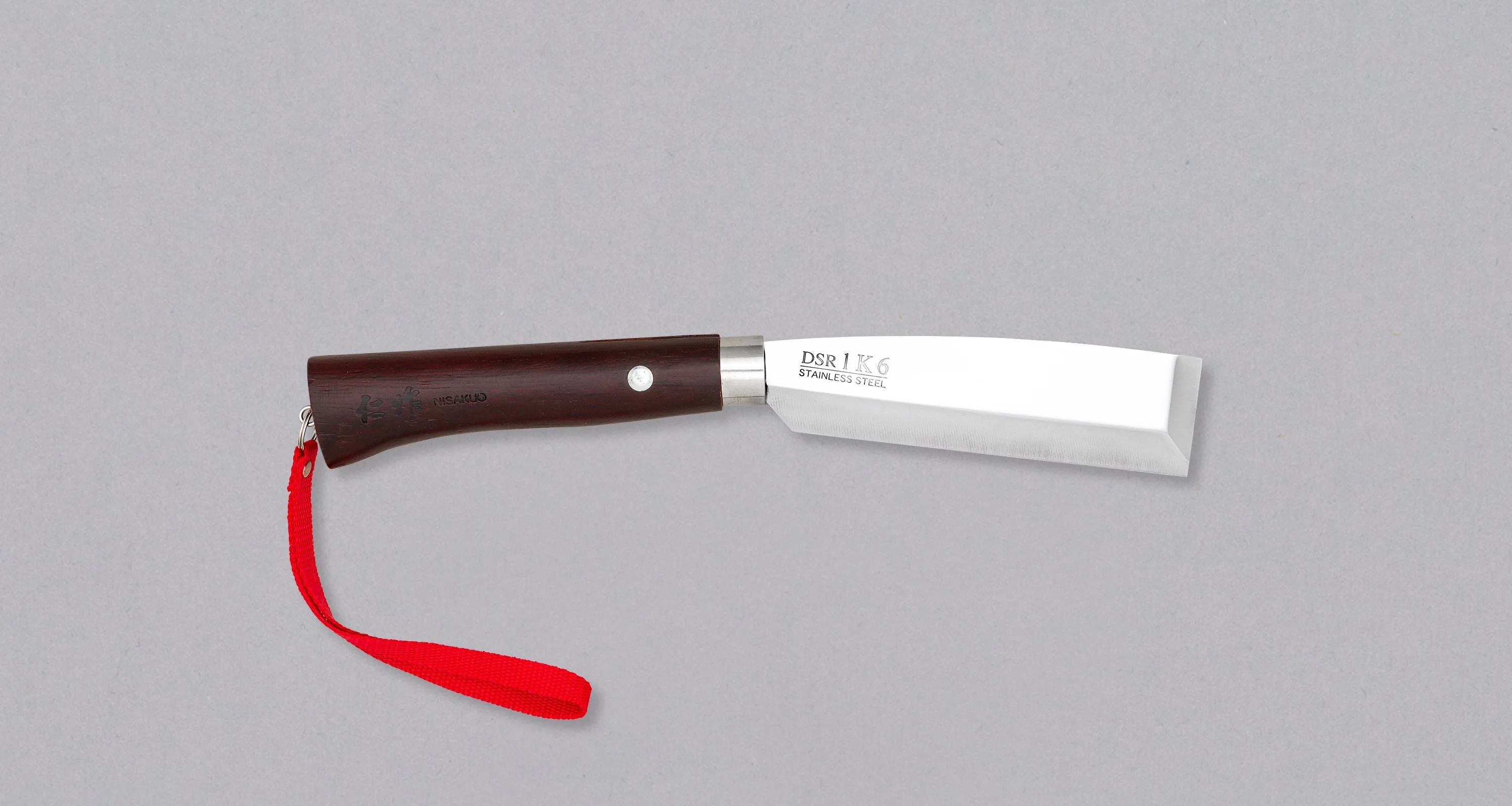
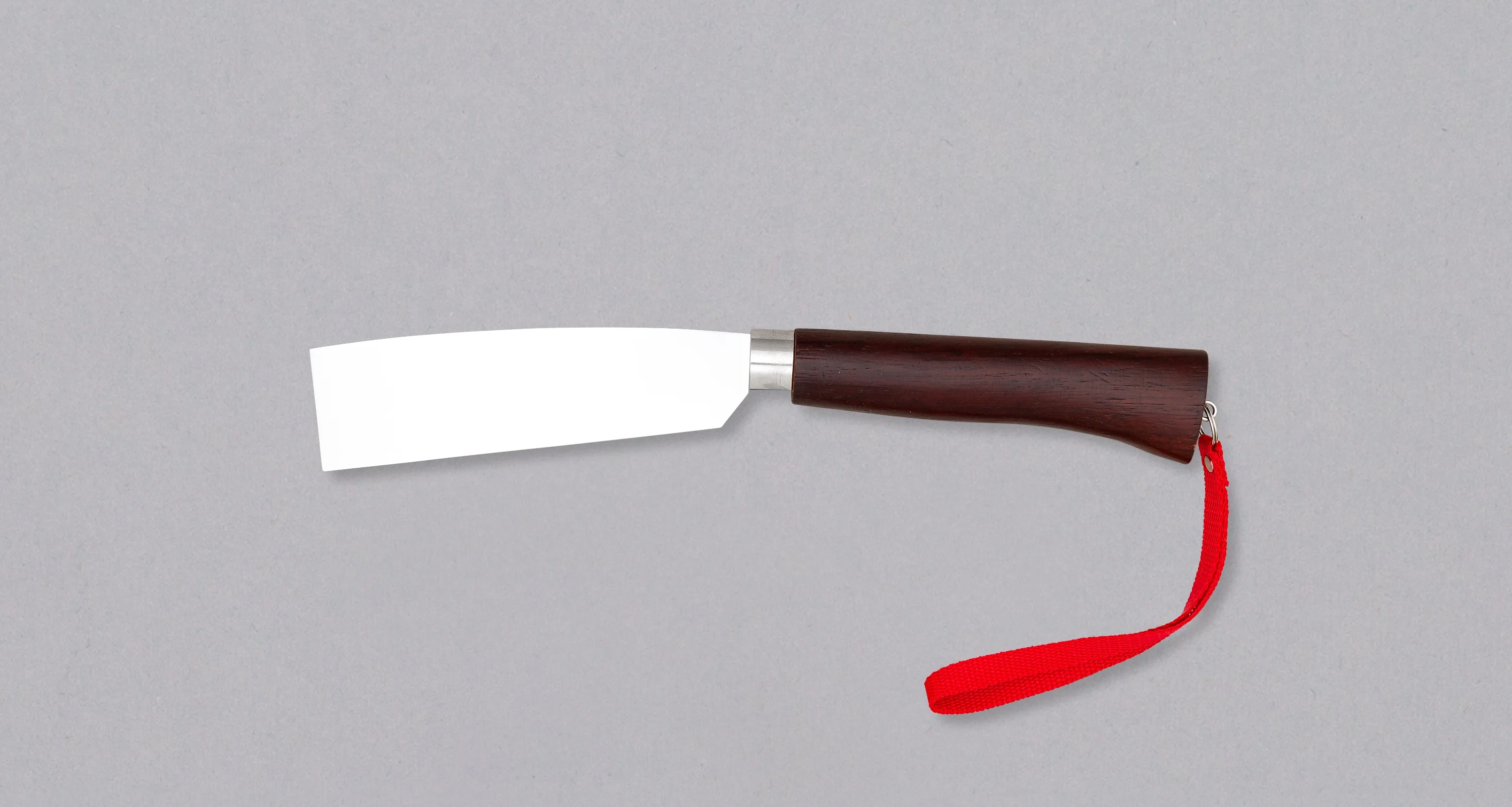
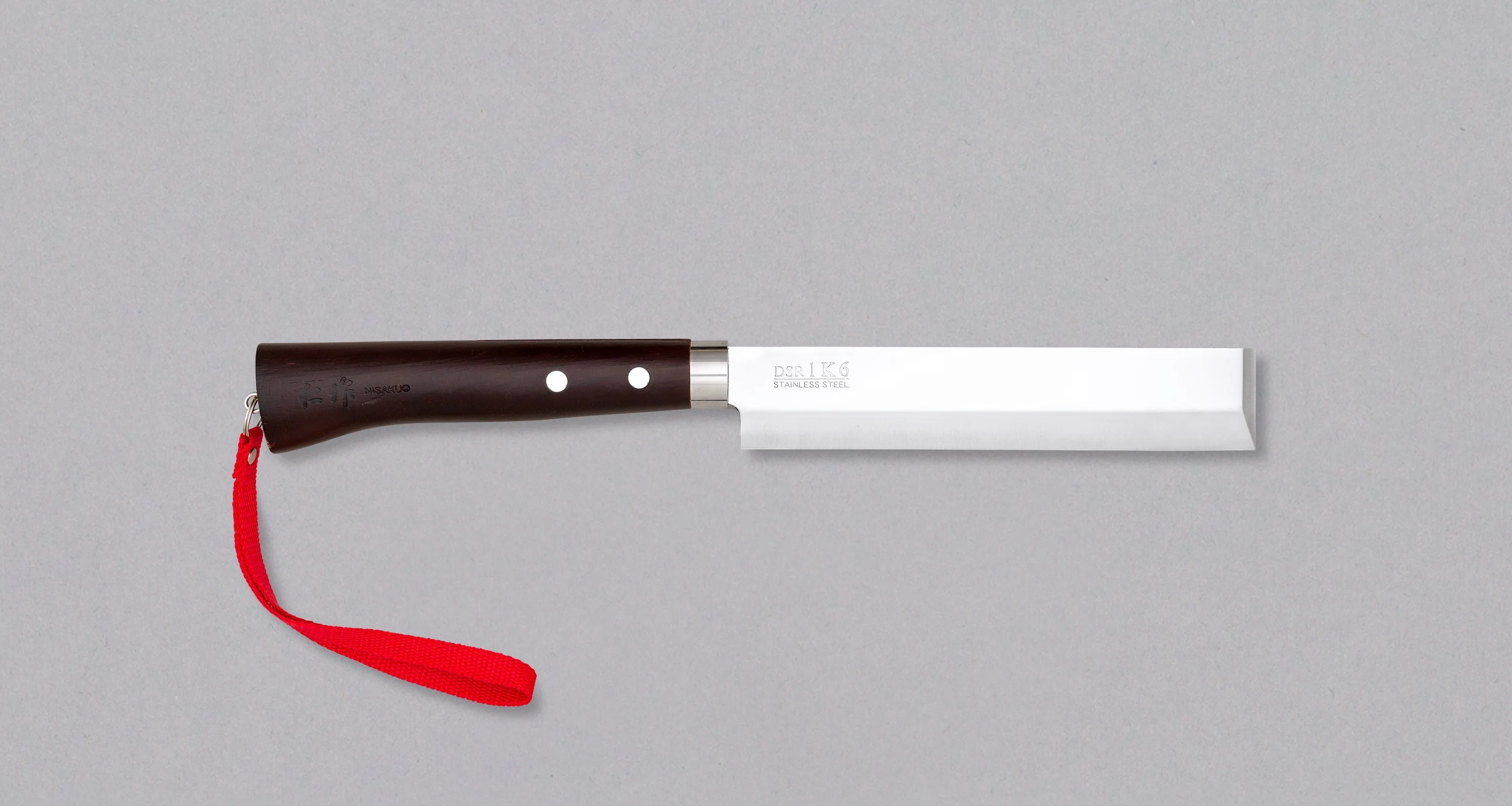
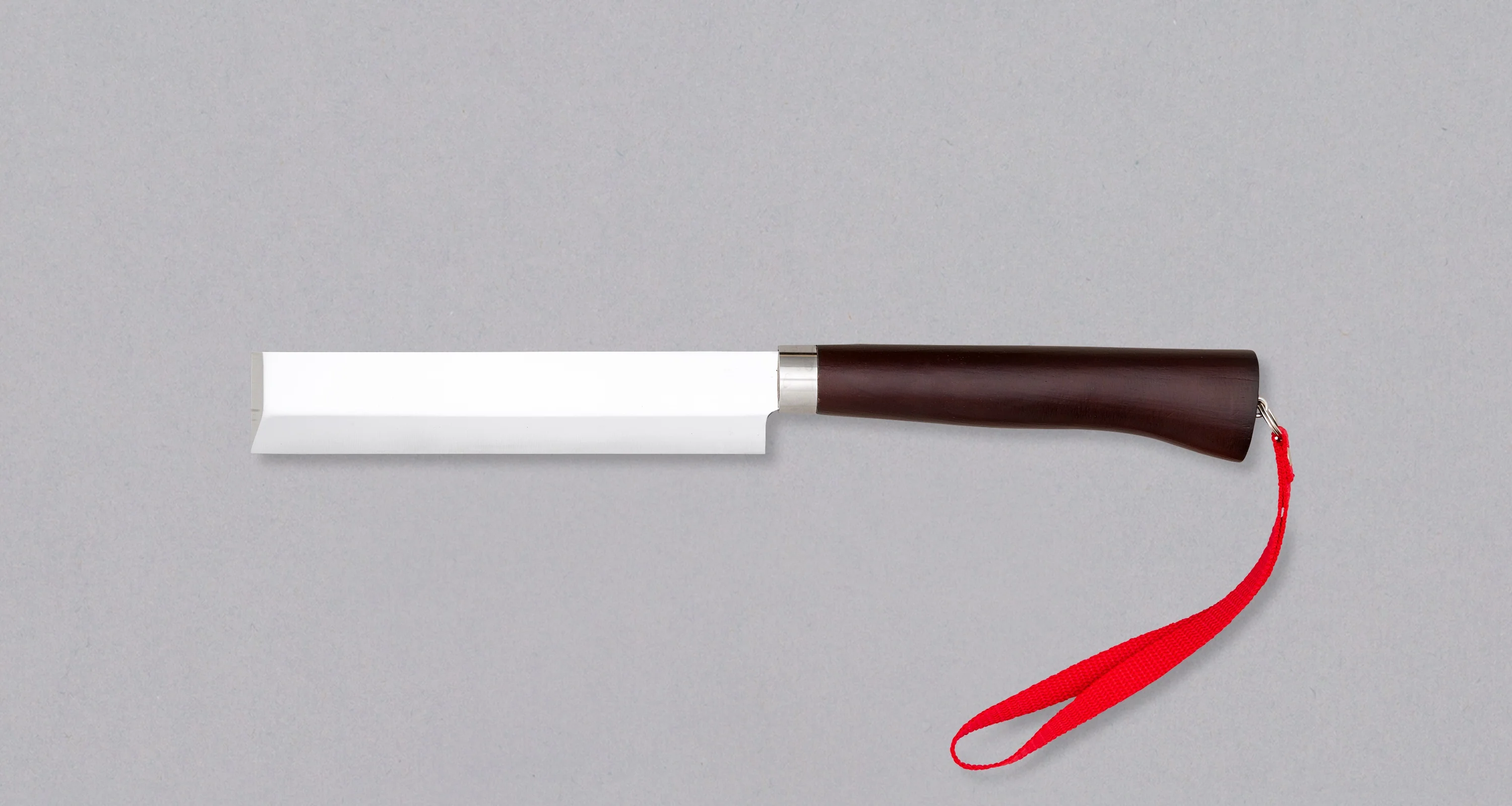
The kaotan handle is made from dark red sandalwood (camwood), a dense hardwood with a natural red tone and even structure. Traditionally used for tools and handles, it is valued for its durability, stability, and comfortable feel in hand. The ferrule is made from rosewood. The octagon shape of the handle provides a comfortable and secure grip, allowing for precise control during use.
Due to the pronounced texture and rich color variation of the wood, each handle is unique and may differ slightly from the product image. This natural diversity is what gives each knife its distinctive, individual character.
BLACKSMITH:
Hokiyama Hamono is a leading smithy in Kochi Prefecture in Japan. They have recently celebrated their 100-year anniversary, founded in 1919. Hokiyama Hamono is known for their quality as they follow the tradition of hand-made blades that has been around for over 800 years. They retain the handiwork and traditional craftsmanship that is passed down from generation to generation, while striving for the ever-new knowledge and innovation.
![Hokiyama Ginsanko Nawame Damascus [Kaotan/Rosewood]](https://cdn.shopify.com/s/files/1/2077/0683/files/Hokiyama_Ginsanko_Nawame_Damascus_-_Kaotan-Rosewood__0S0107401967_0S0108091966_0S0103121968-1.jpg?v=1771840146)
The Hokiyama Petty Ginsanko Nawame Damascus 135mm is a versatile, compact Japanese knife perfect for precision tasks. Smaller than standard Japanese knives, it excels at coring, peeling, and other detailed prep work that larger knives can’t handle comfortably. Think of it as your go-to prep knife—ideal for the fine work that sets up every meal.
! The knife handle is made from dark red sandalwood (camwood), a dense and highly textured wood with natural color variation. Each piece is unique—shades range from deep red to vivid red—meaning every knife is a one-of-a-kind, individual piece.
BLADE SHAPE:
A petty knife is a multi-purpose knife that is smaller in size than other Japanese knives, so it also allows for in-hand work such as coring and peeling, as well as other smaller tasks for which larger knives are deemed unwieldy. It is seen as one of the most important knives to have in the kitchen, coming second only to gyuto (the Japanese version of the Western chef’s knife).
The reason for its popularity lies in its small size and sturdy spine—it can handle most small and intricate tasks that other knives are too big or fragile for, including in-hand work such as peeling, or cutting meat at the tendons. Its smallness is also the source of its name petty, which comes from the French word “petit”.
STEEL:
Hitachi's Silver III steel, also named Ginsan steel or Ginsanko, was hardened to around 63 HRC. Due to its high content of Chromium (Cr), Ginsan steel will resist corrosion very well. Despite it being a stainless steel, it feels and behaves very similarly to carbon steels, due to its extremely pure composition.
LAMINATION:
The hard Ginsanko steel core is clad in softer stainless steel using the traditional san-mai technique. This method enhances durability and protects the core from external stresses and chipping.
BLADE FINISH:
The blade combines a refined damascus pattern with a hand-forged tsuchime finish, which gives the knife a distinctive texture and depth. The tsuchime pattern on the blade is designed in a rope or sailor's knot motif, reminiscent of intertwined threads.
The term nawame (縄目) literally means “rope mark” or “rope imprint” in Japanese. In the context of knives, it refers to a pattern that resembles twisted rope or knots, traditionally associated with maritime and craft symbolism.
The nawame pattern is not only a visual accent but also a functional finish, as it reduces food adhesion and improves the cutting process. The texture gives the blade a distinctive character and subtle three-dimensionality.
HANDLE:
The kaotan handle is made from dark red sandalwood (camwood), a dense hardwood with a natural red tone and even structure. Traditionally used for tools and handles, it is valued for its durability, stability, and comfortable feel in hand. The ferrule is made from rosewood. The octagon shape of the handle provides a comfortable and secure grip, allowing for precise control during use.
Due to the pronounced texture and rich color variation of the wood, each handle is unique and may differ slightly from the product image. This natural diversity is what gives each knife its distinctive, individual character.
BLACKSMITH:
Hokiyama Hamono is a leading smithy in Kochi Prefecture in Japan. They have recently celebrated their 100-year anniversary, founded in 1919. Hokiyama Hamono is known for their quality as they follow the tradition of hand-made blades that has been around for over 800 years. They retain the handiwork and traditional craftsmanship that is passed down from generation to generation, while striving for the ever-new knowledge and innovation.
Original: $185.00
-70%$185.00
$55.50Description
The Hokiyama Petty Ginsanko Nawame Damascus 135mm is a versatile, compact Japanese knife perfect for precision tasks. Smaller than standard Japanese knives, it excels at coring, peeling, and other detailed prep work that larger knives can’t handle comfortably. Think of it as your go-to prep knife—ideal for the fine work that sets up every meal.
! The knife handle is made from dark red sandalwood (camwood), a dense and highly textured wood with natural color variation. Each piece is unique—shades range from deep red to vivid red—meaning every knife is a one-of-a-kind, individual piece.
BLADE SHAPE:
A petty knife is a multi-purpose knife that is smaller in size than other Japanese knives, so it also allows for in-hand work such as coring and peeling, as well as other smaller tasks for which larger knives are deemed unwieldy. It is seen as one of the most important knives to have in the kitchen, coming second only to gyuto (the Japanese version of the Western chef’s knife).
The reason for its popularity lies in its small size and sturdy spine—it can handle most small and intricate tasks that other knives are too big or fragile for, including in-hand work such as peeling, or cutting meat at the tendons. Its smallness is also the source of its name petty, which comes from the French word “petit”.
STEEL:
Hitachi's Silver III steel, also named Ginsan steel or Ginsanko, was hardened to around 63 HRC. Due to its high content of Chromium (Cr), Ginsan steel will resist corrosion very well. Despite it being a stainless steel, it feels and behaves very similarly to carbon steels, due to its extremely pure composition.
LAMINATION:
The hard Ginsanko steel core is clad in softer stainless steel using the traditional san-mai technique. This method enhances durability and protects the core from external stresses and chipping.
BLADE FINISH:
The blade combines a refined damascus pattern with a hand-forged tsuchime finish, which gives the knife a distinctive texture and depth. The tsuchime pattern on the blade is designed in a rope or sailor's knot motif, reminiscent of intertwined threads.
The term nawame (縄目) literally means “rope mark” or “rope imprint” in Japanese. In the context of knives, it refers to a pattern that resembles twisted rope or knots, traditionally associated with maritime and craft symbolism.
The nawame pattern is not only a visual accent but also a functional finish, as it reduces food adhesion and improves the cutting process. The texture gives the blade a distinctive character and subtle three-dimensionality.
HANDLE:
The kaotan handle is made from dark red sandalwood (camwood), a dense hardwood with a natural red tone and even structure. Traditionally used for tools and handles, it is valued for its durability, stability, and comfortable feel in hand. The ferrule is made from rosewood. The octagon shape of the handle provides a comfortable and secure grip, allowing for precise control during use.
Due to the pronounced texture and rich color variation of the wood, each handle is unique and may differ slightly from the product image. This natural diversity is what gives each knife its distinctive, individual character.
BLACKSMITH:
Hokiyama Hamono is a leading smithy in Kochi Prefecture in Japan. They have recently celebrated their 100-year anniversary, founded in 1919. Hokiyama Hamono is known for their quality as they follow the tradition of hand-made blades that has been around for over 800 years. They retain the handiwork and traditional craftsmanship that is passed down from generation to generation, while striving for the ever-new knowledge and innovation.