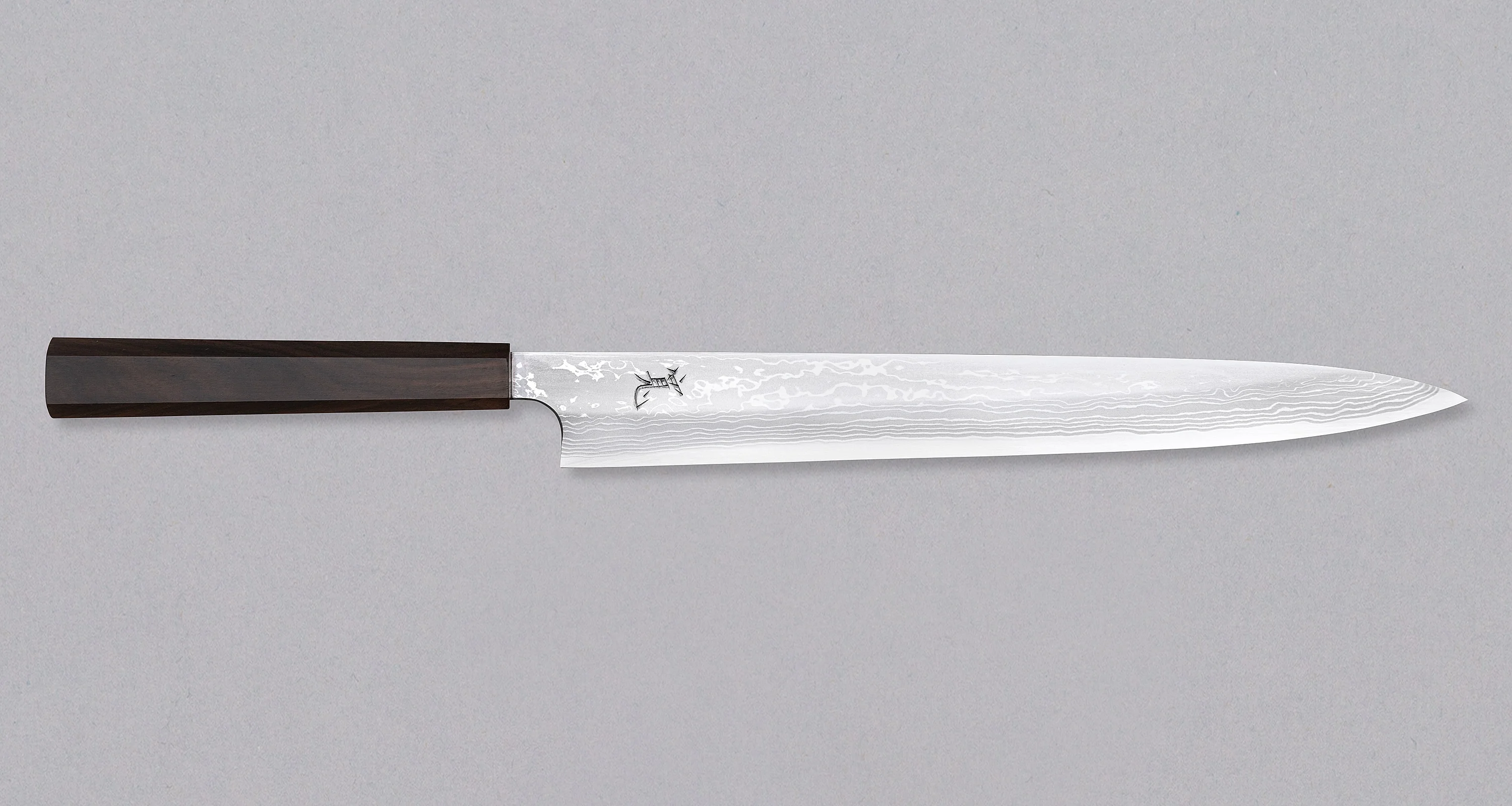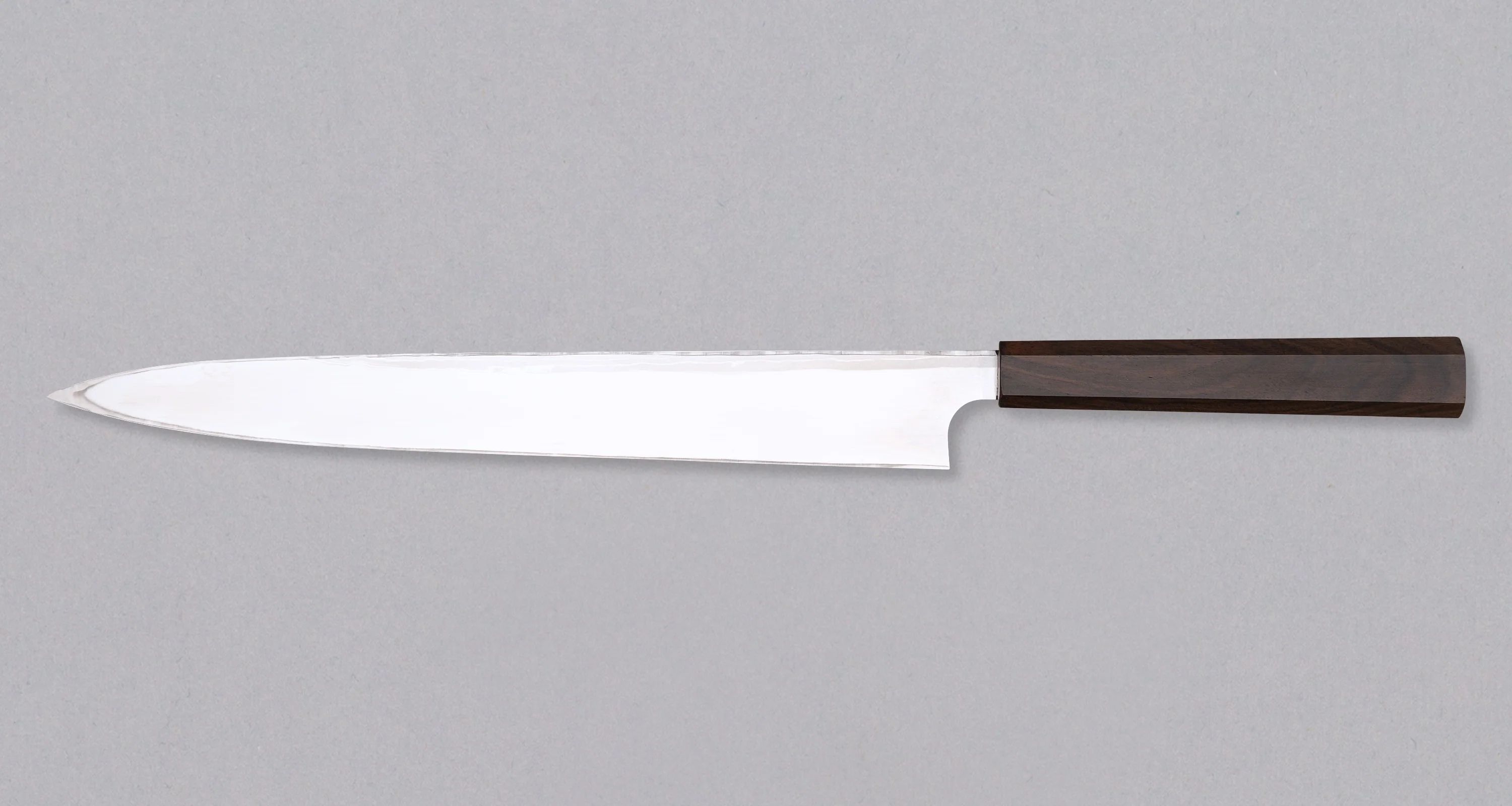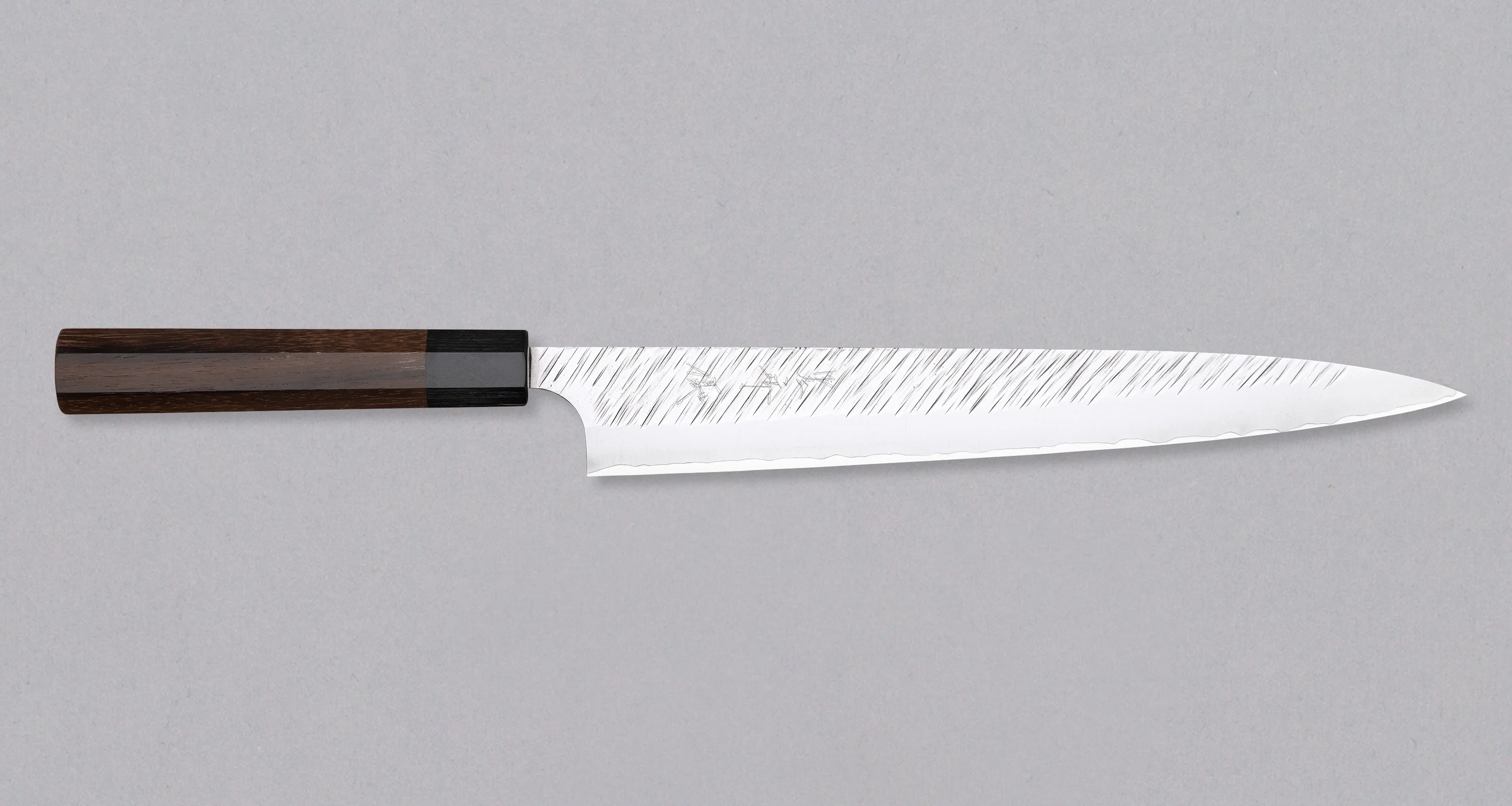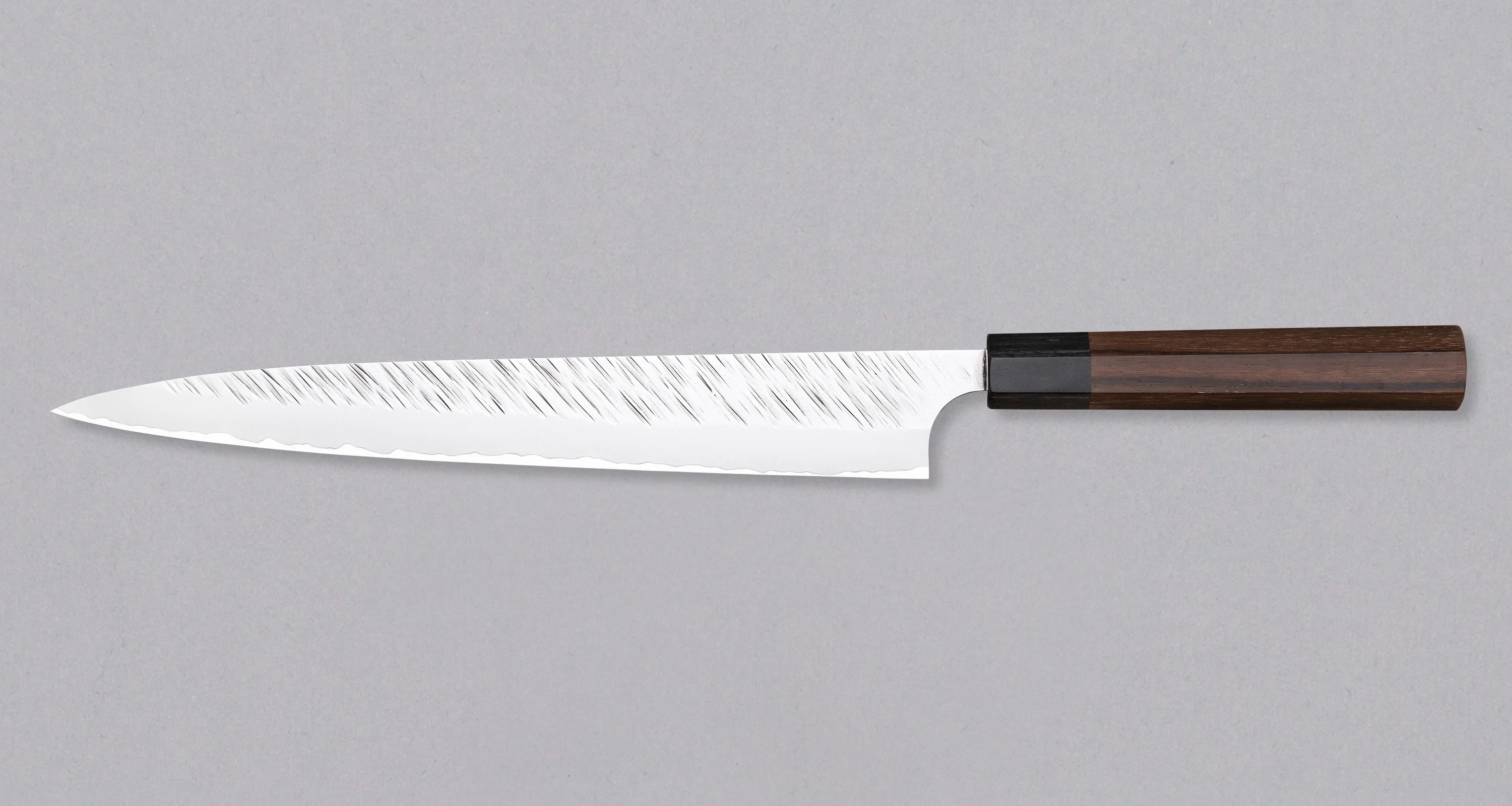
Yoshihiro Yanagiba Aogami #2 Damascus 240mm (9.5")
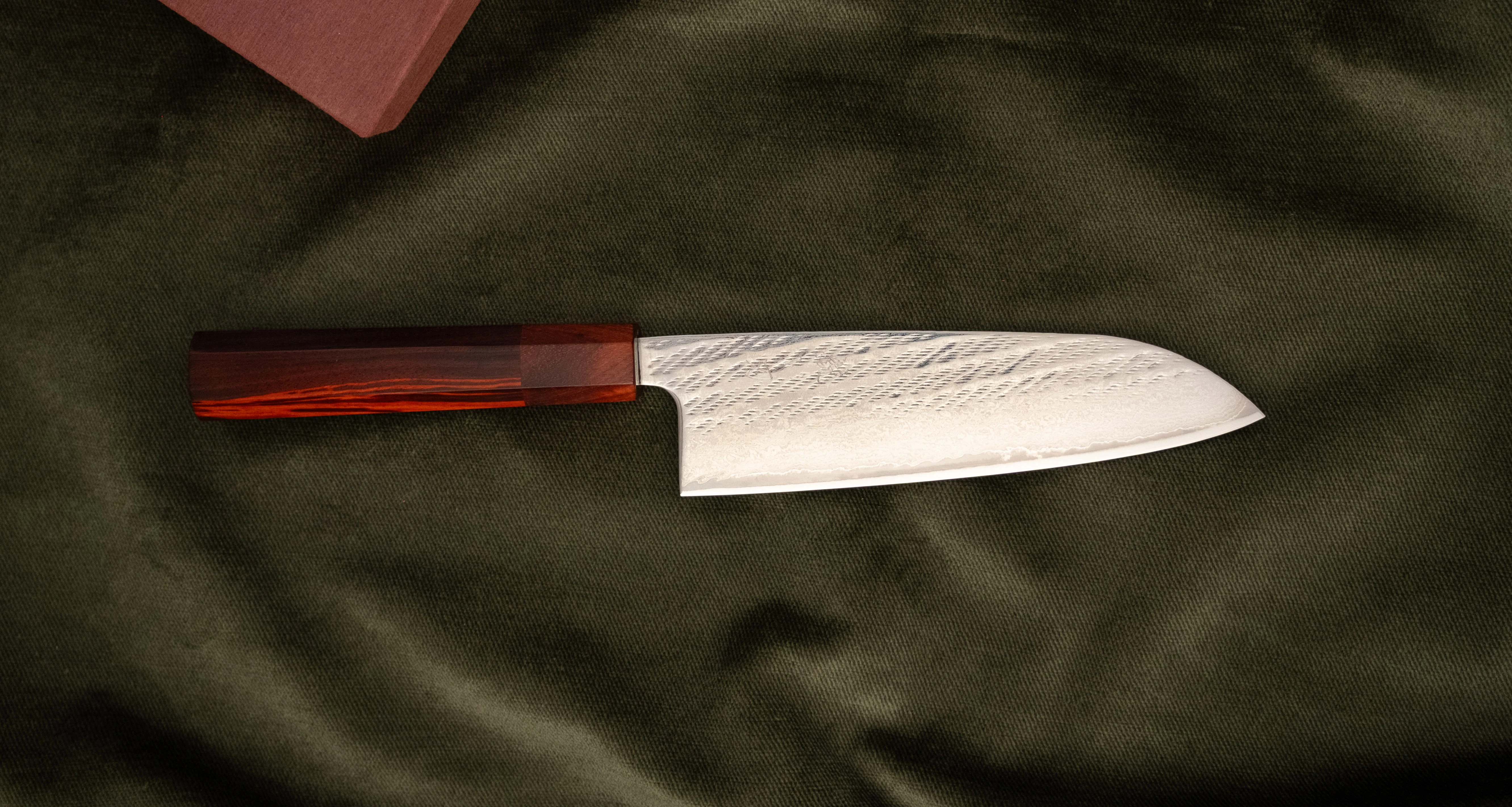
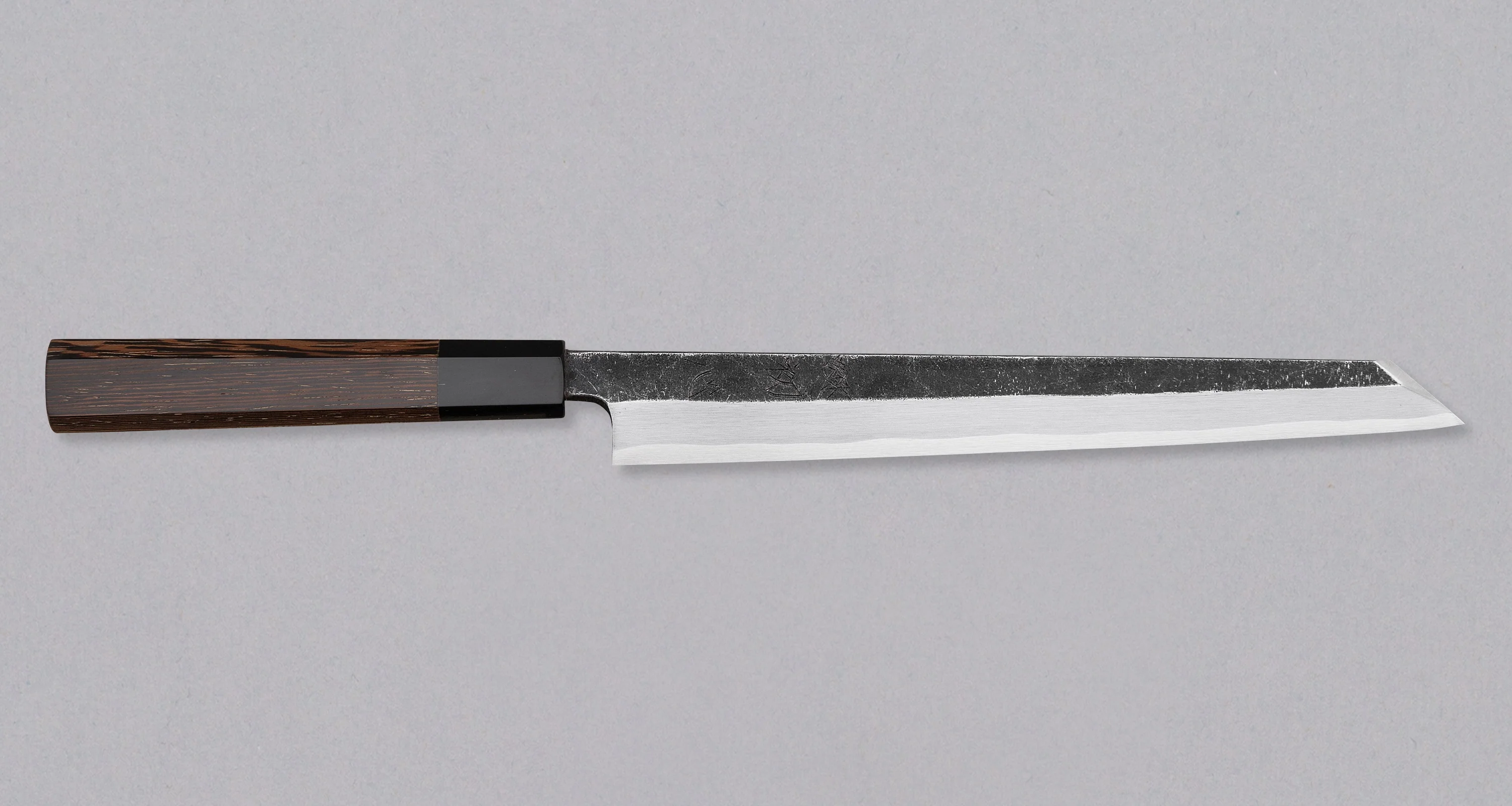
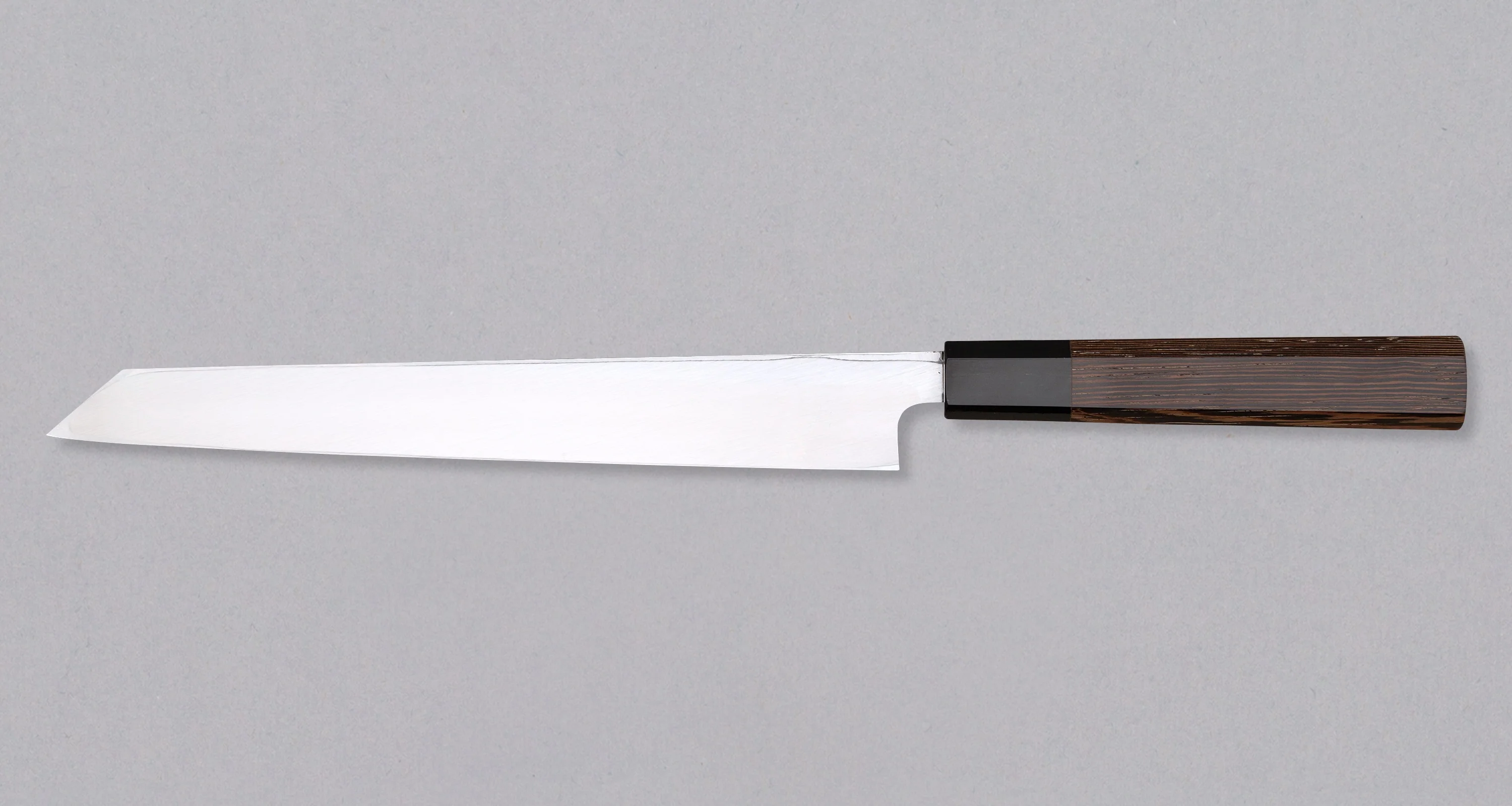
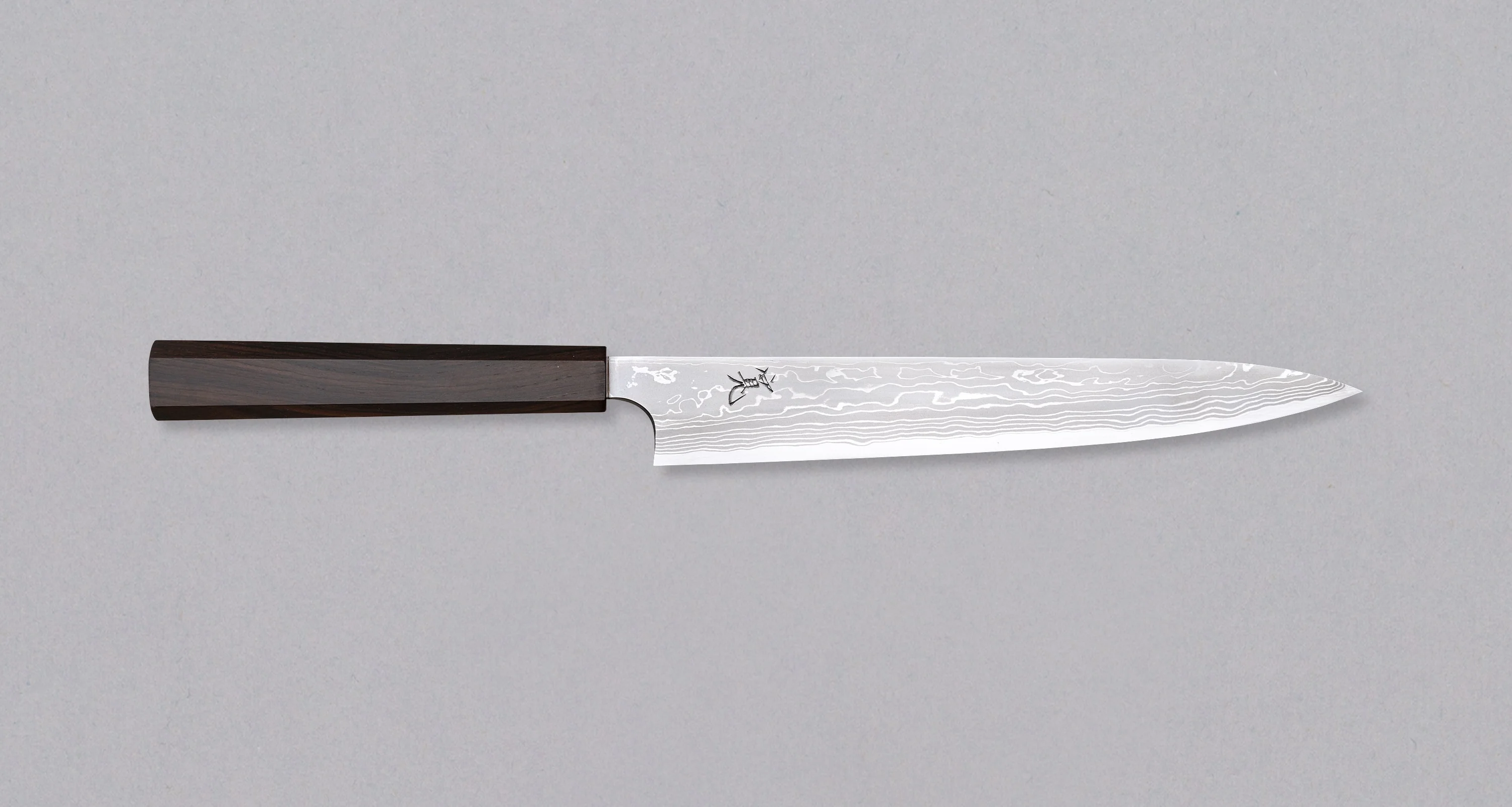
Yoshihiro Yanagiba Aogami #2 Damascus 240mm (9.5") is a traditional single-bevel Japanese knife used for preparing fish, especially sashimi and nigiri sushi. Its length allows the user to slice different types of protein in one single pulling motion, that will – together with the razor-sharp single bevel blade – birth smooth, shiny cuts.
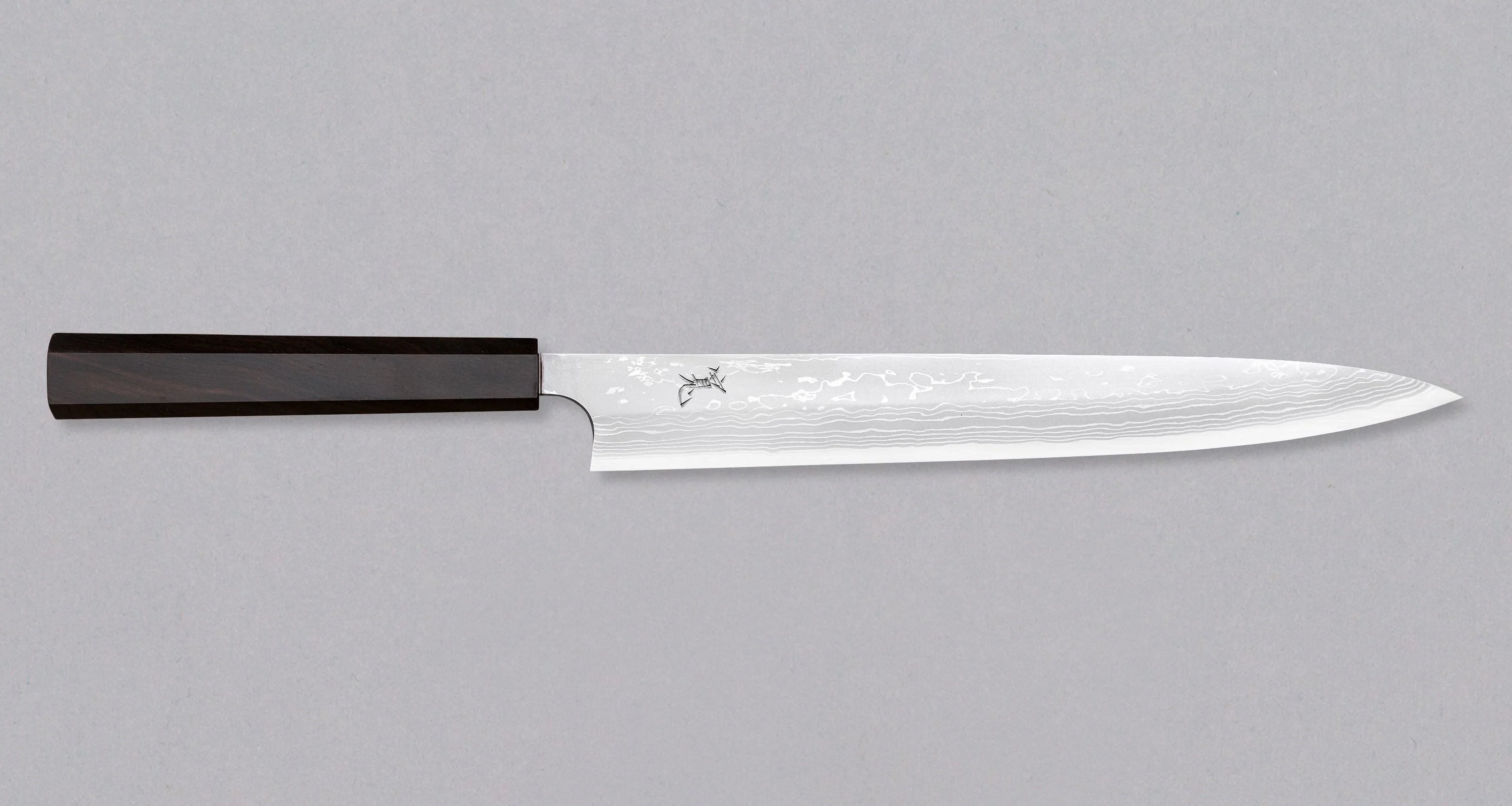
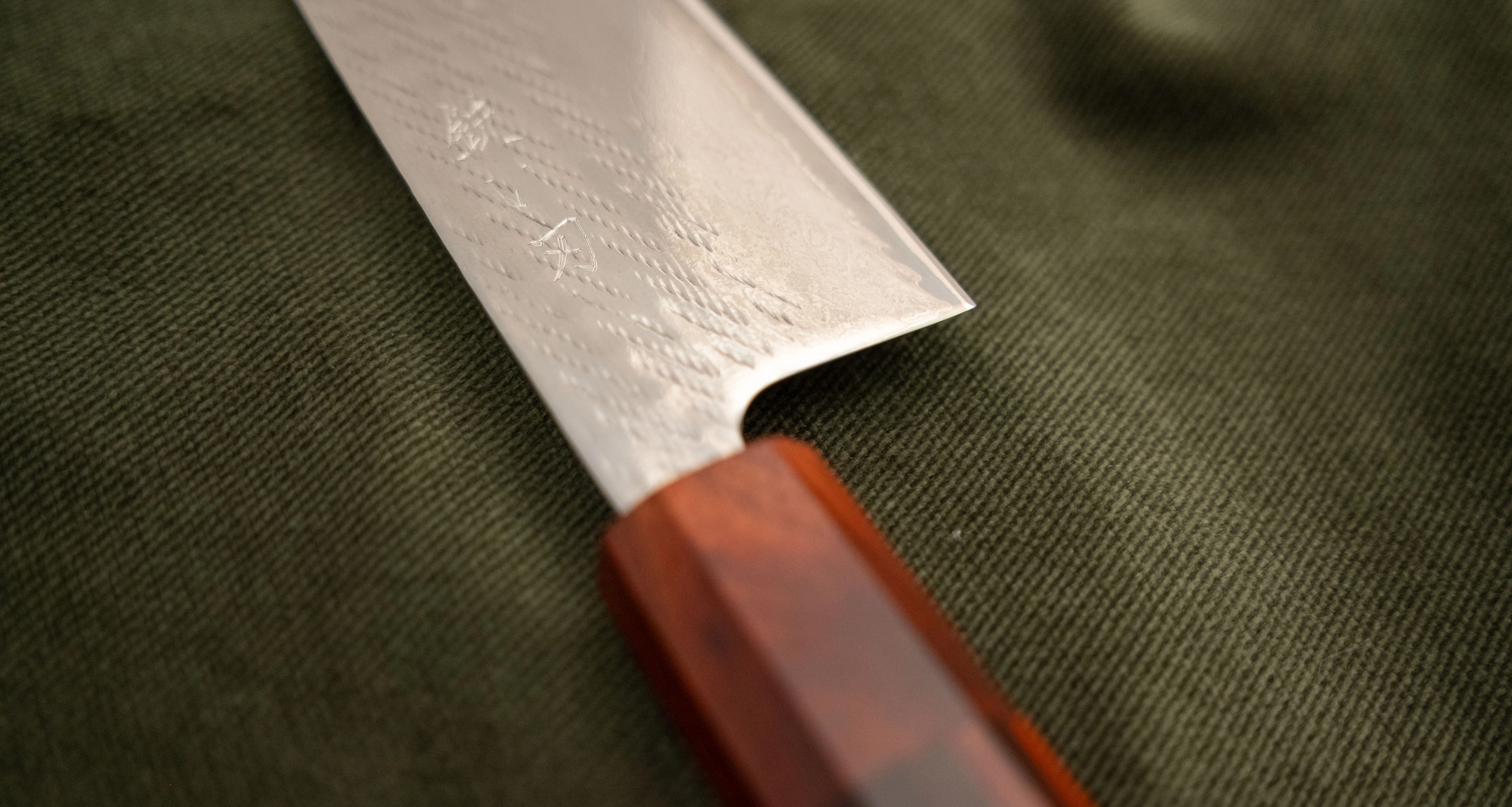
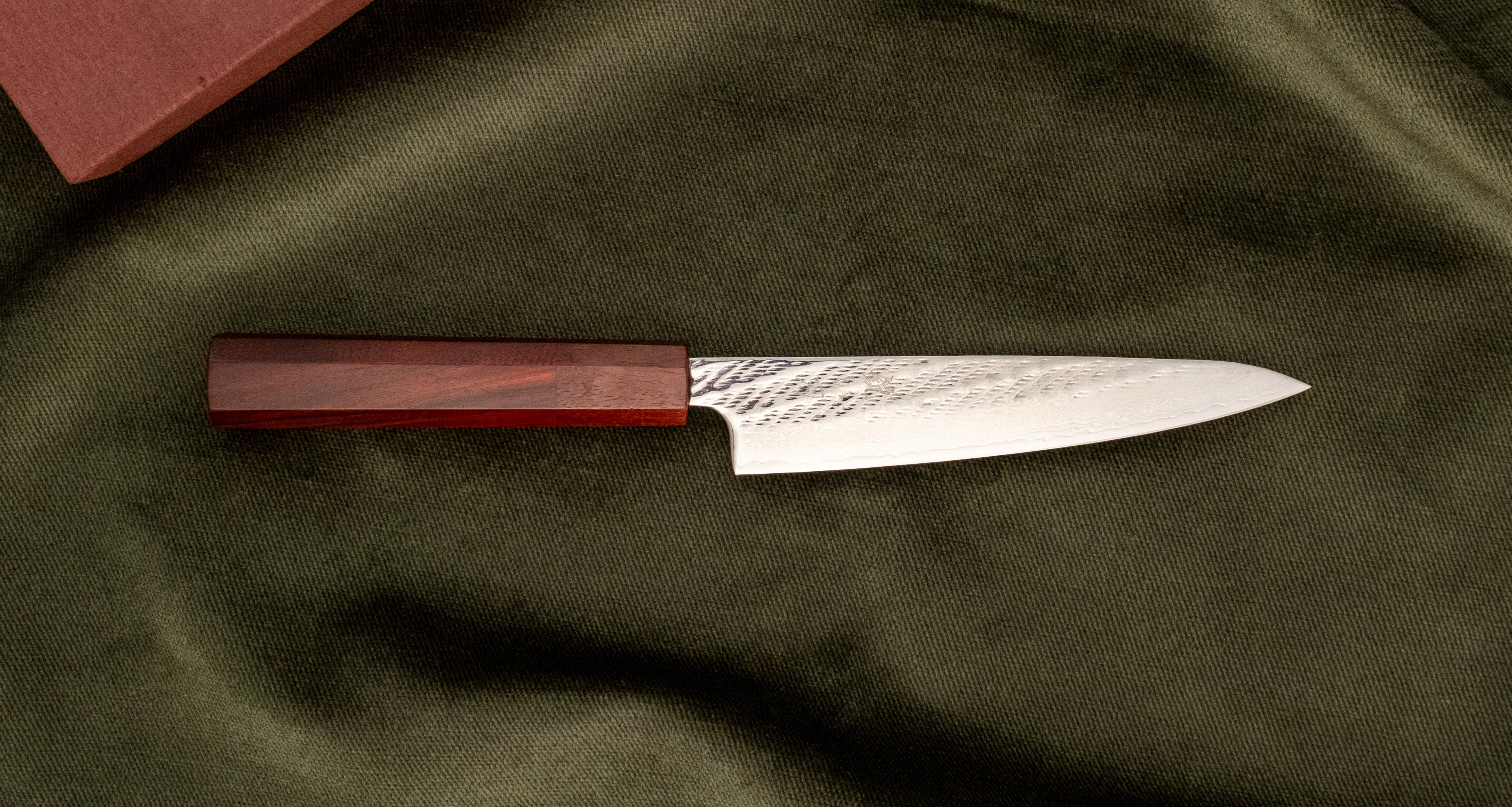
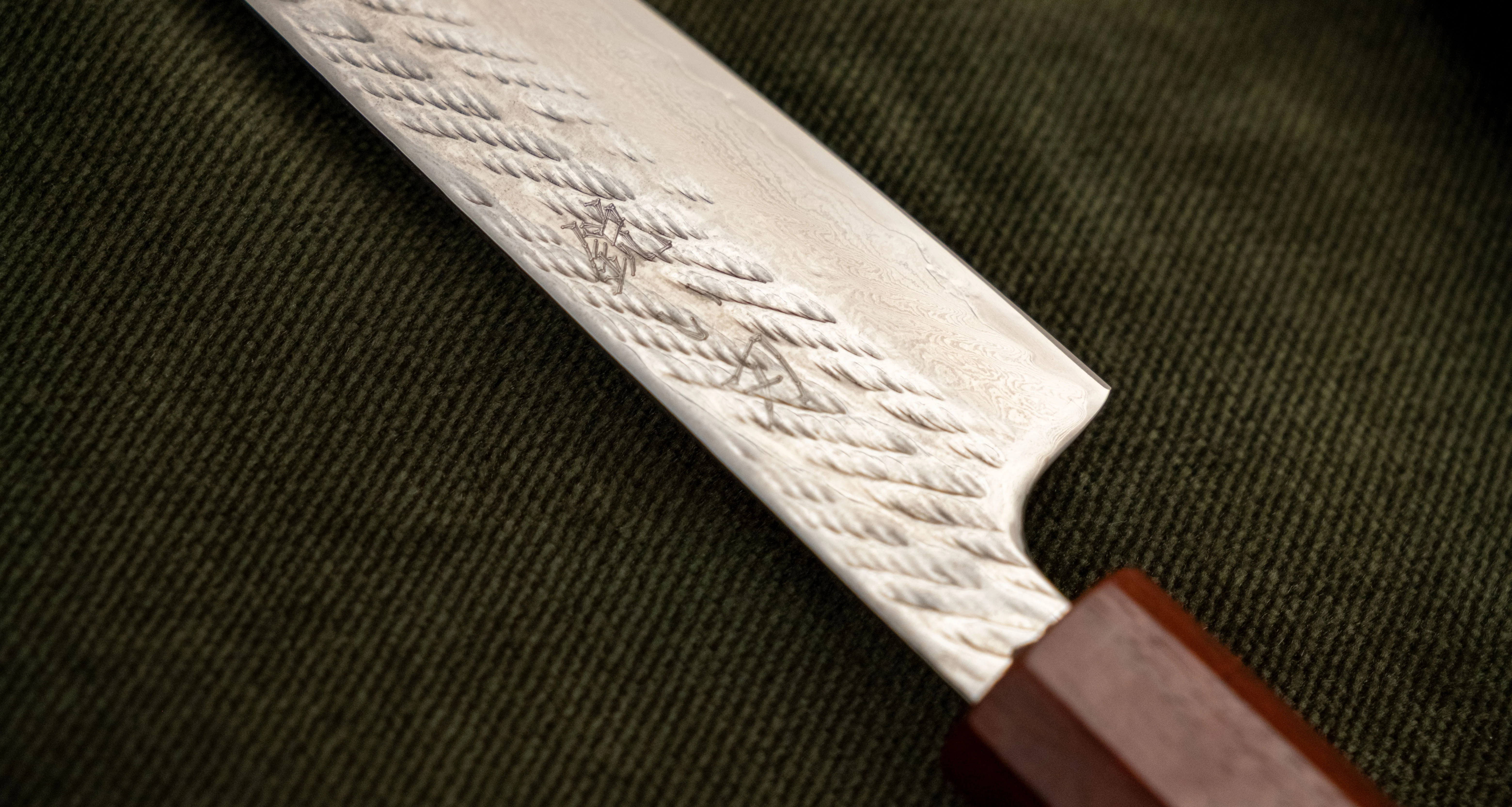
The quality and craftsmanship of this knife is simply superb - from the beautifully polished choil to the unique damascus pattern that surrounds the spine of the blade and extends to its back.
BLADE SHAPE:
Yanagiba (literally ‘willow’, as its shape is reminiscent of a willow leaf) is one of the three traditional Japanese knives (besides deba and usuba), and it’s used for slicing raw fish. They have a single bevel, which can achieve a much finer sharpness – this is key if you want the cut to be as clean and smooth as possible. Yanagiba knives are usually 240-360 mm long, which allows the user to slice the sashimi in a single pulling motion to prevent any shredded, zigzag cuts that would result in damaged food tissue.
Considering the length of the blade, we recommend this knife to experienced users of single-bevel knives, who appreciate the length of the knife and know how to use it to its fullest.
STEEL:
Aogami #2 is a very popular steel in Japanese knifemaking and one of the finest high-carbon steels, meaning the knives forged from it will have excellent edge retention and also sharpen very easily. At the same time, it is less resistant to corrosion, meaning the blade can develop a patina, while longer exposure to water or other corrosives could also lead to rusting. This is improved to some extent with the addition of chromium and tungsten, but it’s still a high-carbon steel that should be maintained accordingly (⚠️ read more about knife maintenance here).
Aogami #2 steel is composed of carbon (C) 1.1 %, chromium (Cr) 0.5 %, manganese (Mn) 0.3%, and tungsten (W) 1.5%.
LAMINATION:
The hard core of the knife is composed of a hard core (forming the cutting edge) and a softer, external layer of soft iron, a cladding we call ni-mai lamination. The outer layer of softer steel forms a "shinogi" line along the entire edge of the blade. The shinogi line represents the border between the harder, inner steel and the outer layer of softer steel. The Ni-mai lamination method is used on single-bevel knives, where a sheet of softer metal is forge-welded onto the shinogi (front) side of the blade’s hard core. This reinforces the blade’s structural integrity and consequently makes it tougher.
GEOMETRY:
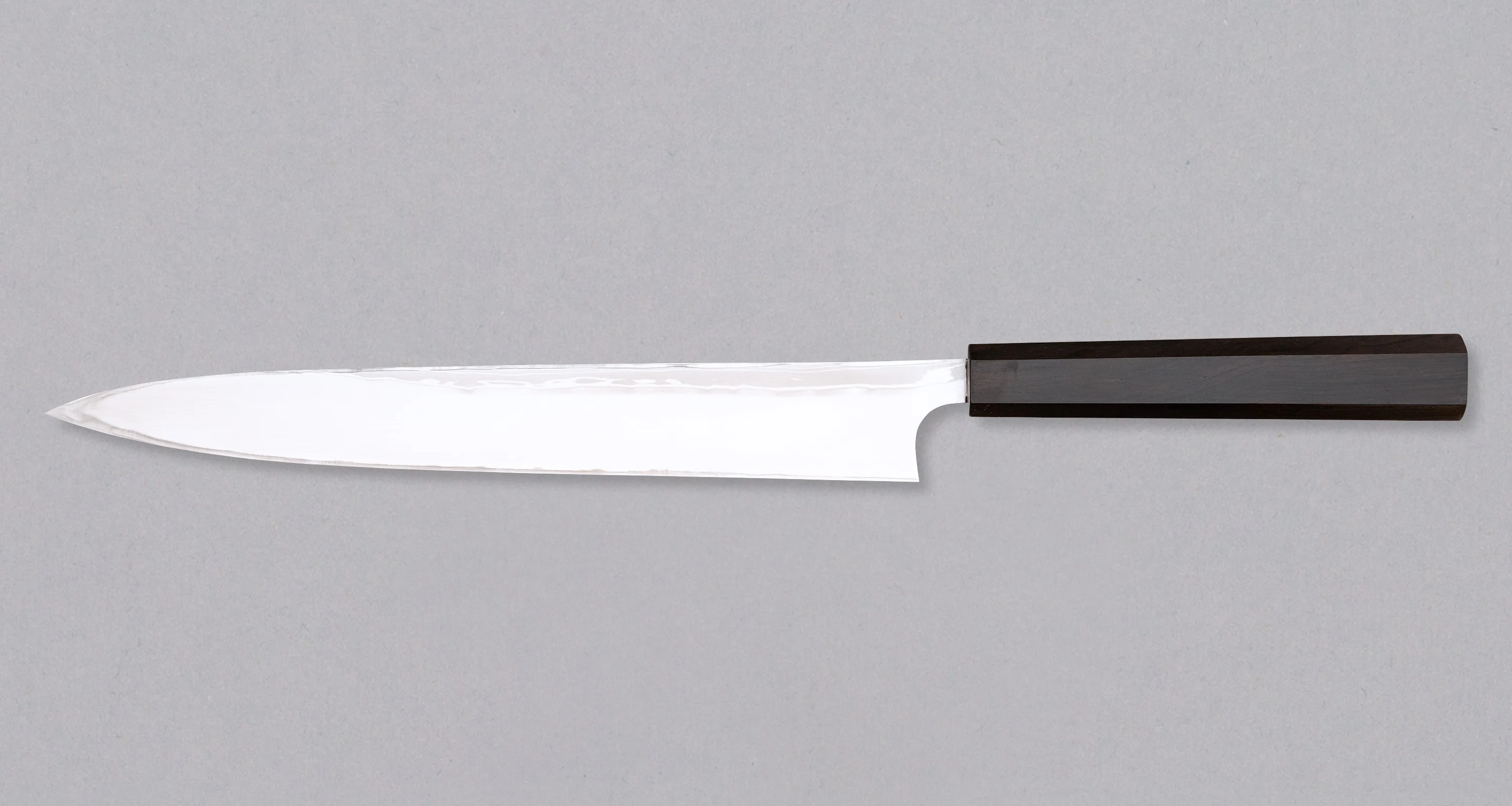
It has a single bevel (asymmetrical) blade and has a chisel bevel grind As such, the blade and handle are not suited for left-handed people but right-handed users only. The profile of the blade is superb with a deep ground urasuki and a very fine secondary angle. Single bevel blades make extremely precise cuts and are easy to resharpen.
BLADE FINISH:
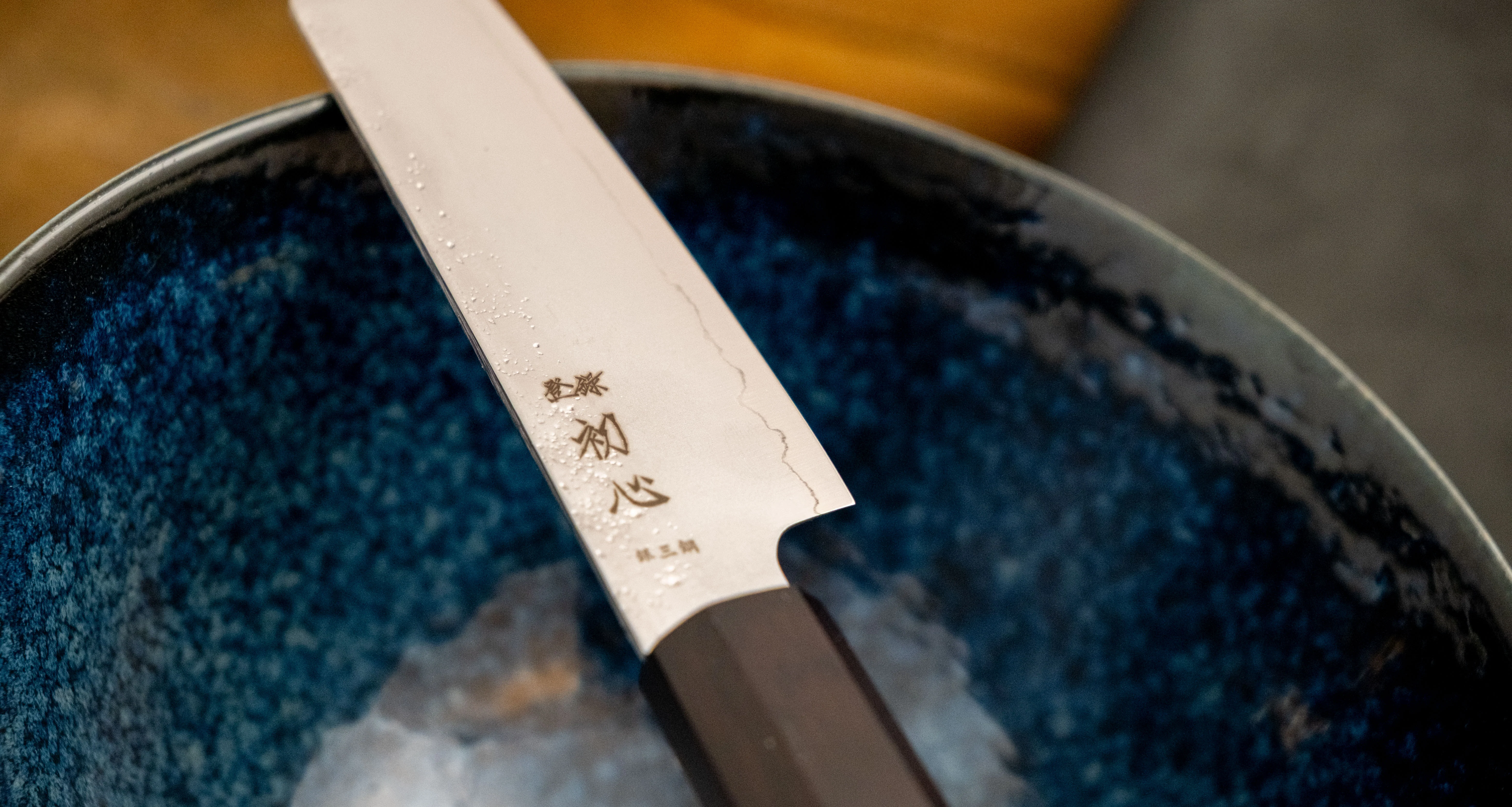
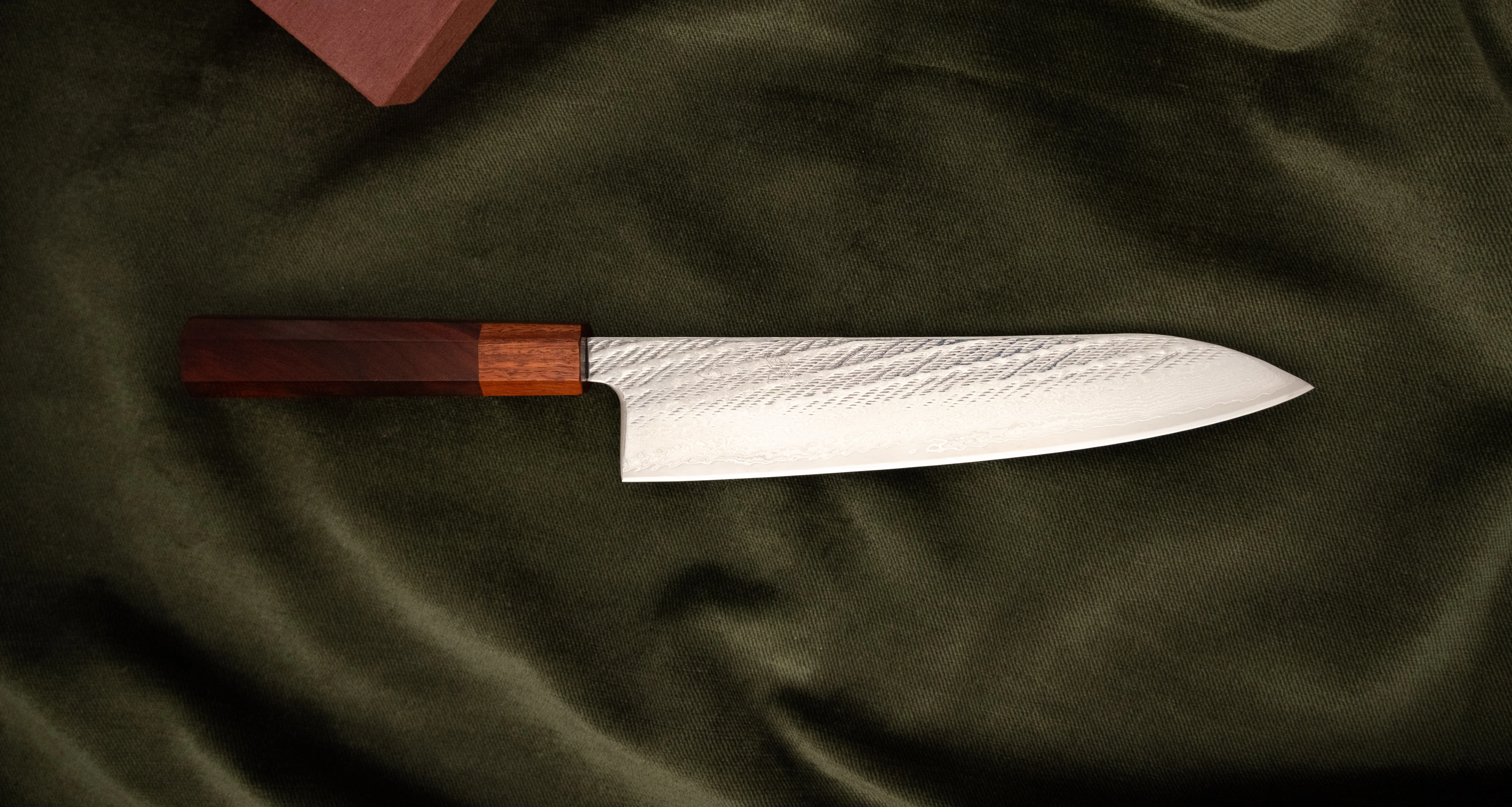
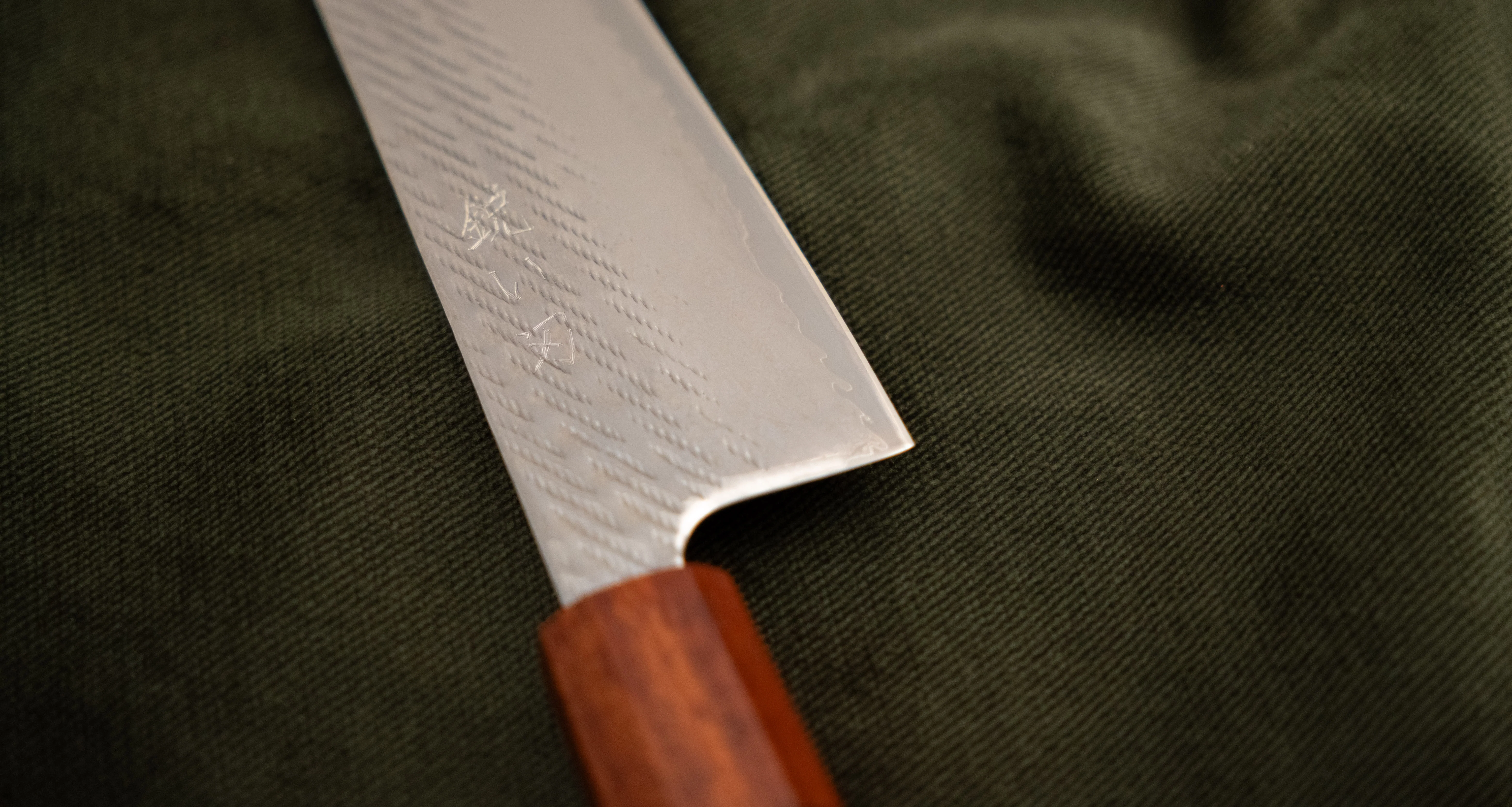
The damascus kyōmen (mirror) finish gives the blade a clean, elegant look, while the subtle kasumi polish adds depth and soft contrast to the layered steel. The damascus jigane wraps evenly around the core steel and continues to the spine and ura (jiai area), giving the blade a well-resolved and balanced visual character. Even the choil is finished to a flawless mirror polish—a small but telling detail that reflects the maker’s care and consistency throughout the knife.
HANDLE:
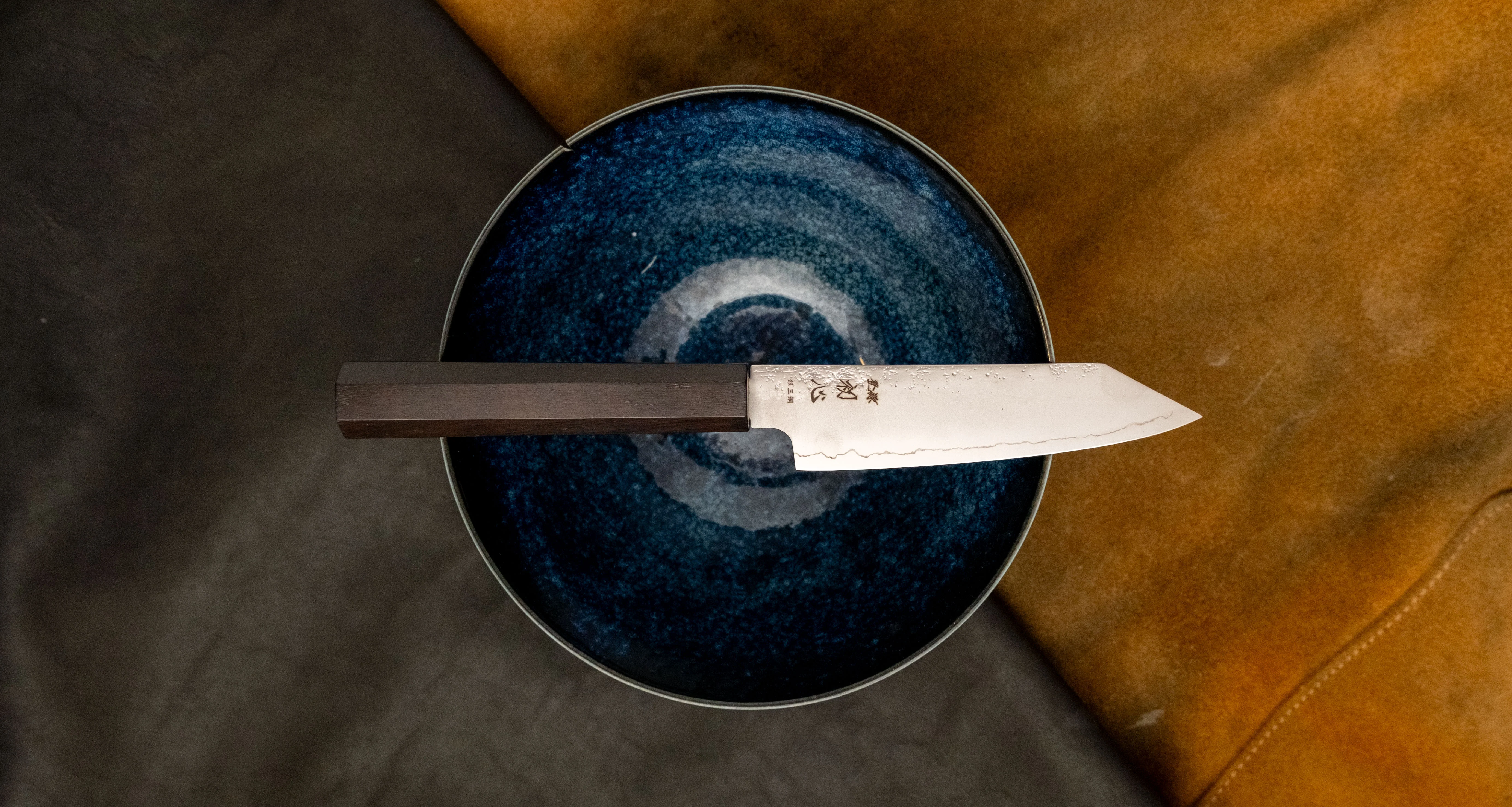
The traditional Japanese (Wa) style handle is octagonal in shape and is made of ebony wood. The symmetrical handle embodies the minimalistic Japanese aesthetic.
BLACKSMITH:
Yoshihiro Yauji is a young Japanese blacksmith who carries out every step of knife making himself, from forging and grinding to finishing and sharpening. His knives are characterized by precise heat treatment, clean geometry, and a high level of surface finishing.
Yoshihiro Yanagiba Aogami #2 Damascus 240mm (9.5") is a traditional single-bevel Japanese knife used for preparing fish, especially sashimi and nigiri sushi. Its length allows the user to slice different types of protein in one single pulling motion, that will – together with the razor-sharp single bevel blade – birth smooth, shiny cuts.
The quality and craftsmanship of this knife is simply superb - from the beautifully polished choil to the unique damascus pattern that surrounds the spine of the blade and extends to its back.
BLADE SHAPE:
Yanagiba (literally ‘willow’, as its shape is reminiscent of a willow leaf) is one of the three traditional Japanese knives (besides deba and usuba), and it’s used for slicing raw fish. They have a single bevel, which can achieve a much finer sharpness – this is key if you want the cut to be as clean and smooth as possible. Yanagiba knives are usually 240-360 mm long, which allows the user to slice the sashimi in a single pulling motion to prevent any shredded, zigzag cuts that would result in damaged food tissue.
Considering the length of the blade, we recommend this knife to experienced users of single-bevel knives, who appreciate the length of the knife and know how to use it to its fullest.
STEEL:
Aogami #2 is a very popular steel in Japanese knifemaking and one of the finest high-carbon steels, meaning the knives forged from it will have excellent edge retention and also sharpen very easily. At the same time, it is less resistant to corrosion, meaning the blade can develop a patina, while longer exposure to water or other corrosives could also lead to rusting. This is improved to some extent with the addition of chromium and tungsten, but it’s still a high-carbon steel that should be maintained accordingly (⚠️ read more about knife maintenance here).
Aogami #2 steel is composed of carbon (C) 1.1 %, chromium (Cr) 0.5 %, manganese (Mn) 0.3%, and tungsten (W) 1.5%.
LAMINATION:
The hard core of the knife is composed of a hard core (forming the cutting edge) and a softer, external layer of soft iron, a cladding we call ni-mai lamination. The outer layer of softer steel forms a "shinogi" line along the entire edge of the blade. The shinogi line represents the border between the harder, inner steel and the outer layer of softer steel. The Ni-mai lamination method is used on single-bevel knives, where a sheet of softer metal is forge-welded onto the shinogi (front) side of the blade’s hard core. This reinforces the blade’s structural integrity and consequently makes it tougher.
GEOMETRY:
It has a single bevel (asymmetrical) blade and has a chisel bevel grind As such, the blade and handle are not suited for left-handed people but right-handed users only. The profile of the blade is superb with a deep ground urasuki and a very fine secondary angle. Single bevel blades make extremely precise cuts and are easy to resharpen.
BLADE FINISH:
The damascus kyōmen (mirror) finish gives the blade a clean, elegant look, while the subtle kasumi polish adds depth and soft contrast to the layered steel. The damascus jigane wraps evenly around the core steel and continues to the spine and ura (jiai area), giving the blade a well-resolved and balanced visual character. Even the choil is finished to a flawless mirror polish—a small but telling detail that reflects the maker’s care and consistency throughout the knife.
HANDLE:
The traditional Japanese (Wa) style handle is octagonal in shape and is made of ebony wood. The symmetrical handle embodies the minimalistic Japanese aesthetic.
BLACKSMITH:
Yoshihiro Yauji is a young Japanese blacksmith who carries out every step of knife making himself, from forging and grinding to finishing and sharpening. His knives are characterized by precise heat treatment, clean geometry, and a high level of surface finishing.
Original: $420.00
-70%$420.00
$126.00Description
Yoshihiro Yanagiba Aogami #2 Damascus 240mm (9.5") is a traditional single-bevel Japanese knife used for preparing fish, especially sashimi and nigiri sushi. Its length allows the user to slice different types of protein in one single pulling motion, that will – together with the razor-sharp single bevel blade – birth smooth, shiny cuts.
The quality and craftsmanship of this knife is simply superb - from the beautifully polished choil to the unique damascus pattern that surrounds the spine of the blade and extends to its back.
BLADE SHAPE:
Yanagiba (literally ‘willow’, as its shape is reminiscent of a willow leaf) is one of the three traditional Japanese knives (besides deba and usuba), and it’s used for slicing raw fish. They have a single bevel, which can achieve a much finer sharpness – this is key if you want the cut to be as clean and smooth as possible. Yanagiba knives are usually 240-360 mm long, which allows the user to slice the sashimi in a single pulling motion to prevent any shredded, zigzag cuts that would result in damaged food tissue.
Considering the length of the blade, we recommend this knife to experienced users of single-bevel knives, who appreciate the length of the knife and know how to use it to its fullest.
STEEL:
Aogami #2 is a very popular steel in Japanese knifemaking and one of the finest high-carbon steels, meaning the knives forged from it will have excellent edge retention and also sharpen very easily. At the same time, it is less resistant to corrosion, meaning the blade can develop a patina, while longer exposure to water or other corrosives could also lead to rusting. This is improved to some extent with the addition of chromium and tungsten, but it’s still a high-carbon steel that should be maintained accordingly (⚠️ read more about knife maintenance here).
Aogami #2 steel is composed of carbon (C) 1.1 %, chromium (Cr) 0.5 %, manganese (Mn) 0.3%, and tungsten (W) 1.5%.
LAMINATION:
The hard core of the knife is composed of a hard core (forming the cutting edge) and a softer, external layer of soft iron, a cladding we call ni-mai lamination. The outer layer of softer steel forms a "shinogi" line along the entire edge of the blade. The shinogi line represents the border between the harder, inner steel and the outer layer of softer steel. The Ni-mai lamination method is used on single-bevel knives, where a sheet of softer metal is forge-welded onto the shinogi (front) side of the blade’s hard core. This reinforces the blade’s structural integrity and consequently makes it tougher.
GEOMETRY:
It has a single bevel (asymmetrical) blade and has a chisel bevel grind As such, the blade and handle are not suited for left-handed people but right-handed users only. The profile of the blade is superb with a deep ground urasuki and a very fine secondary angle. Single bevel blades make extremely precise cuts and are easy to resharpen.
BLADE FINISH:
The damascus kyōmen (mirror) finish gives the blade a clean, elegant look, while the subtle kasumi polish adds depth and soft contrast to the layered steel. The damascus jigane wraps evenly around the core steel and continues to the spine and ura (jiai area), giving the blade a well-resolved and balanced visual character. Even the choil is finished to a flawless mirror polish—a small but telling detail that reflects the maker’s care and consistency throughout the knife.
HANDLE:
The traditional Japanese (Wa) style handle is octagonal in shape and is made of ebony wood. The symmetrical handle embodies the minimalistic Japanese aesthetic.
BLACKSMITH:
Yoshihiro Yauji is a young Japanese blacksmith who carries out every step of knife making himself, from forging and grinding to finishing and sharpening. His knives are characterized by precise heat treatment, clean geometry, and a high level of surface finishing.