Beginner / Value Knife Sharpening Set
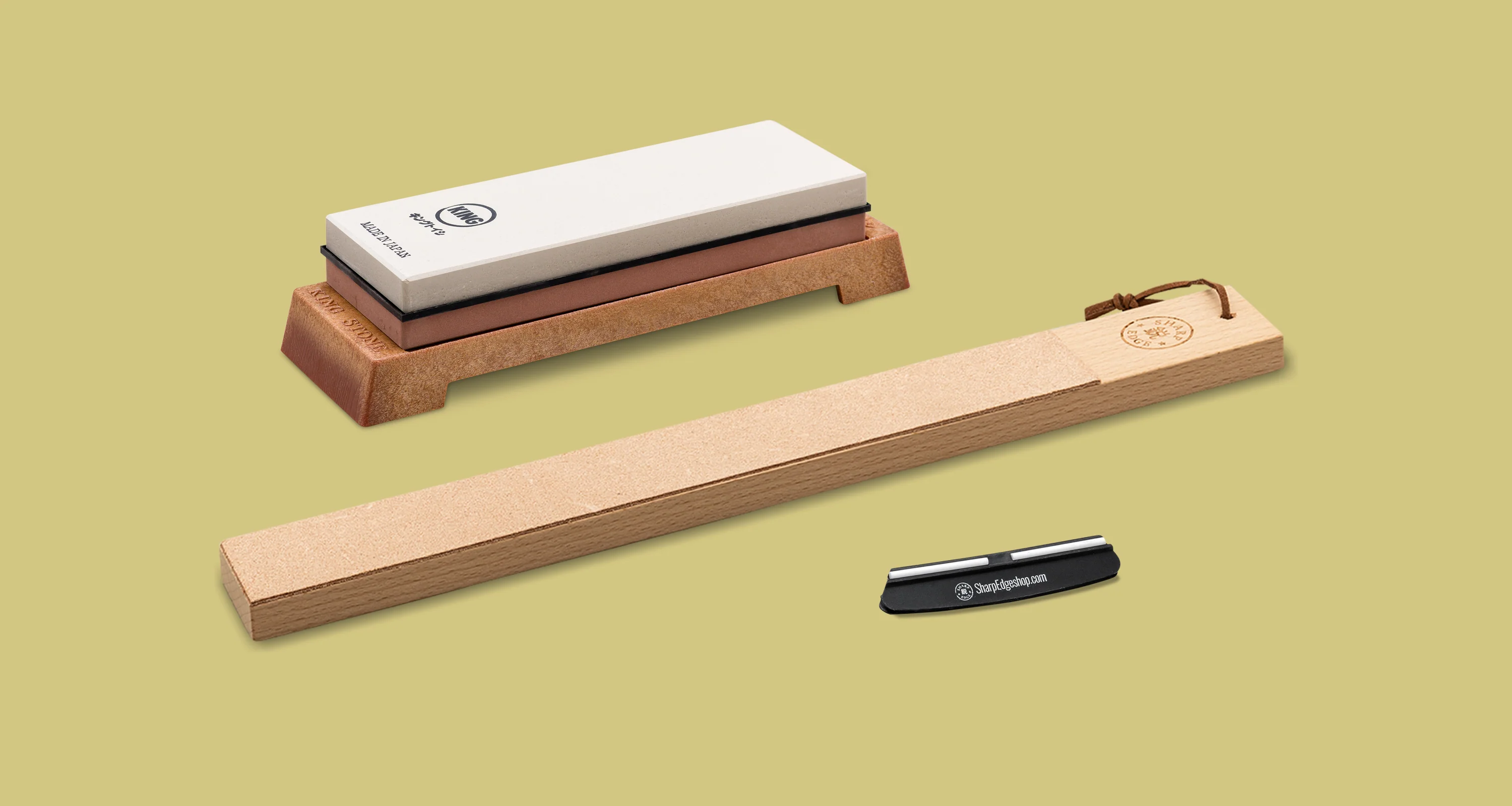
If you want an affordable yet high-quality set to start your sharpening journey, this one has all the essentials you need to cover the basics. The King #1000/#6000 combination stone is at the heart of our Beginner / Value Knife Sharpening set. Reliable, durable, and ideal for Japanese knives above 60 HRC, it delivers excellent cutting performance and long-lasting results.
Products included:
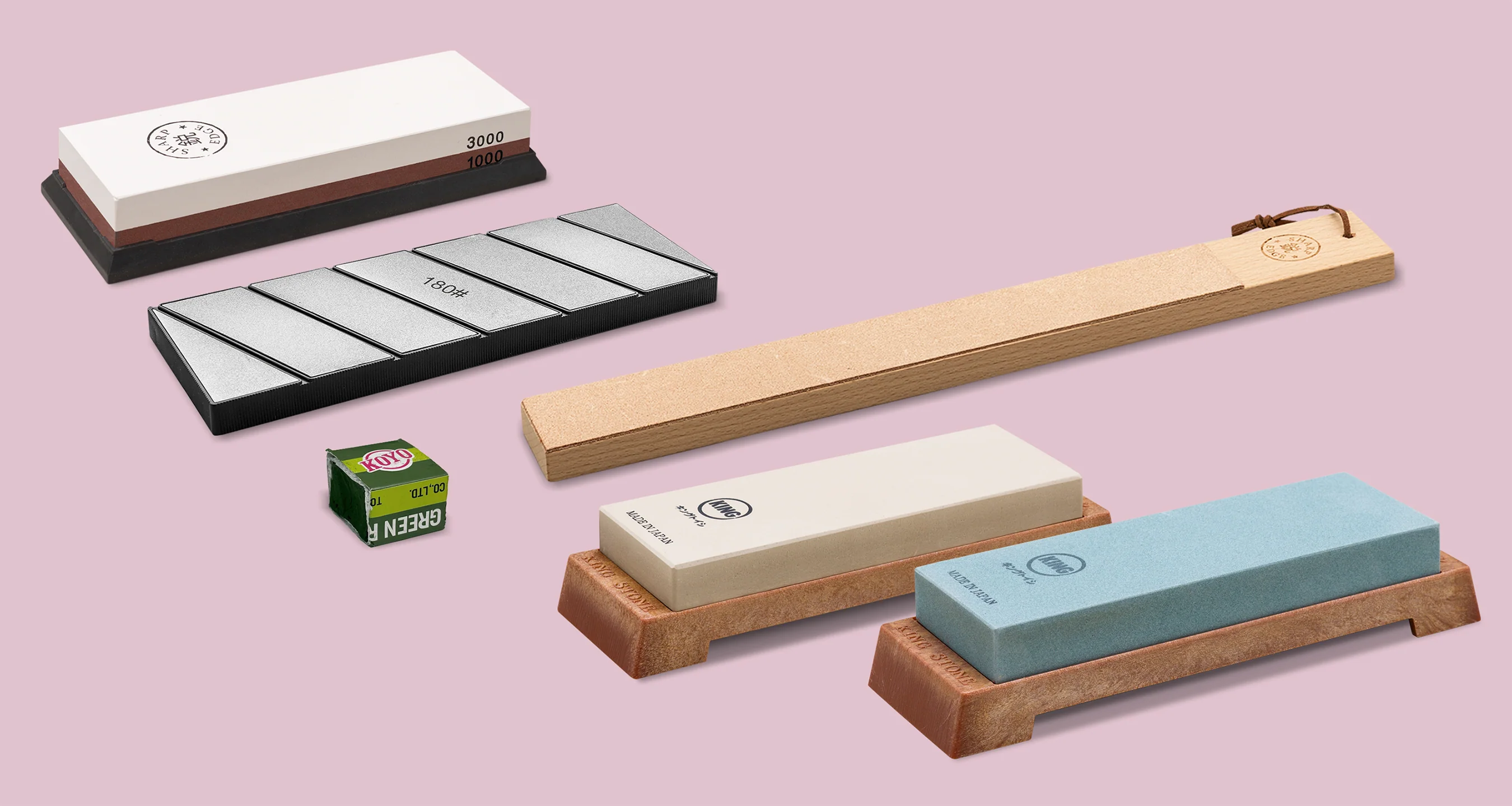
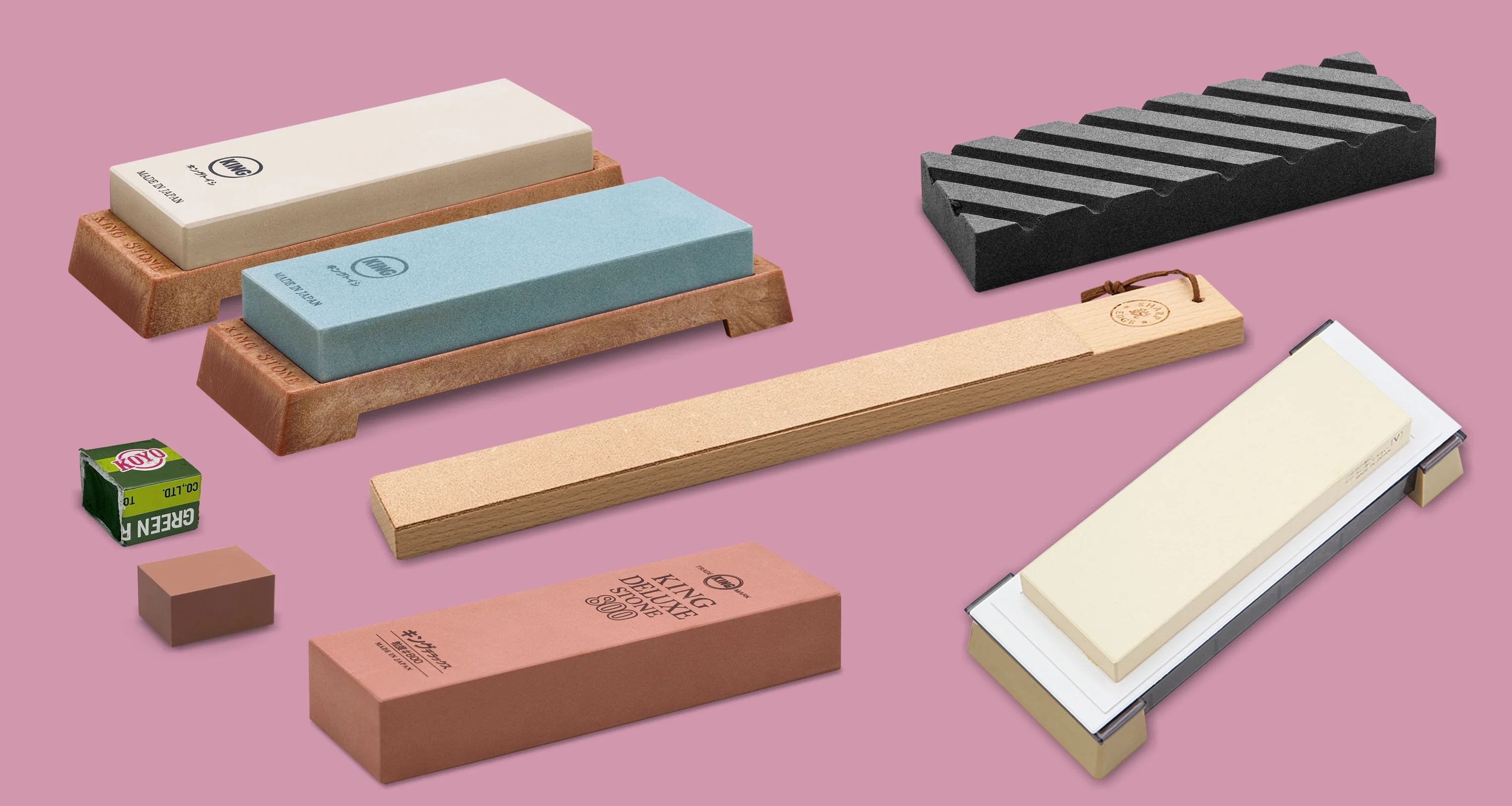
- King Sharpening Stone #1000/#6000 – Reliable combination whetstone for essential knife care. A great and affordable choice for novice and intermediate knife sharpeners.
- SharpEdge Leather Strop [1-sided] – Polishes the edge and removes burr.
- Knife Sharpening Guide Clip [large] – For standard knives like gyuto or santoku
The King #1000/#6000 combination stone is a great all-rounder for anyone getting into sharpening. The #1000 grit is the most common, general sharpening granulation (to put a new edge on a blunt knife), while #6000 grit is a finer granulation for an extremely sharp edge and the final polish of the blade.
King stones are kiln-baked, which makes them longer-lasting, though they require a bit more patience since they create less slurry than entry-level stones. It’s an affordable, reliable stone that’s easy to use and built to last.
Step-by-step instructions:
- Begin with the #1000 grit side of the King stone for general sharpening and to establish a new edge.
- Move to the #6000 grit side for finer sharpening and final polishing of the blade.
- Finish with the included leather strop to remove any remaining burr and achieve a smooth, razor-sharp edge.
|
Just got into sharpening? Don’t make these beginner mistakes:
|
If you want an affordable yet high-quality set to start your sharpening journey, this one has all the essentials you need to cover the basics. The King #1000/#6000 combination stone is at the heart of our Beginner / Value Knife Sharpening set. Reliable, durable, and ideal for Japanese knives above 60 HRC, it delivers excellent cutting performance and long-lasting results.
Products included:
- King Sharpening Stone #1000/#6000 – Reliable combination whetstone for essential knife care. A great and affordable choice for novice and intermediate knife sharpeners.
- SharpEdge Leather Strop [1-sided] – Polishes the edge and removes burr.
- Knife Sharpening Guide Clip [large] – For standard knives like gyuto or santoku
The King #1000/#6000 combination stone is a great all-rounder for anyone getting into sharpening. The #1000 grit is the most common, general sharpening granulation (to put a new edge on a blunt knife), while #6000 grit is a finer granulation for an extremely sharp edge and the final polish of the blade.
King stones are kiln-baked, which makes them longer-lasting, though they require a bit more patience since they create less slurry than entry-level stones. It’s an affordable, reliable stone that’s easy to use and built to last.
Step-by-step instructions:
- Begin with the #1000 grit side of the King stone for general sharpening and to establish a new edge.
- Move to the #6000 grit side for finer sharpening and final polishing of the blade.
- Finish with the included leather strop to remove any remaining burr and achieve a smooth, razor-sharp edge.
|
Just got into sharpening? Don’t make these beginner mistakes:
|
Original: $85.00
-70%$85.00
$25.50Description
If you want an affordable yet high-quality set to start your sharpening journey, this one has all the essentials you need to cover the basics. The King #1000/#6000 combination stone is at the heart of our Beginner / Value Knife Sharpening set. Reliable, durable, and ideal for Japanese knives above 60 HRC, it delivers excellent cutting performance and long-lasting results.
Products included:
- King Sharpening Stone #1000/#6000 – Reliable combination whetstone for essential knife care. A great and affordable choice for novice and intermediate knife sharpeners.
- SharpEdge Leather Strop [1-sided] – Polishes the edge and removes burr.
- Knife Sharpening Guide Clip [large] – For standard knives like gyuto or santoku
The King #1000/#6000 combination stone is a great all-rounder for anyone getting into sharpening. The #1000 grit is the most common, general sharpening granulation (to put a new edge on a blunt knife), while #6000 grit is a finer granulation for an extremely sharp edge and the final polish of the blade.
King stones are kiln-baked, which makes them longer-lasting, though they require a bit more patience since they create less slurry than entry-level stones. It’s an affordable, reliable stone that’s easy to use and built to last.
Step-by-step instructions:
- Begin with the #1000 grit side of the King stone for general sharpening and to establish a new edge.
- Move to the #6000 grit side for finer sharpening and final polishing of the blade.
- Finish with the included leather strop to remove any remaining burr and achieve a smooth, razor-sharp edge.
|
Just got into sharpening? Don’t make these beginner mistakes:
|