Hayabusa Honesuki HAP-40 150mm (5.9")
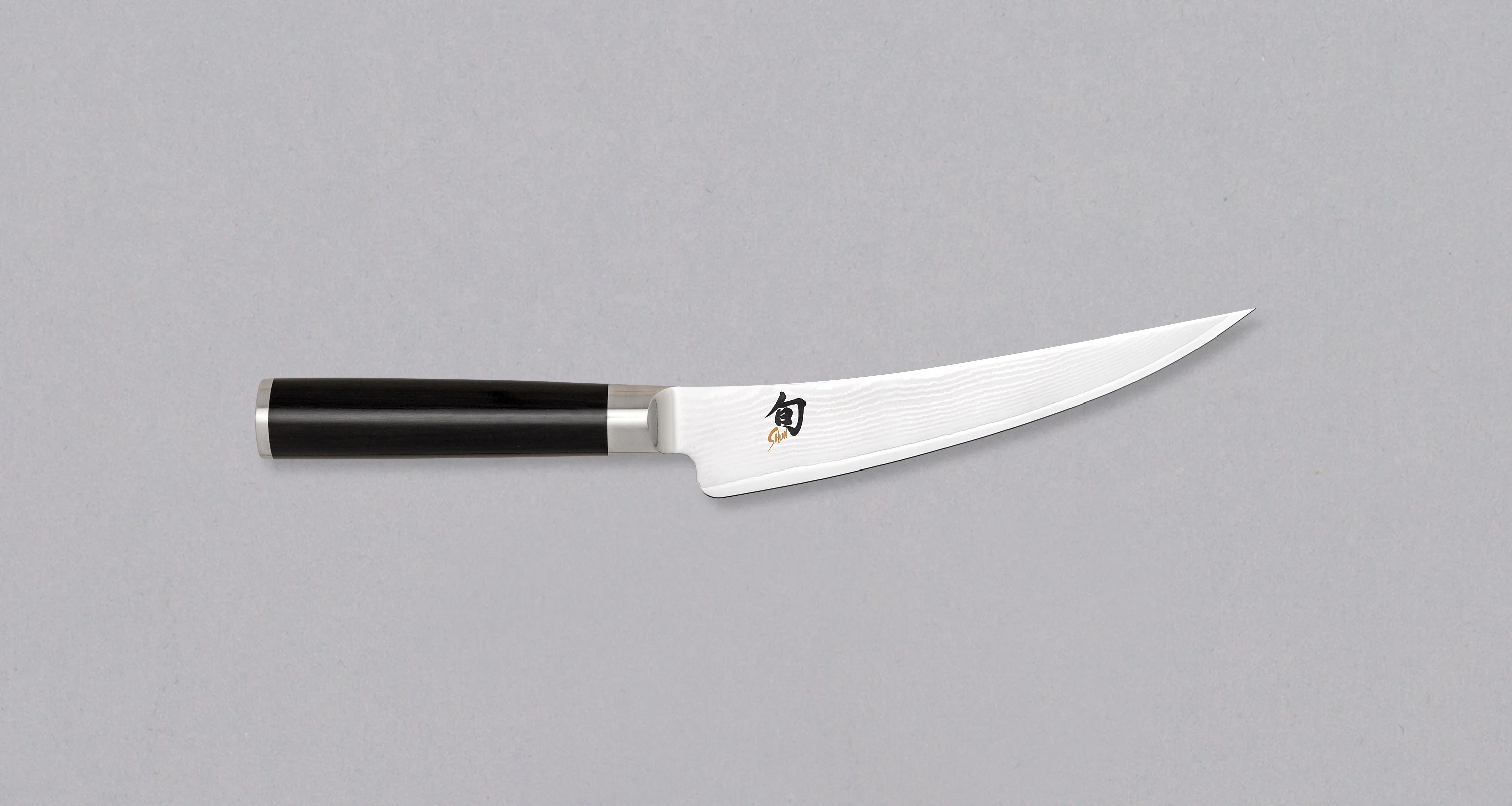
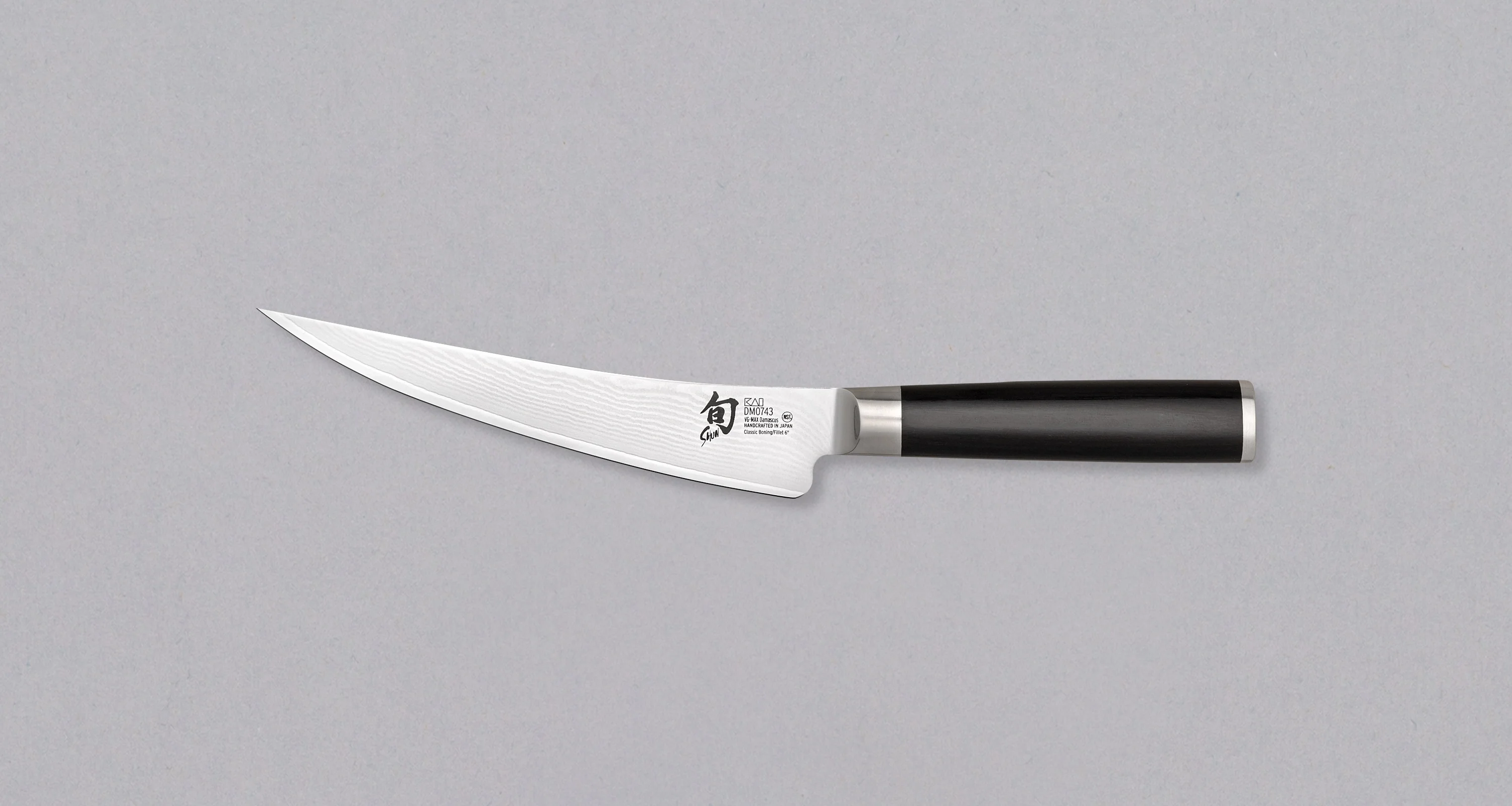
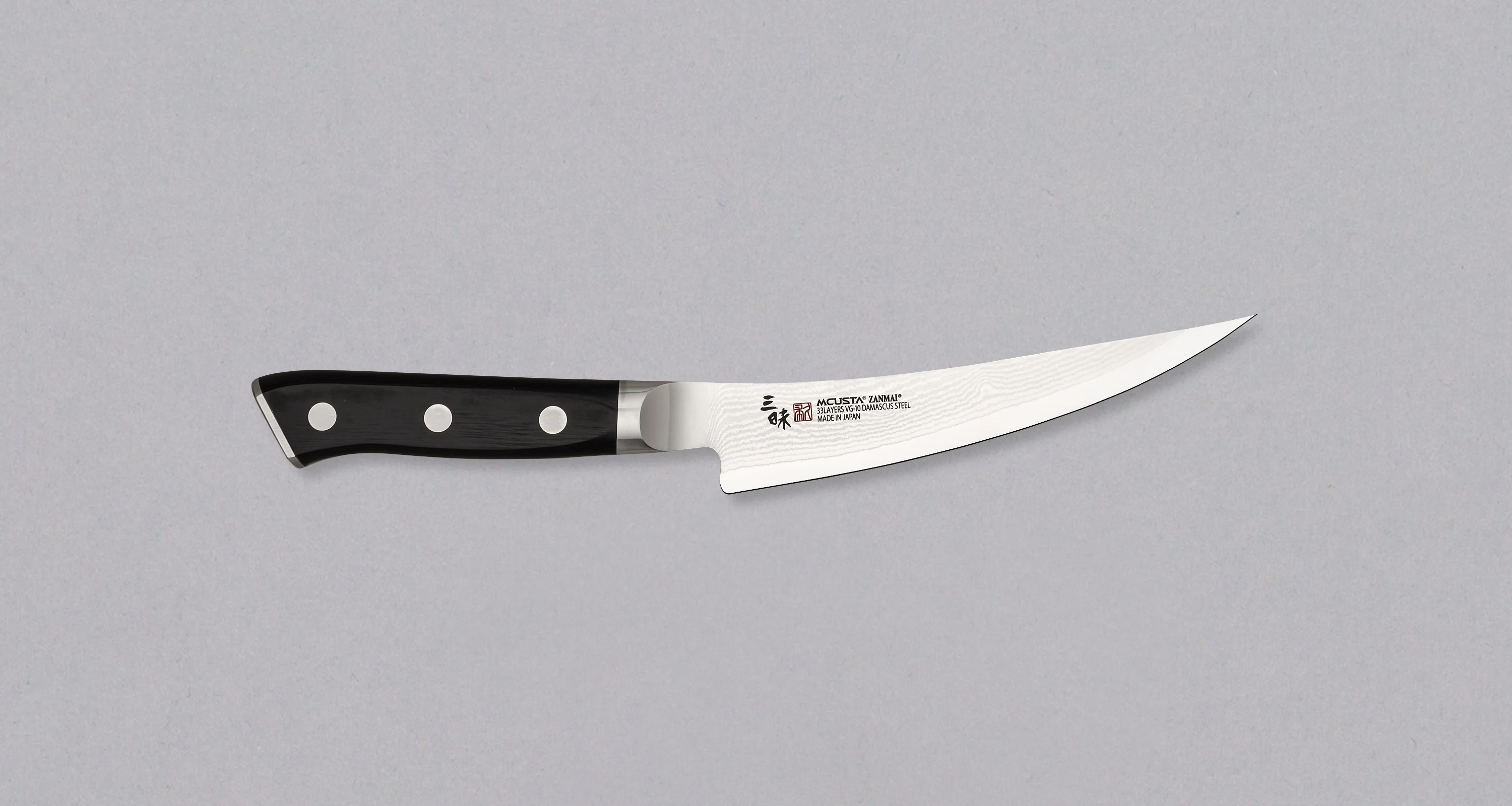
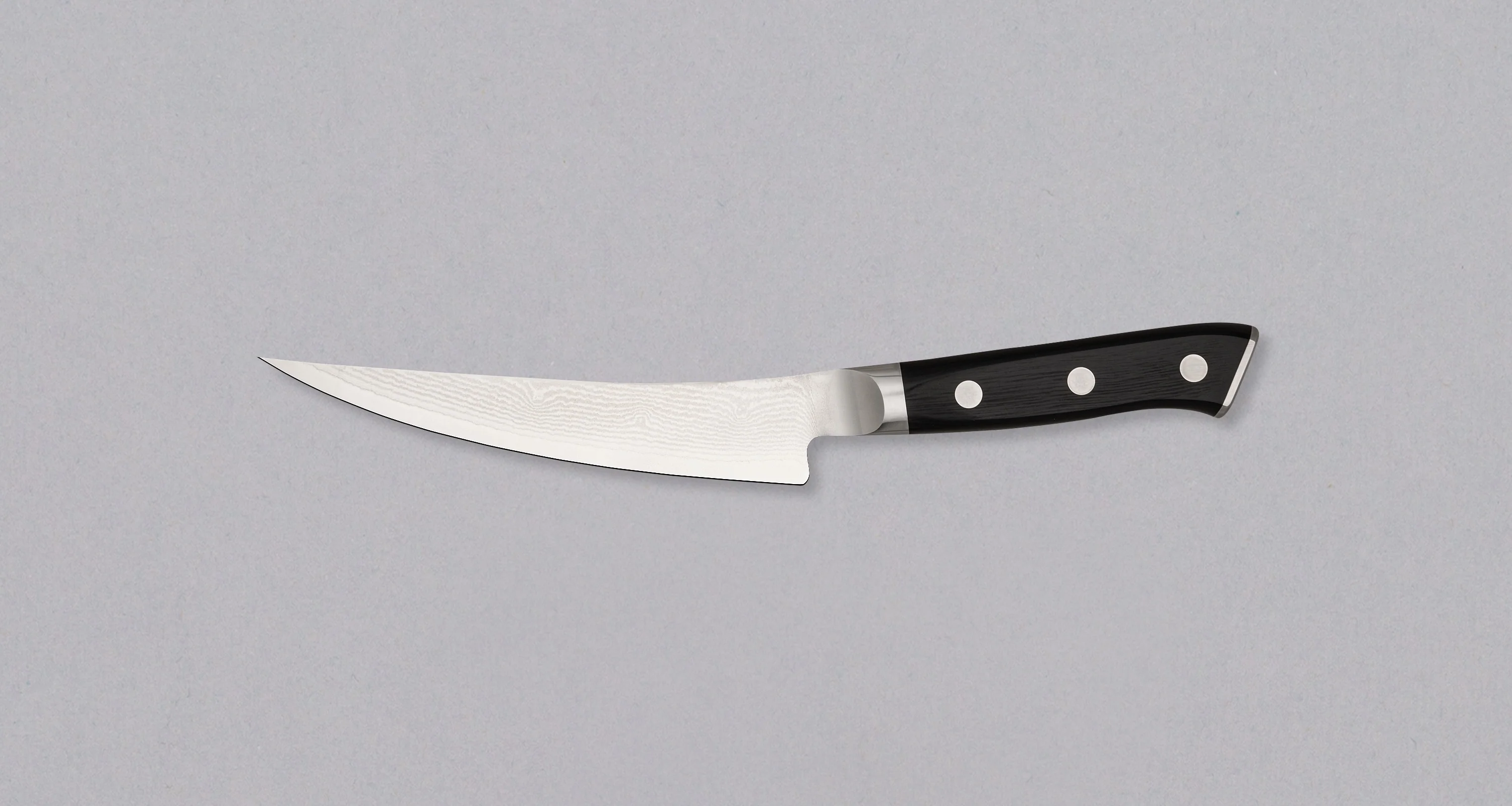
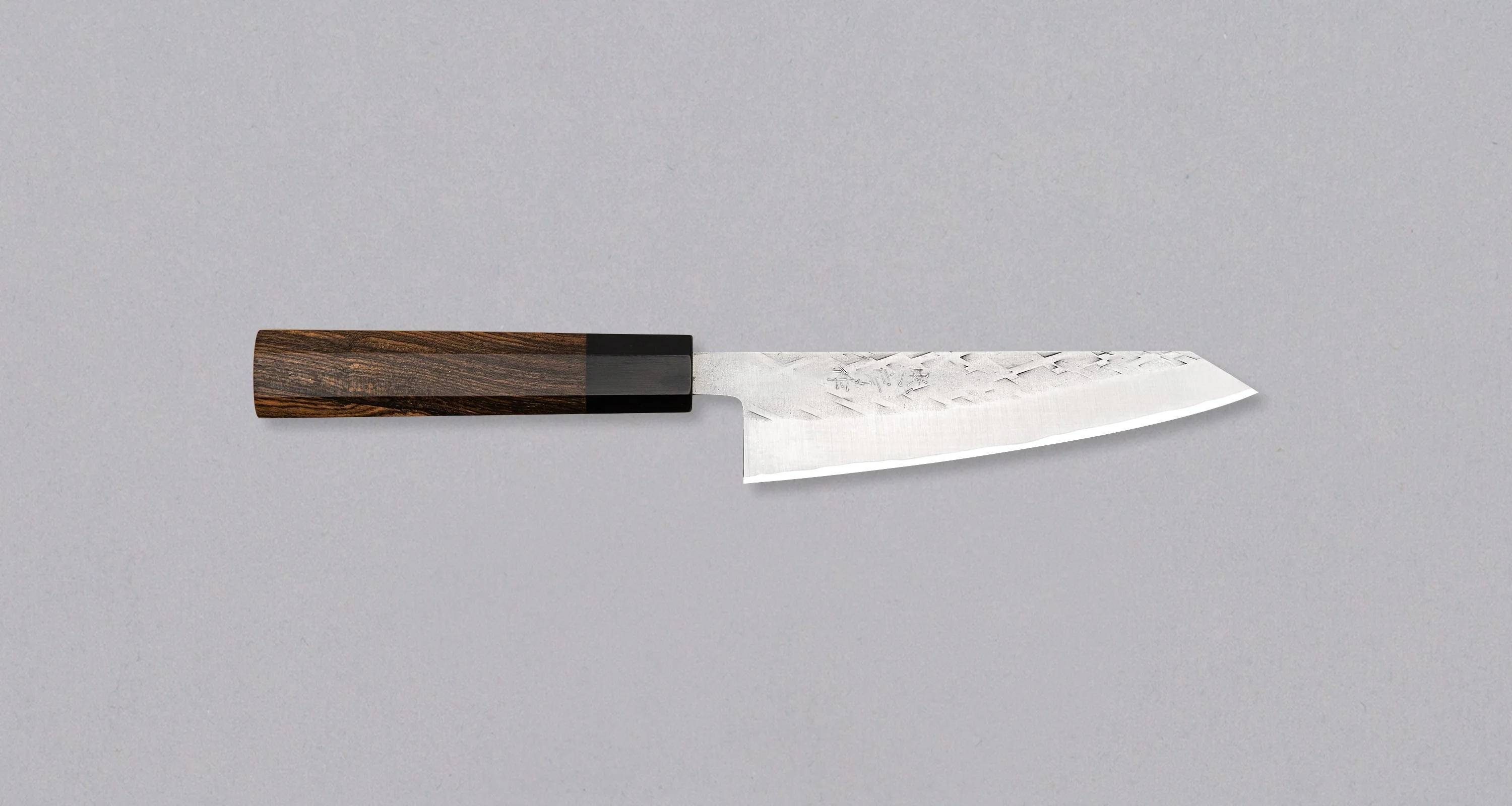
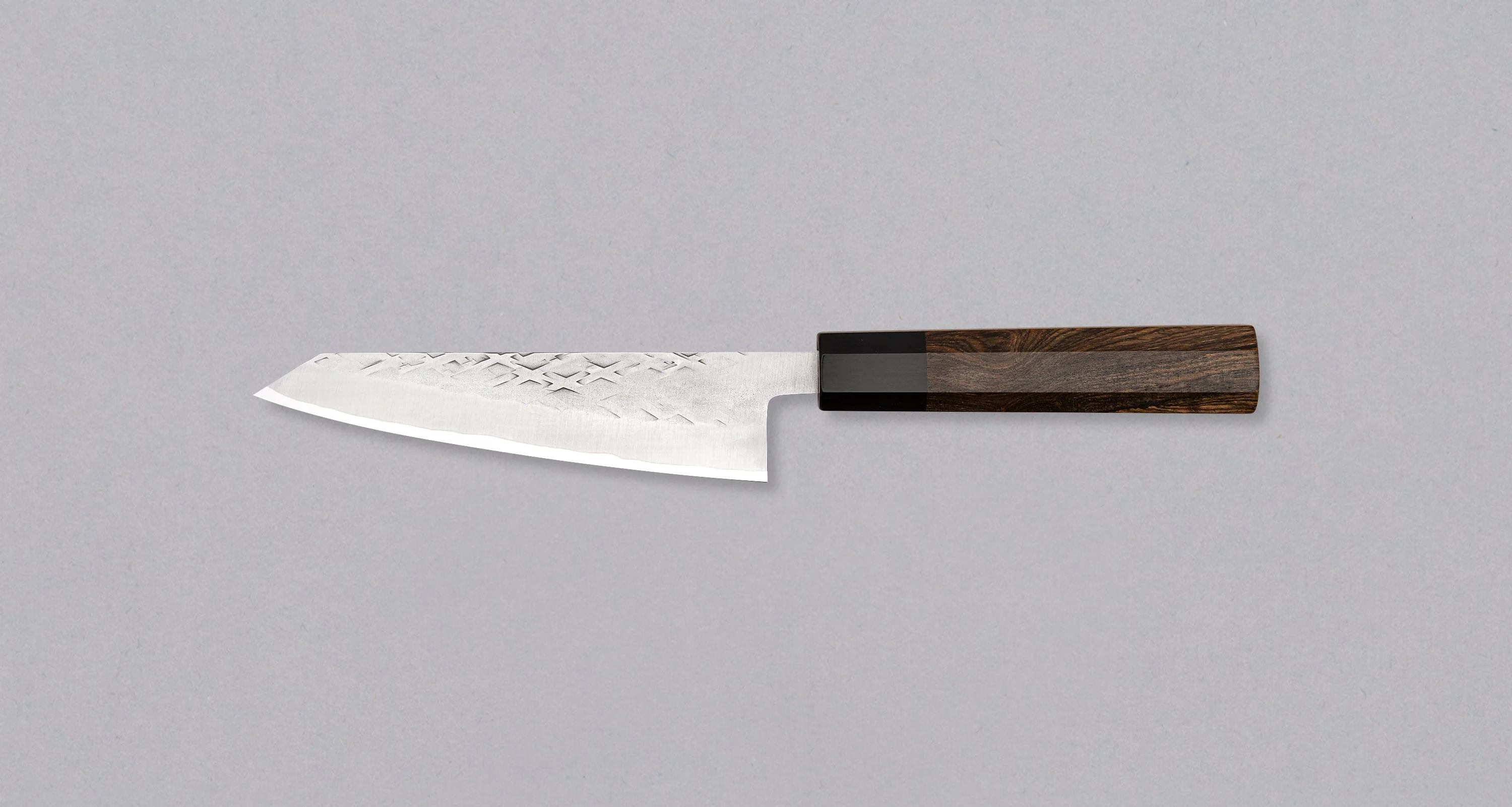
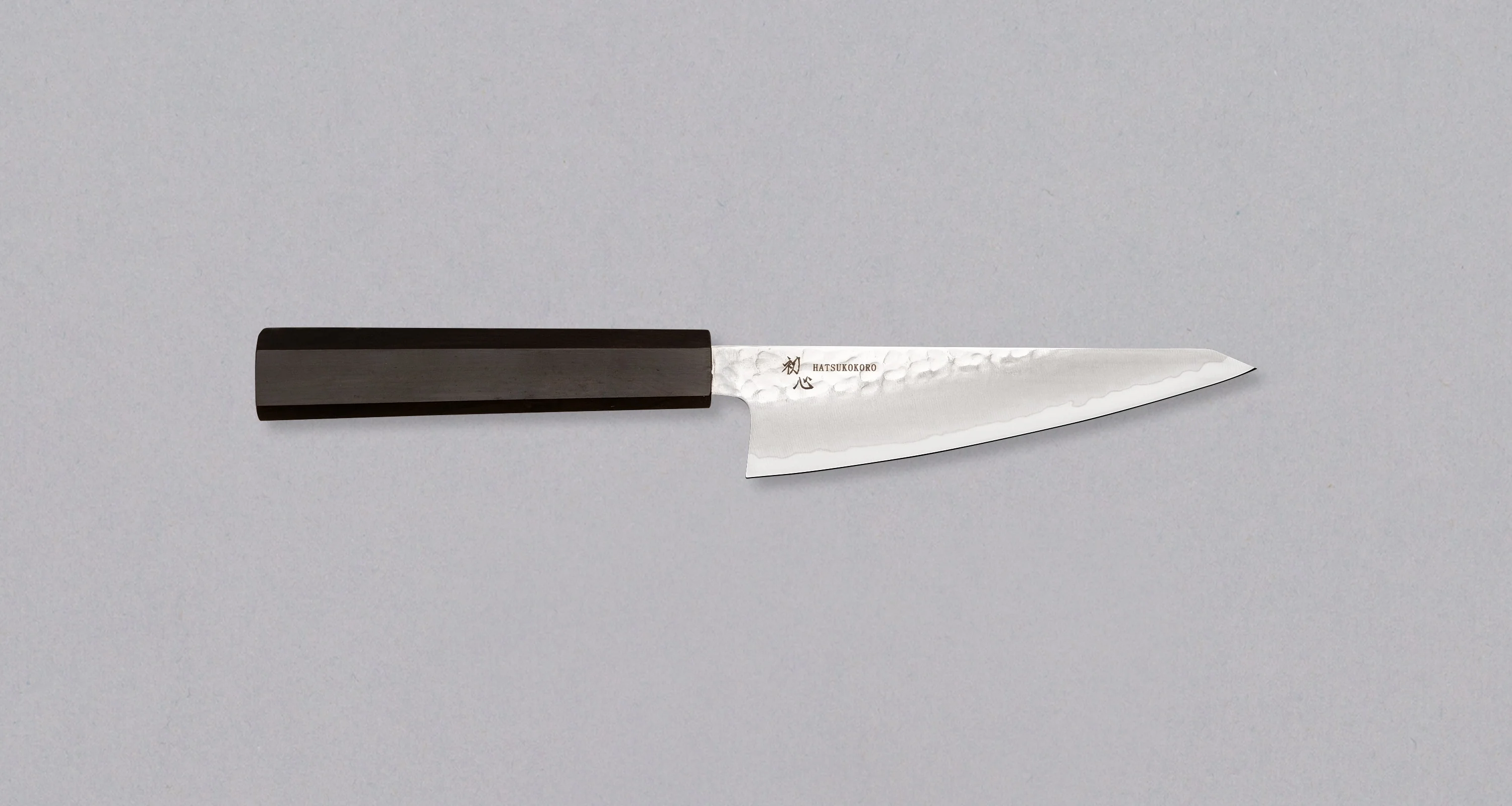
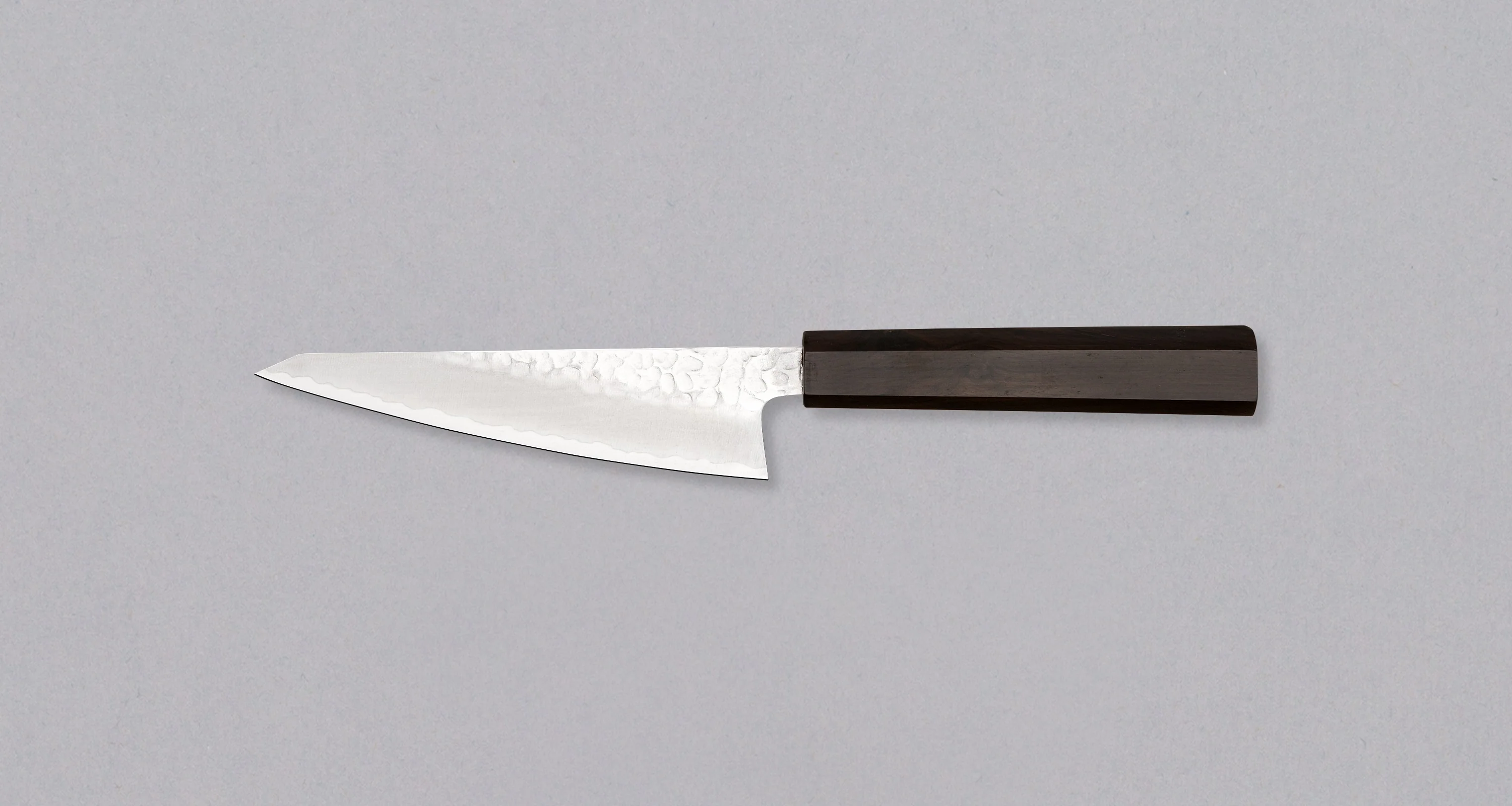
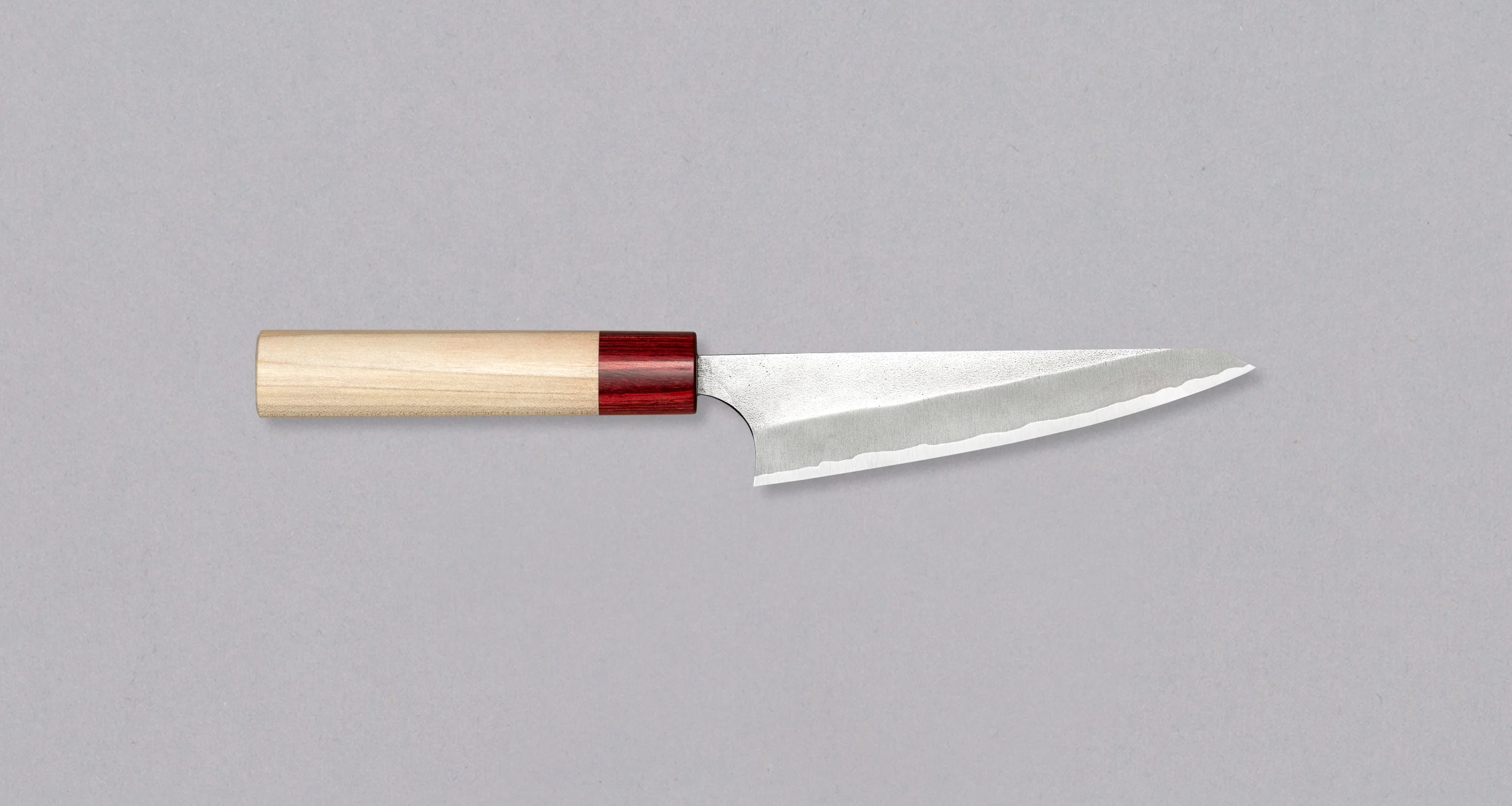
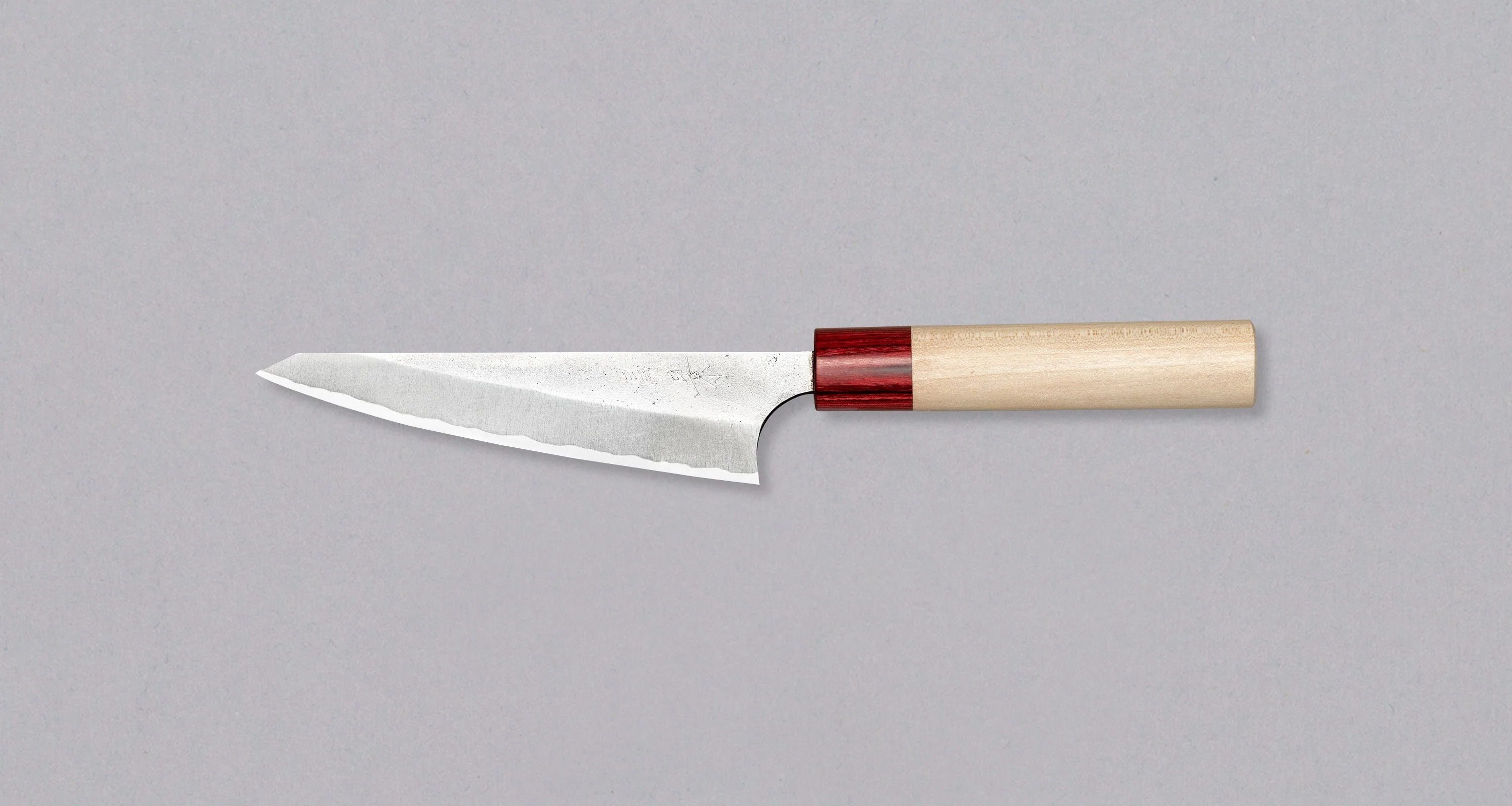
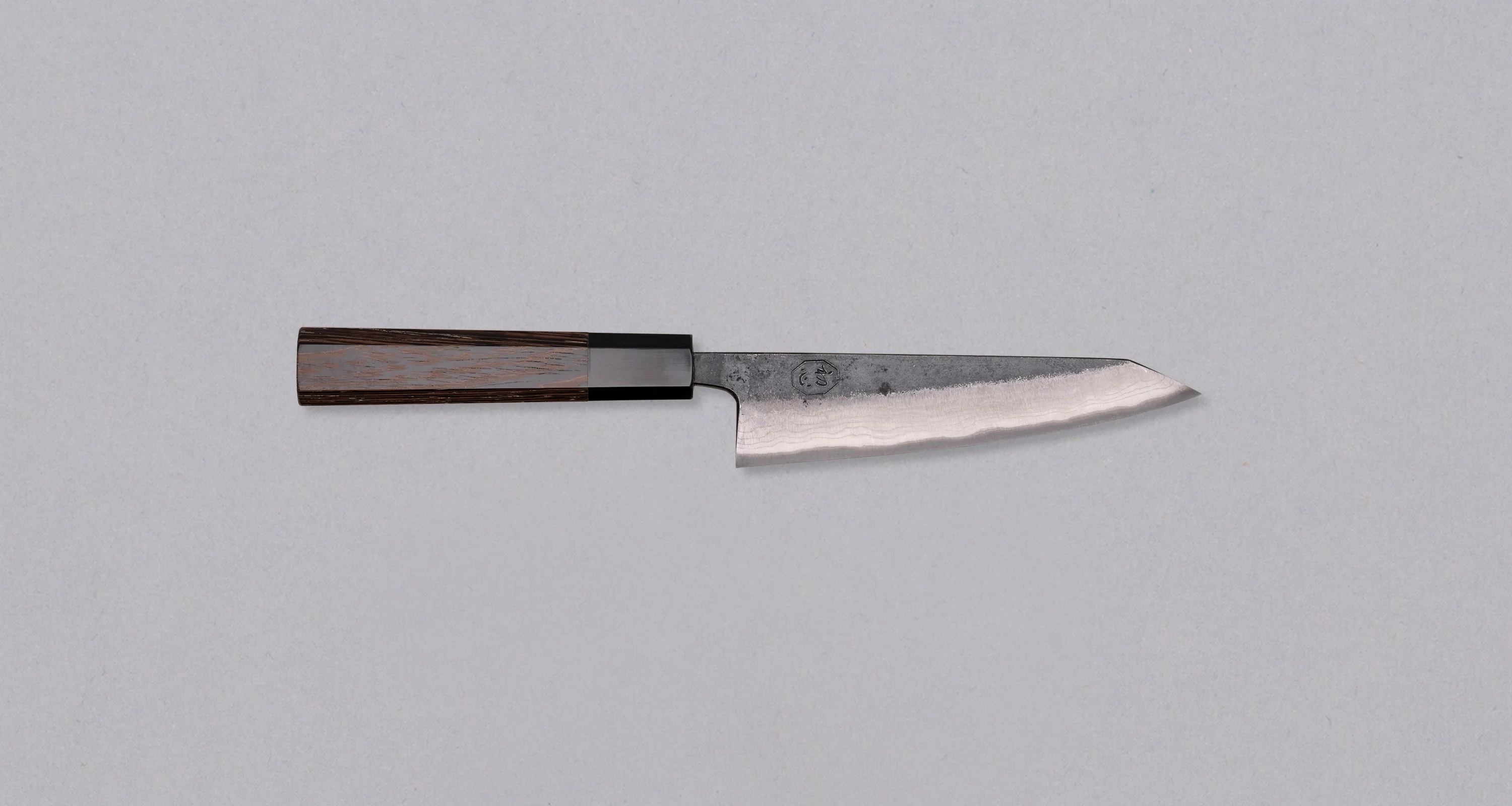
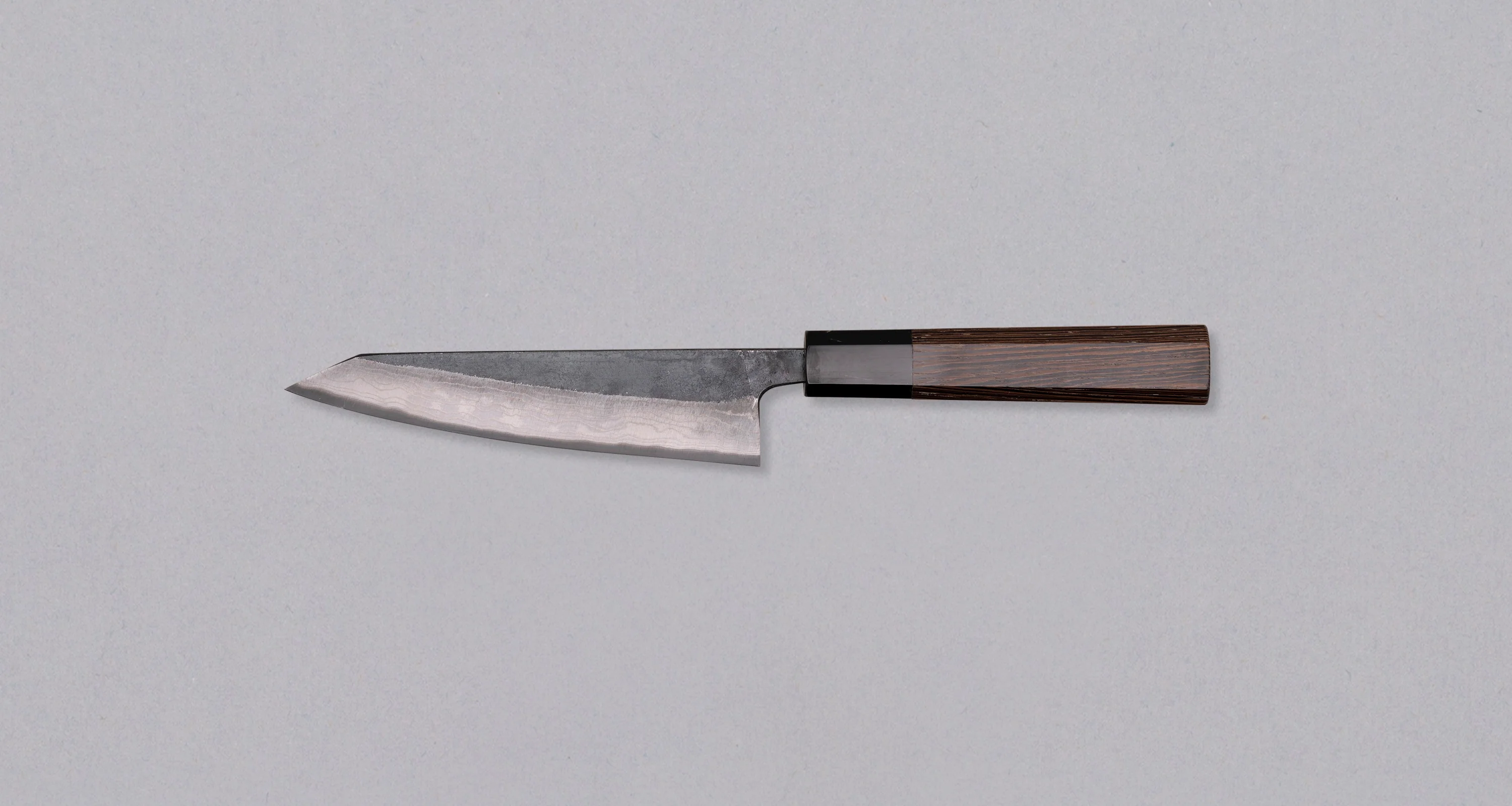
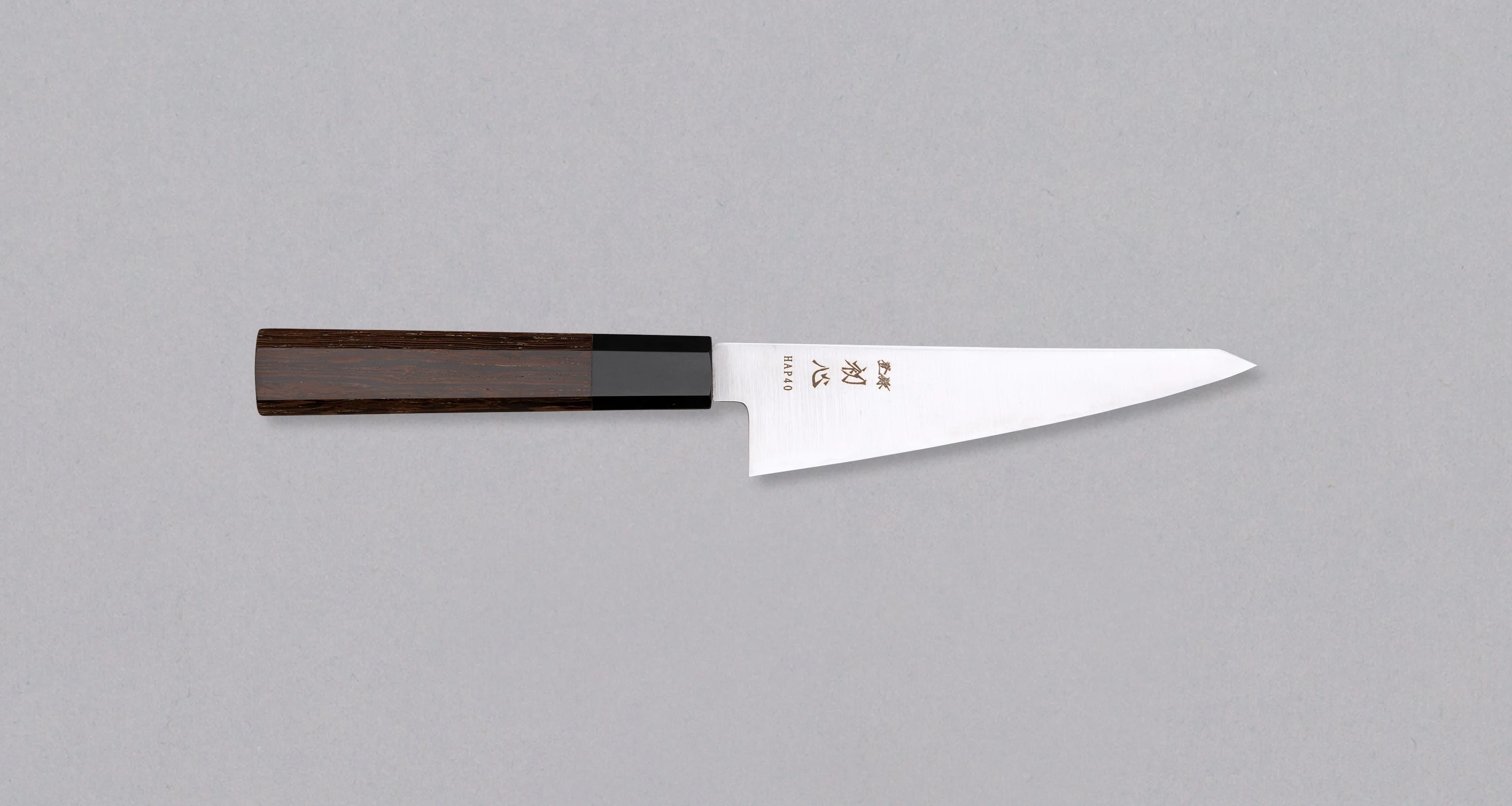
Hayabusa Honesuki HAP-40 150mm is a Japanese boning knife, intended for the preparation of poultry. Whereas it is not suitable for cutting through bone, it handles cartilage and tendons wonderfully, and its sturdy heel can be used for scraping meat off the bones. The reverse tanto tip design increases the strength of the tip, which can be used to easily pierce the skin, as well as to make precise cuts in tight spots, like the joints. Its shape also allows for making quick turns, great for trimming away fat and connective tissue.
BLADE SHAPE:
Originally intended for poultry and small animals (such as rabbits), the Honesuki is a Japanese-style knife that is highly effective for larger butchering and filleting of fish. Its blade features a thick heel that is ideal for scraping meat off bones, as well as a thinner tip that allows for precise cuts. While it is not advisable to use excessive force when cutting through bone with this knife, it is well-suited for separating tendons and cartilage.
The "reverse tanto" tip design increases the strength of the tip, which can be used to easily pierce the skin, as well as to make precise cuts in tight spots, like the joints. Its shape also allows making quick turns, great for trimming away fat and connective tissue.
Standard honesuki knives have an asymmetrical grind, meaning they are usually suited only for right-handed users, while this one is sharpened to a 50/50 angle and fits both right and left-handed users.
STEEL:
This knife’s hard core is made of a somewhat exotic and currently one of the most mysterious and attractive steels produced in Japan (at least as far as kitchen knives are concerned): Hitachi’s HAP-40 steel that fits into the category of modern and technologically advanced steels. HAP-40 is fine-grained enough to sharpen very well, and knives from this steel keep their sharpness 3-5 times longer than traditional knives. An interesting fact is that, considering it is a powder steel, it has an minimal content of chromium (around 4%) and can react as a high-carbon steel in specific circumstances.
LAMINATION:
The core layer consisting of the harder HAP-40 steel was sandwiched between two layers of softer steel. This technique is called san-mai and is used to protect the hard (but delicate) core from outside factors and physical impacts, which could lead to breakage.
GEOMETRY:
It has a double bevel (symmetrical) blade. The cutting edge is sharpened to a 50/50 angle and stays sharp even after hours of constant use.
BLADE FINISH:
The minimalistic-looking, highly polished (also called migaki finish - see article Blade Construction: Blade Finish for more) blade is extremely thin, which allows the user to work precisely even with the smallest pieces of ingredients.
HANDLE:
The knife features an octagon Japanese (Wa) style handle made out of ebony wood. The octagon shape of the handle provides a comfortable and secure grip, allowing for precise control during use.
Hayabusa Honesuki HAP-40 150mm is a Japanese boning knife, intended for the preparation of poultry. Whereas it is not suitable for cutting through bone, it handles cartilage and tendons wonderfully, and its sturdy heel can be used for scraping meat off the bones. The reverse tanto tip design increases the strength of the tip, which can be used to easily pierce the skin, as well as to make precise cuts in tight spots, like the joints. Its shape also allows for making quick turns, great for trimming away fat and connective tissue.
BLADE SHAPE:
Originally intended for poultry and small animals (such as rabbits), the Honesuki is a Japanese-style knife that is highly effective for larger butchering and filleting of fish. Its blade features a thick heel that is ideal for scraping meat off bones, as well as a thinner tip that allows for precise cuts. While it is not advisable to use excessive force when cutting through bone with this knife, it is well-suited for separating tendons and cartilage.
The "reverse tanto" tip design increases the strength of the tip, which can be used to easily pierce the skin, as well as to make precise cuts in tight spots, like the joints. Its shape also allows making quick turns, great for trimming away fat and connective tissue.
Standard honesuki knives have an asymmetrical grind, meaning they are usually suited only for right-handed users, while this one is sharpened to a 50/50 angle and fits both right and left-handed users.
STEEL:
This knife’s hard core is made of a somewhat exotic and currently one of the most mysterious and attractive steels produced in Japan (at least as far as kitchen knives are concerned): Hitachi’s HAP-40 steel that fits into the category of modern and technologically advanced steels. HAP-40 is fine-grained enough to sharpen very well, and knives from this steel keep their sharpness 3-5 times longer than traditional knives. An interesting fact is that, considering it is a powder steel, it has an minimal content of chromium (around 4%) and can react as a high-carbon steel in specific circumstances.
LAMINATION:
The core layer consisting of the harder HAP-40 steel was sandwiched between two layers of softer steel. This technique is called san-mai and is used to protect the hard (but delicate) core from outside factors and physical impacts, which could lead to breakage.
GEOMETRY:
It has a double bevel (symmetrical) blade. The cutting edge is sharpened to a 50/50 angle and stays sharp even after hours of constant use.
BLADE FINISH:
The minimalistic-looking, highly polished (also called migaki finish - see article Blade Construction: Blade Finish for more) blade is extremely thin, which allows the user to work precisely even with the smallest pieces of ingredients.
HANDLE:
The knife features an octagon Japanese (Wa) style handle made out of ebony wood. The octagon shape of the handle provides a comfortable and secure grip, allowing for precise control during use.
Original: $230.00
-70%$230.00
$69.00Description
Hayabusa Honesuki HAP-40 150mm is a Japanese boning knife, intended for the preparation of poultry. Whereas it is not suitable for cutting through bone, it handles cartilage and tendons wonderfully, and its sturdy heel can be used for scraping meat off the bones. The reverse tanto tip design increases the strength of the tip, which can be used to easily pierce the skin, as well as to make precise cuts in tight spots, like the joints. Its shape also allows for making quick turns, great for trimming away fat and connective tissue.
BLADE SHAPE:
Originally intended for poultry and small animals (such as rabbits), the Honesuki is a Japanese-style knife that is highly effective for larger butchering and filleting of fish. Its blade features a thick heel that is ideal for scraping meat off bones, as well as a thinner tip that allows for precise cuts. While it is not advisable to use excessive force when cutting through bone with this knife, it is well-suited for separating tendons and cartilage.
The "reverse tanto" tip design increases the strength of the tip, which can be used to easily pierce the skin, as well as to make precise cuts in tight spots, like the joints. Its shape also allows making quick turns, great for trimming away fat and connective tissue.
Standard honesuki knives have an asymmetrical grind, meaning they are usually suited only for right-handed users, while this one is sharpened to a 50/50 angle and fits both right and left-handed users.
STEEL:
This knife’s hard core is made of a somewhat exotic and currently one of the most mysterious and attractive steels produced in Japan (at least as far as kitchen knives are concerned): Hitachi’s HAP-40 steel that fits into the category of modern and technologically advanced steels. HAP-40 is fine-grained enough to sharpen very well, and knives from this steel keep their sharpness 3-5 times longer than traditional knives. An interesting fact is that, considering it is a powder steel, it has an minimal content of chromium (around 4%) and can react as a high-carbon steel in specific circumstances.
LAMINATION:
The core layer consisting of the harder HAP-40 steel was sandwiched between two layers of softer steel. This technique is called san-mai and is used to protect the hard (but delicate) core from outside factors and physical impacts, which could lead to breakage.
GEOMETRY:
It has a double bevel (symmetrical) blade. The cutting edge is sharpened to a 50/50 angle and stays sharp even after hours of constant use.
BLADE FINISH:
The minimalistic-looking, highly polished (also called migaki finish - see article Blade Construction: Blade Finish for more) blade is extremely thin, which allows the user to work precisely even with the smallest pieces of ingredients.
HANDLE:
The knife features an octagon Japanese (Wa) style handle made out of ebony wood. The octagon shape of the handle provides a comfortable and secure grip, allowing for precise control during use.