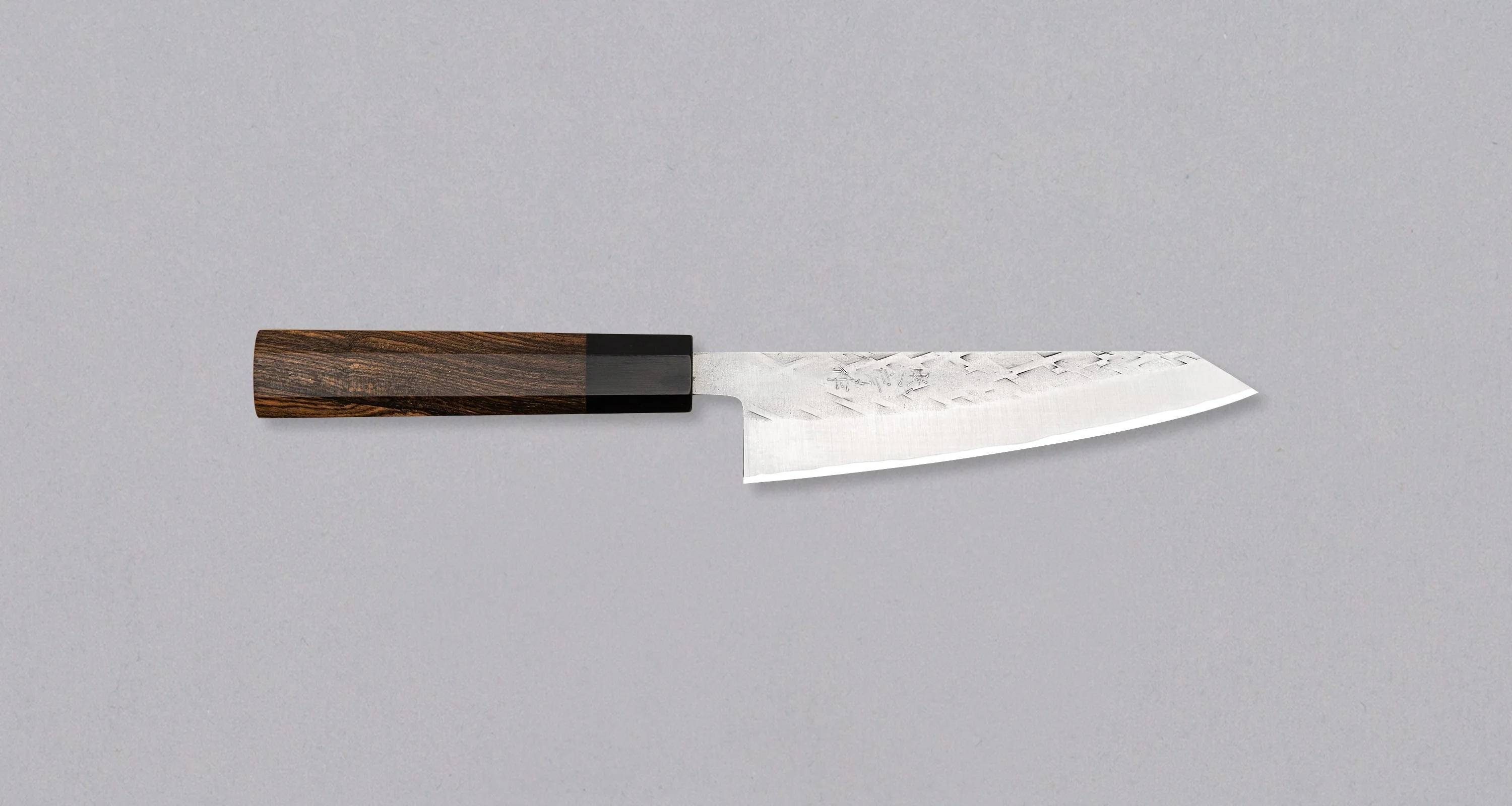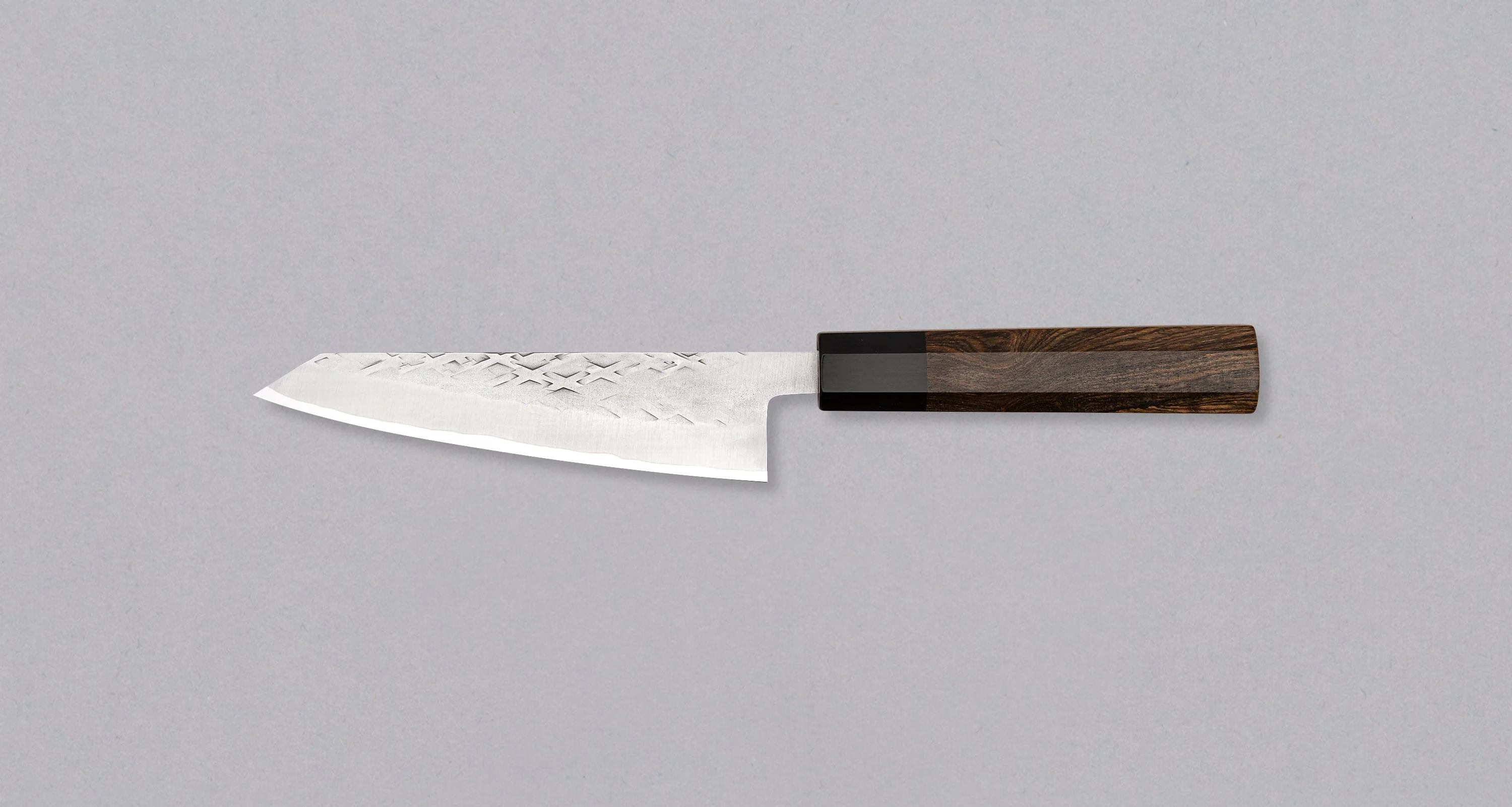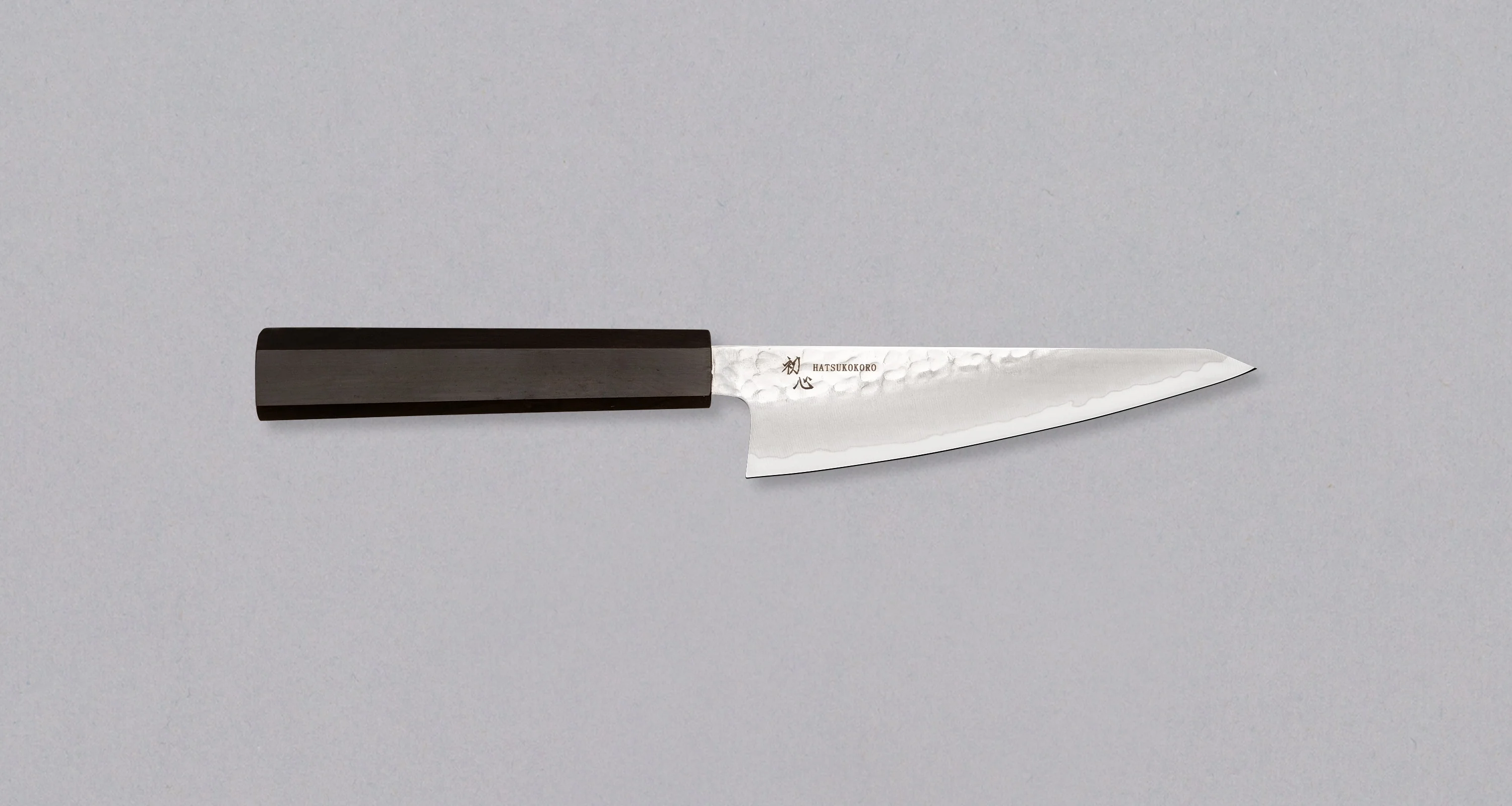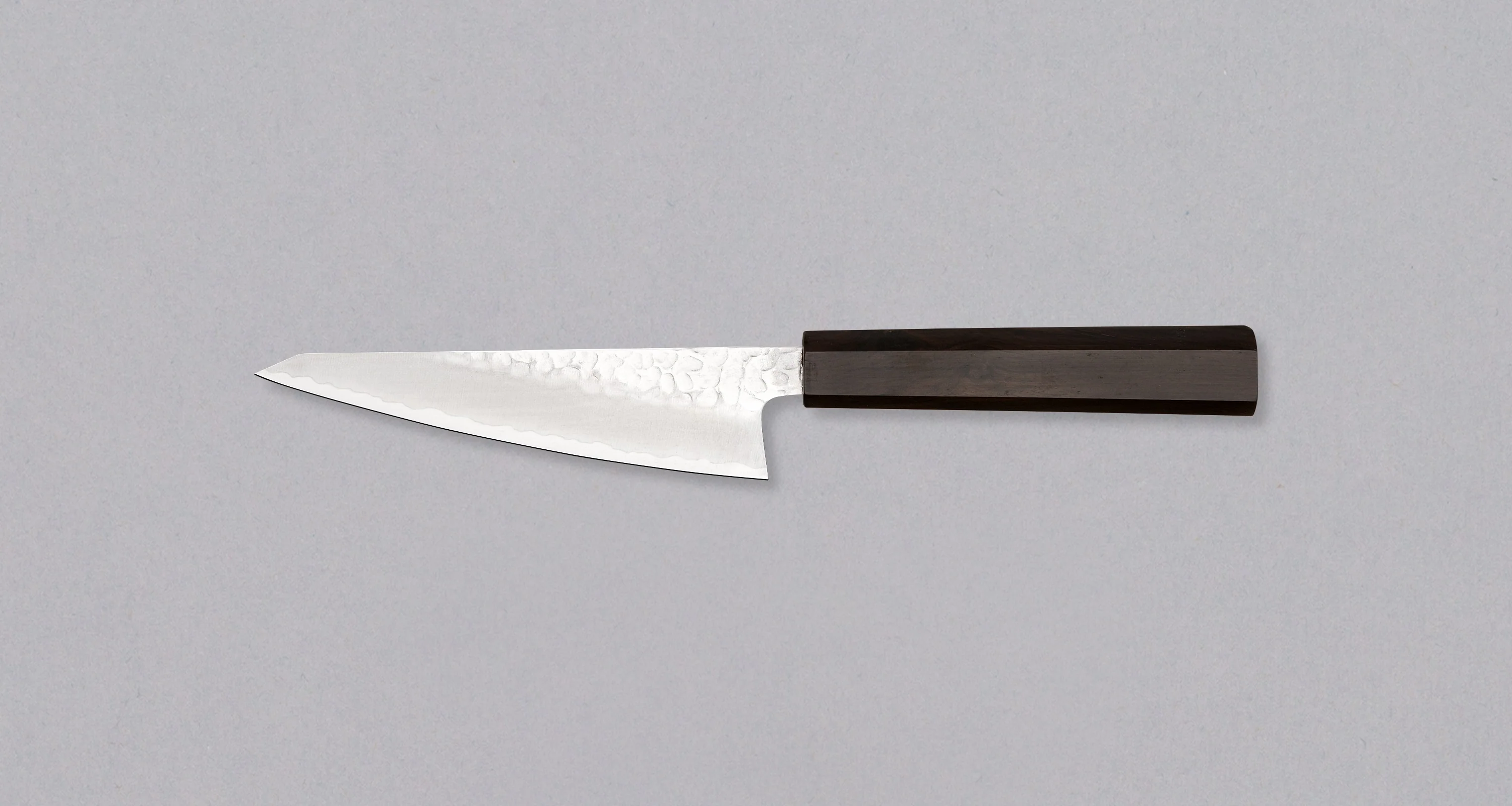
Mcusta Boning Damascus D Classic Black 165mm (6.5")
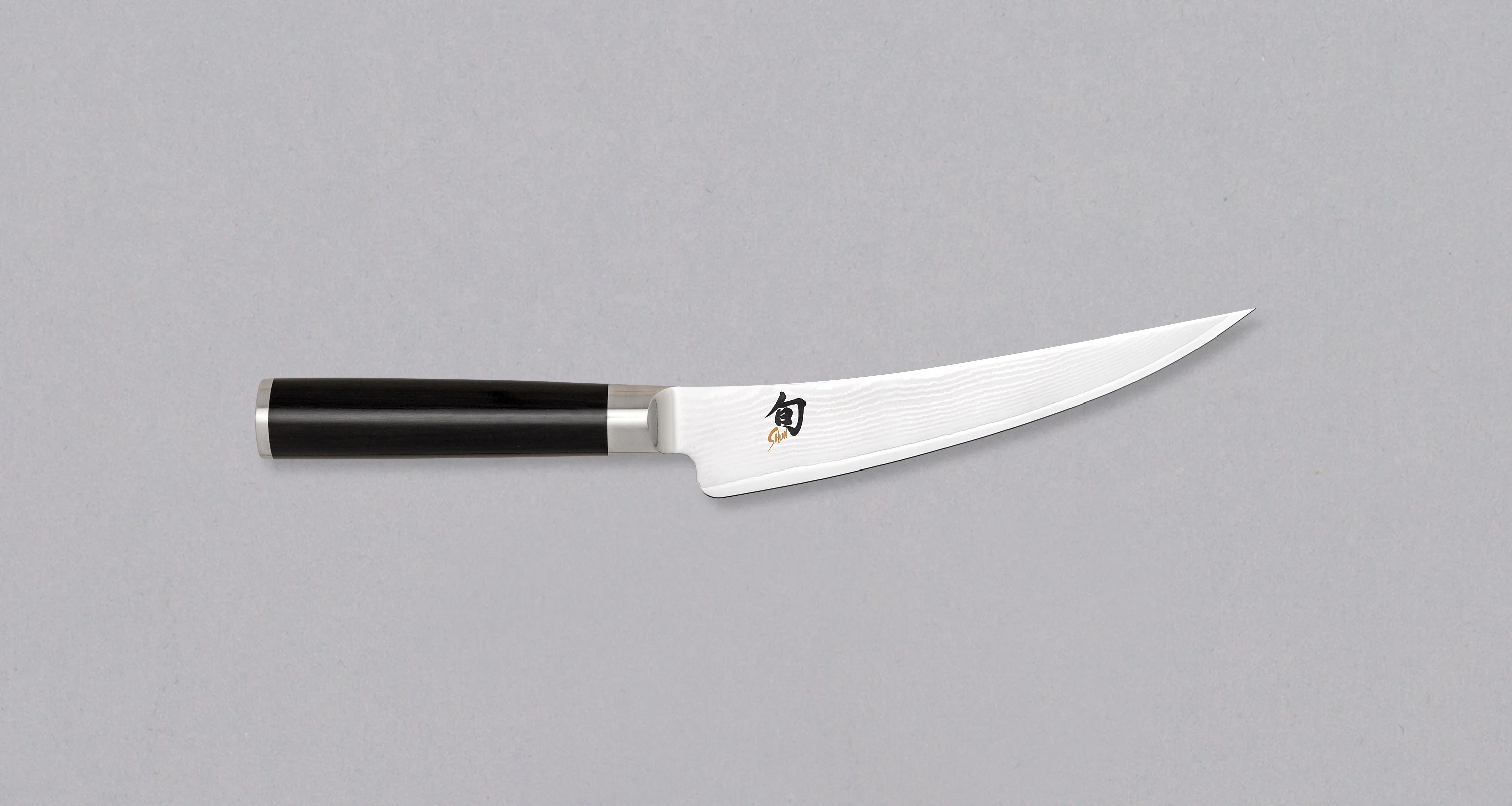
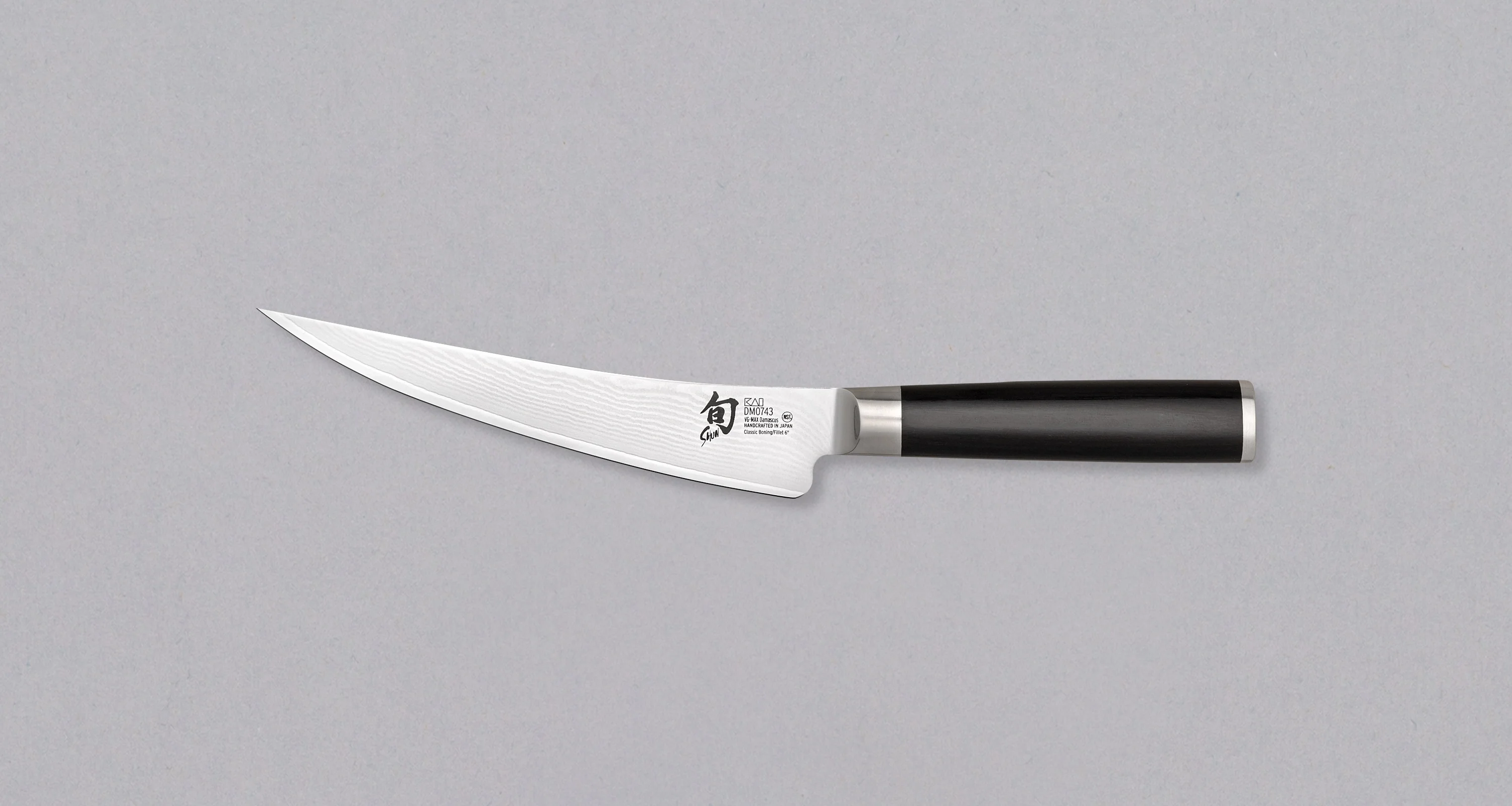
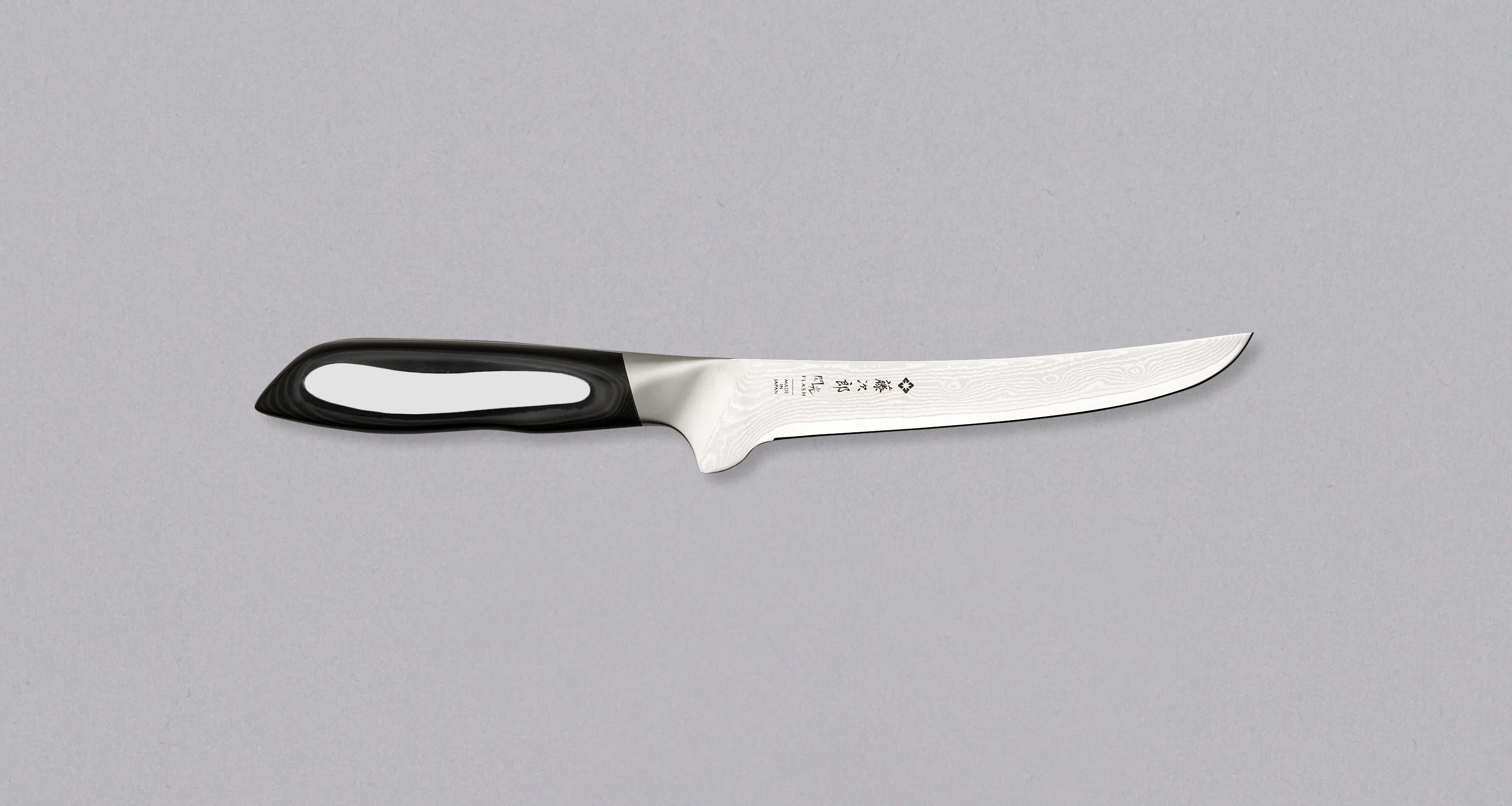
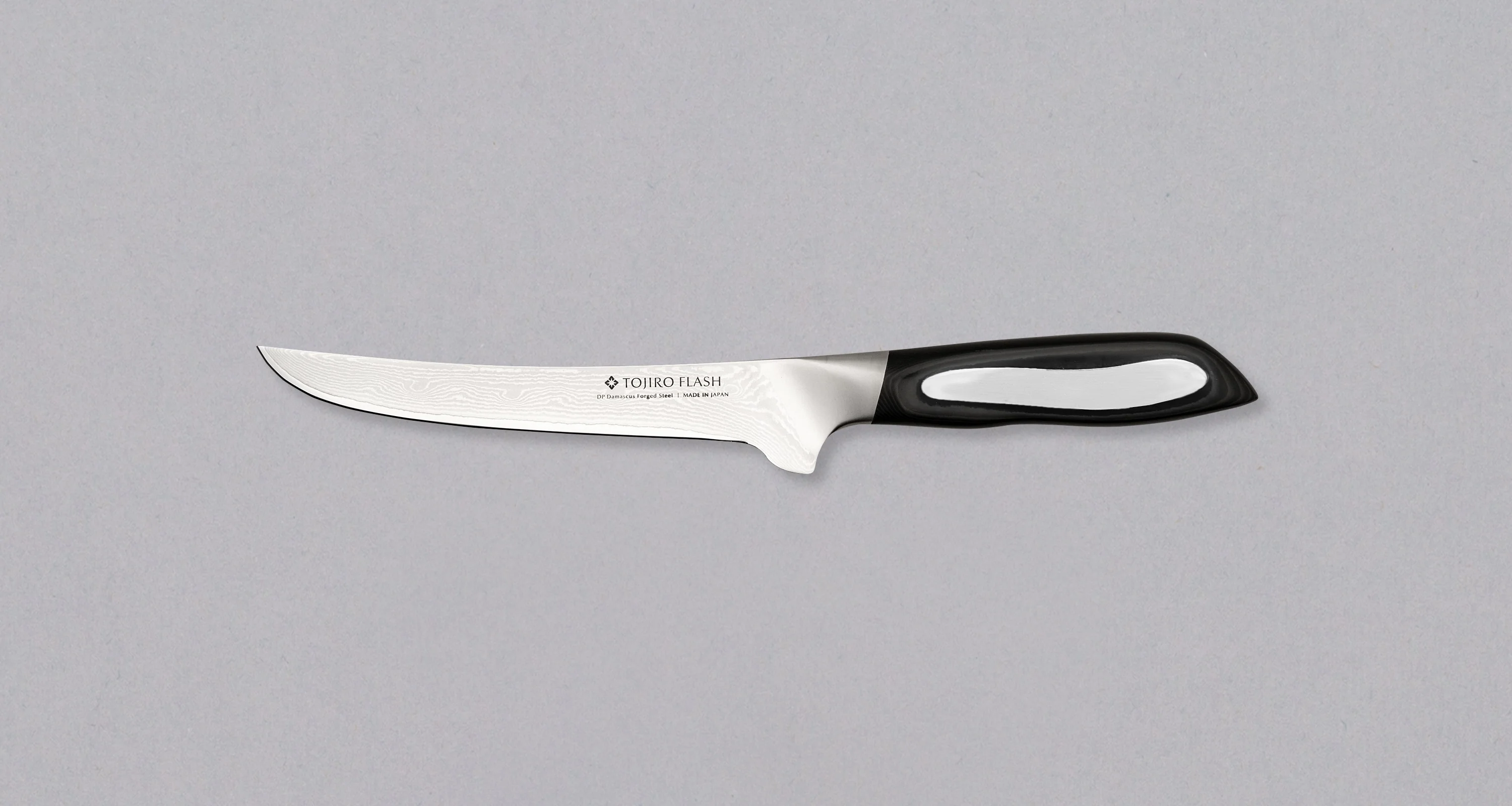
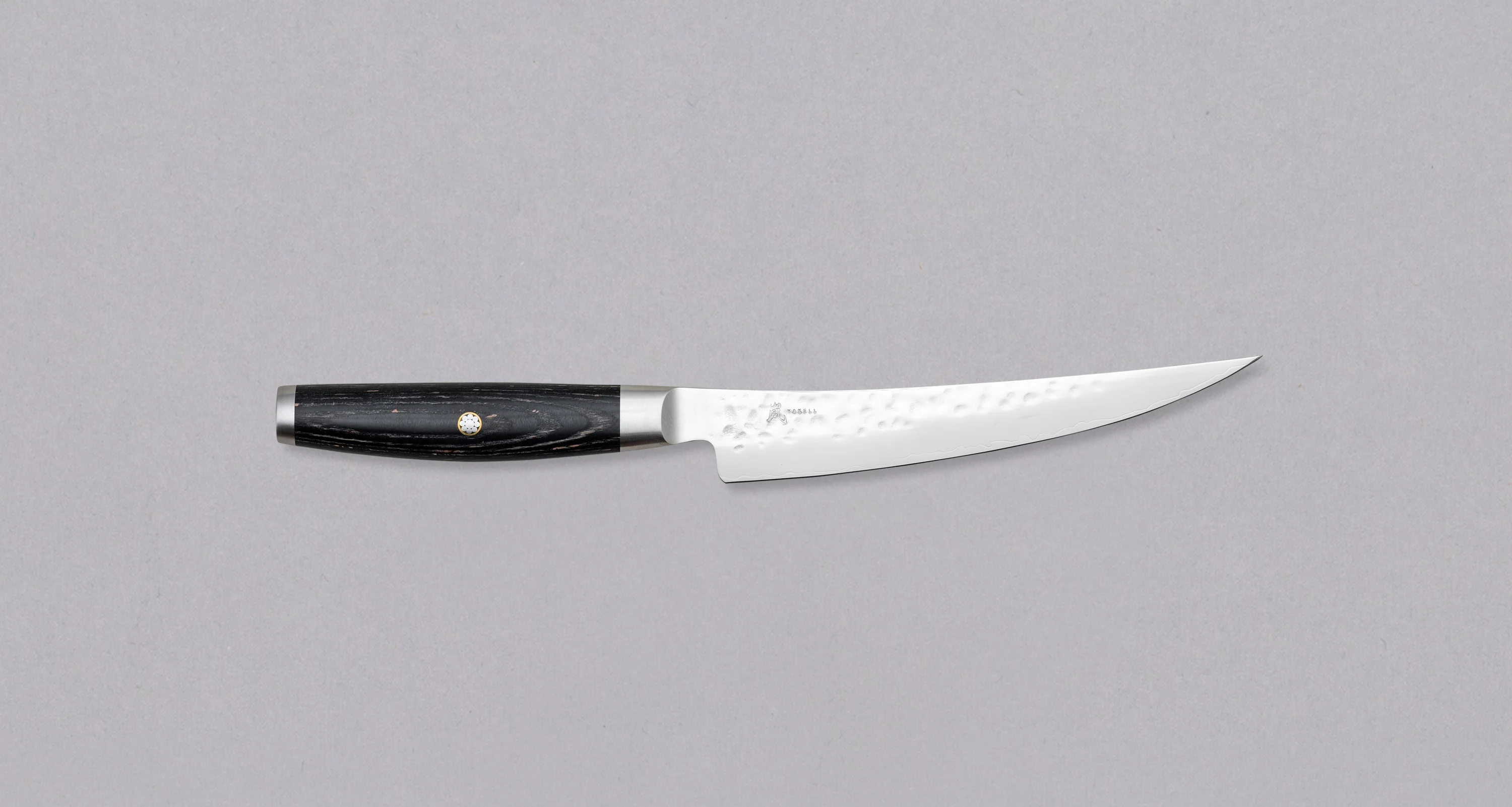
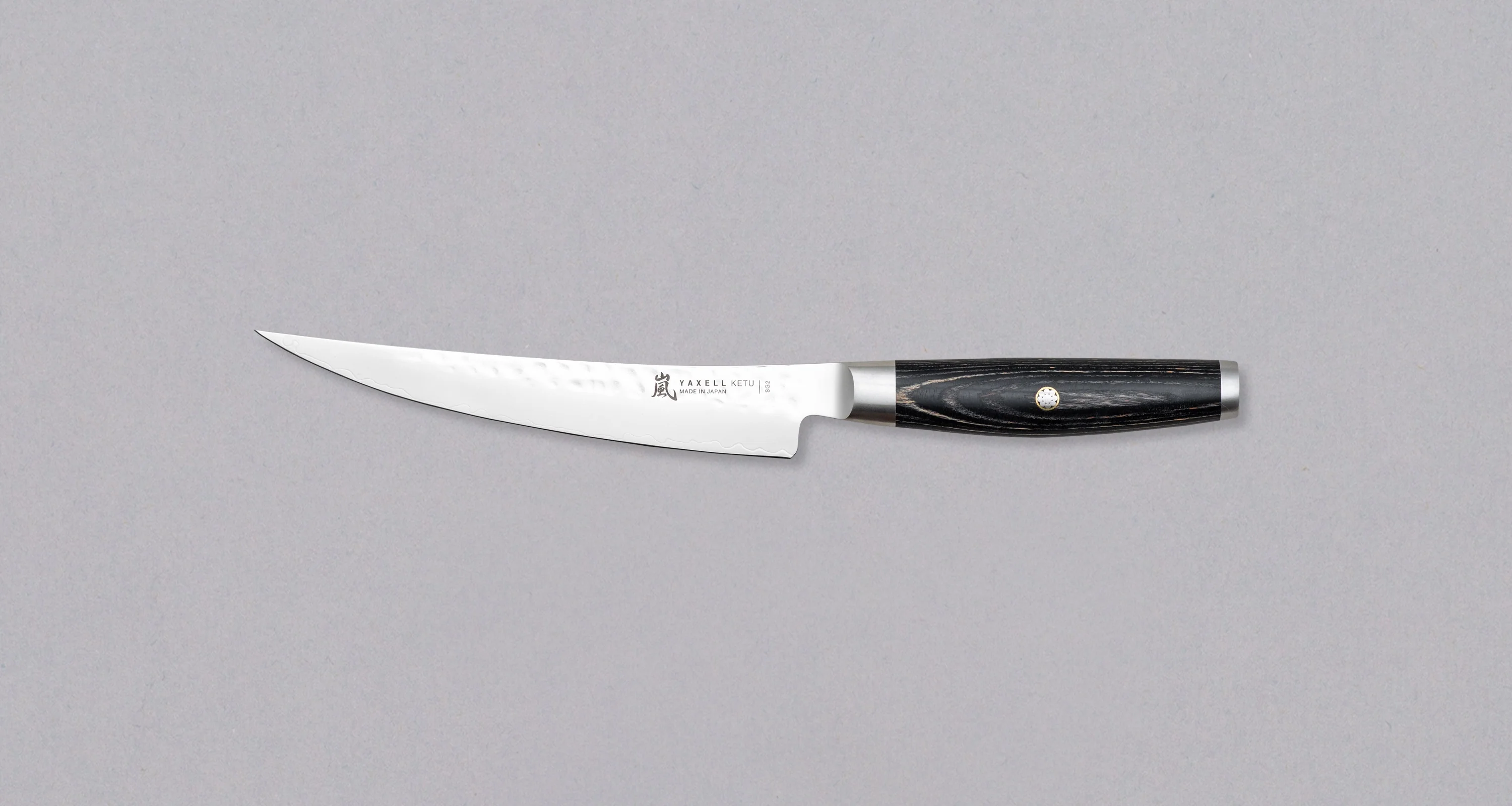
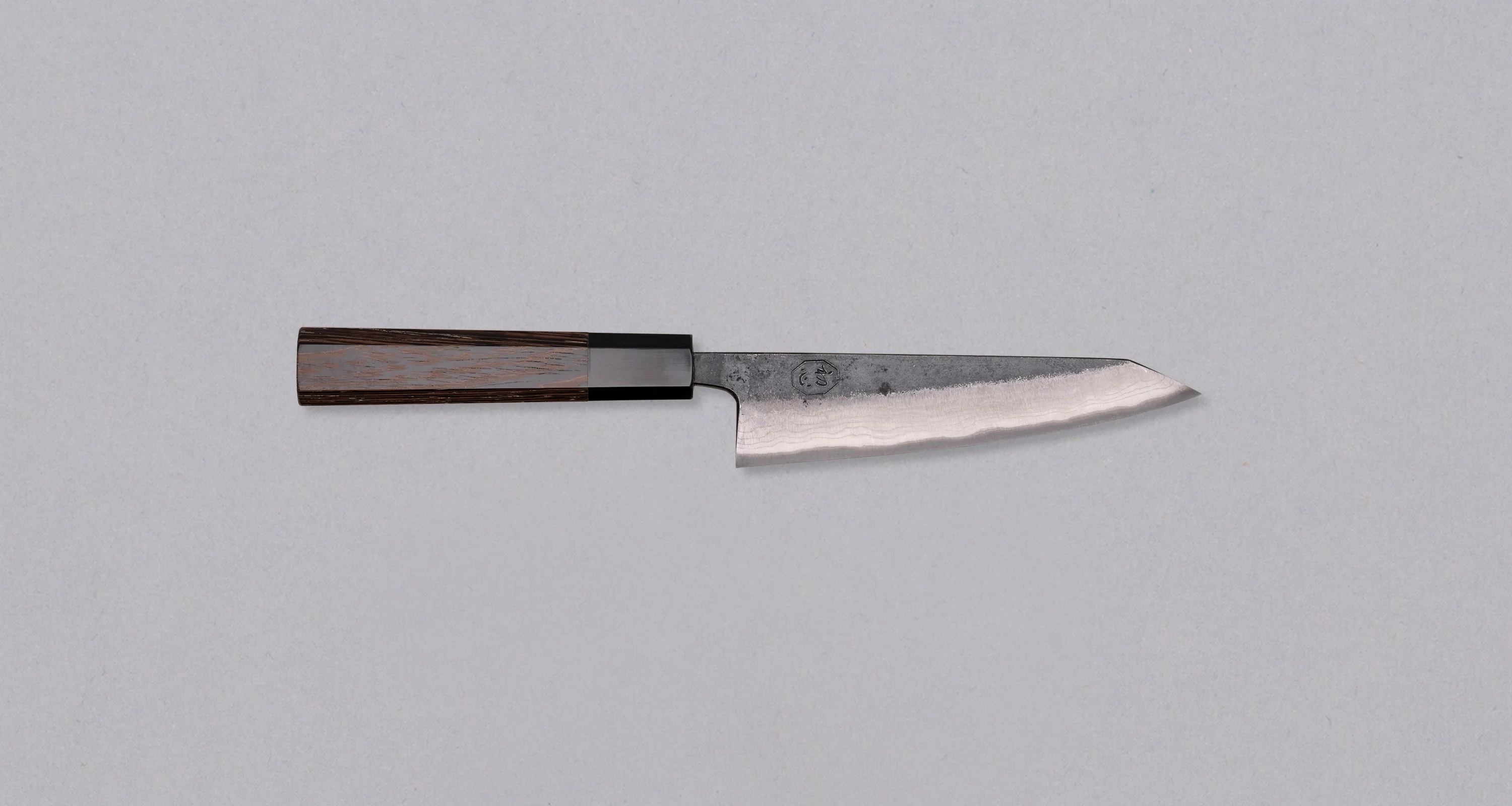
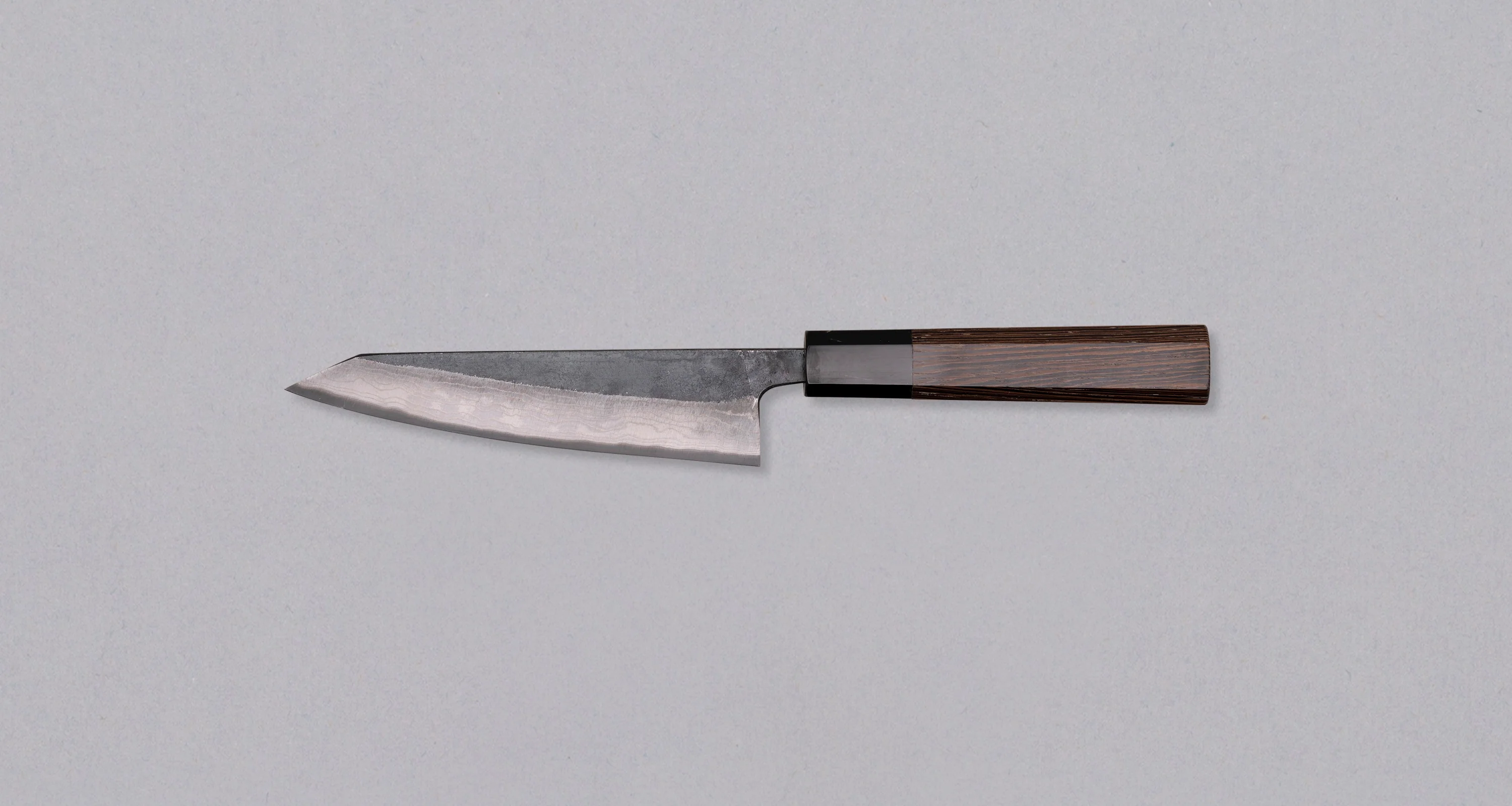
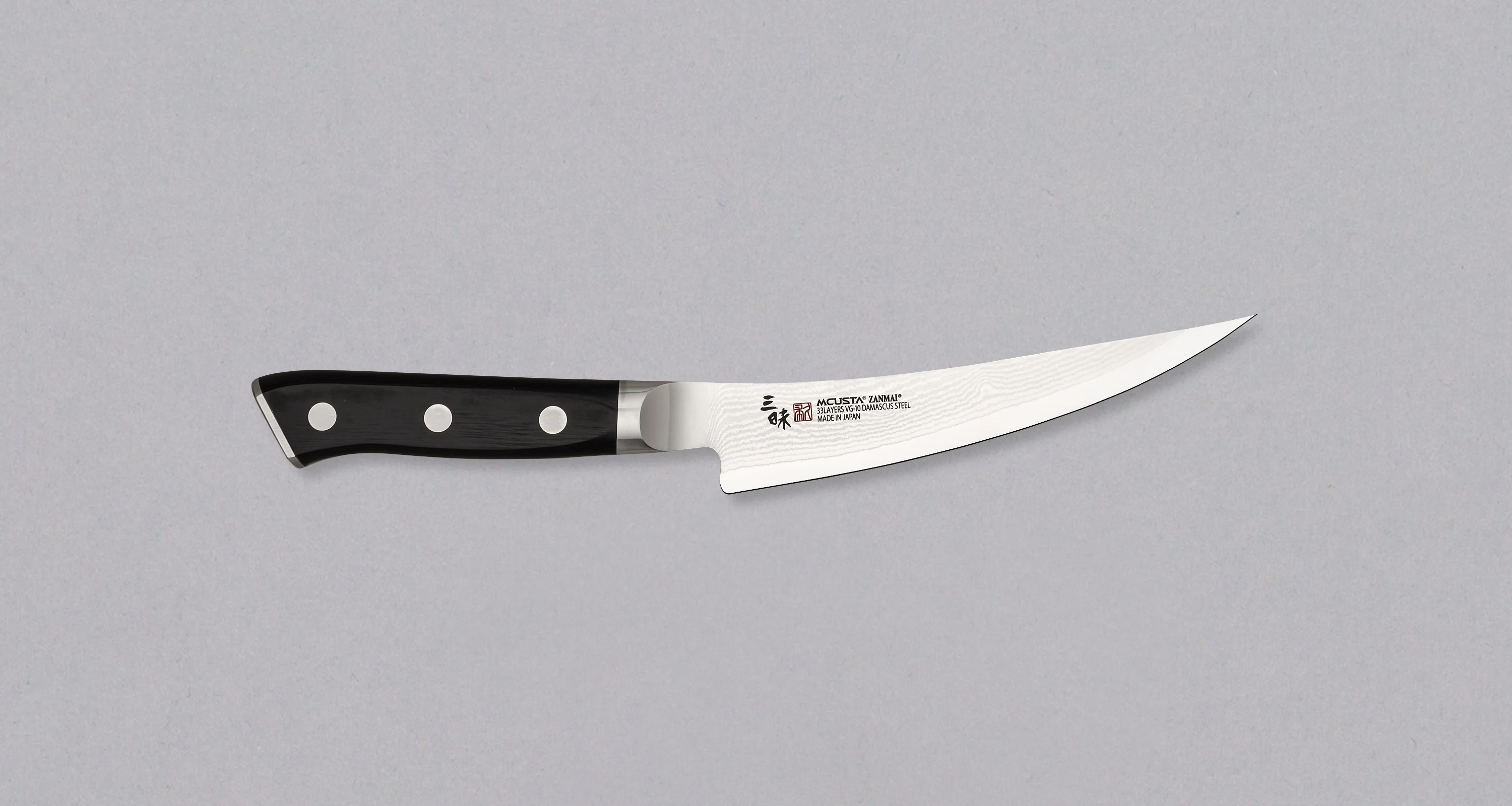
Mcusta Boning Damascus D Classic Black 165mm (6.5") is a looker suitable for at-home and professional use. The 33 layers of softer and stainless steel that form the damascus pattern resemble a flame spreading from the bottom to the tip of the blade, giving every knife a unique look. The core of this knife is made of great-performing, easy-to-resharpen VG-10 steel.
BLADE SHAPE:
A boning knife is, as its name already suggests, used for removing the bones from meat, poultry, and fish. The blade's handle and shape allow for a variety of grips and cutting techniques, especially useful when working around the bone. It is suitable for anyone looking for a slightly heavier but perfectly balanced knife with a super thin and precise blade. Boning knives are to be used around the bones, but not for cutting through them - the blade is too thin, which can result in a chipped blade.
The knife also has finger protection, as the bolster (at the transition from the blade into the handle) extends down the heel of the knife, which prevents your fingers from sliding down the cutting edge.
While primarily designed for deboning meat, it is also ideal for filleting fish up to 10 kg (35 oz.), offering precision and control for delicate tasks.
STEEL:
VG-10 (V for Vanadium, G for "gold" as in "gold standard") is made by Takefu Special Steel Company, a relatively small steel company that around 60 years ago managed to find just the right balance of different elements to create the most popular Japanese knife making steel today.
VG-10 steel is stainless steel with relatively high Carbon (C) content (1%), 15% Chromium (Cr), 1% Molybdenum (Mo), 0.3% Vanadium (V) and 1.5% Cobalt (Co).
The combination of Cr, Mo, and V forms a lot of hard carbides, making the steel abrasion resistant, which translates to long-lasting, smooth sharpness. Heat treated to the hardness of 60-61 HRC.
LAMINATION:
The blade’s core was laminated using the san-mai method to improve its structural integrity and subsequent ability to withstand impacts and prevent chipping. San-mai translates to “three layers” in Japanese, referring to a blade that is composed of a primary, inner layer of harder steel (hagane) and of two secondary, outer layers of softer steel (jigane) that protect the prior.
→ Read more on Blade Construction: Lamination.
BLADE FINISH:
The 33-layer Damascus cladding ensures that every knife has a unique pattern on the blade, which makes it one-of-a-kind.
GEOMETRY:
It has a double bevel (symmetrical) blade (50/50) with a hamaguri grind. The blade has a distal taper, meaning that the blane thins from the heel of the blade towards the tip. This gives it more strength and weight at the handle (meaning we can exert more pressure with the heel) and more precision at the tip, allowing for smooth and precise cuts.
HANDLE:
This knife is a full-tang boning knife, attached to the ergonomic black/brown pakka wood handle. Two rivets and a lavish mosaic pin hold the knife securely attached to the handle. A stainless bolster is added for a smooth transition from the blade to the handle.
Besides aesthetics, the flat ejiri, - the bottom part of the handle - has a practical function, too; it can be used for crushing garlic and other ingredients.
BLACKSMITH:
Mcusta Zanmai has an interesting (and very high-tech) philosophy of knife manufacturing. With their 800-year tradition of making knives, they decided to incorporate traditional knife craftsmanship knowledge into their own custom-made machines. Mcusta is the only knife manufacturer that uses laser machines to cut out the knives instead of stamping them out of the steel sheet. Due to this process, their blades are less susceptible to structural stresses in the steel, making them the most innovative and modern knife maker in Japan.
Handles and pins are milled to the precision of 1/1000mm with their high-quality CNC machines. Every knife is then inspected and assembled by hand. The final (sharp) edge is sharpened by Mcusta's team of master craftsmen to get a very good out-of-the-box sharpness.
☝️ Fun fact: Mcusta is a made-up word - a combination of Machine and custom!
Mcusta Boning Damascus D Classic Black 165mm (6.5") is a looker suitable for at-home and professional use. The 33 layers of softer and stainless steel that form the damascus pattern resemble a flame spreading from the bottom to the tip of the blade, giving every knife a unique look. The core of this knife is made of great-performing, easy-to-resharpen VG-10 steel.
BLADE SHAPE:
A boning knife is, as its name already suggests, used for removing the bones from meat, poultry, and fish. The blade's handle and shape allow for a variety of grips and cutting techniques, especially useful when working around the bone. It is suitable for anyone looking for a slightly heavier but perfectly balanced knife with a super thin and precise blade. Boning knives are to be used around the bones, but not for cutting through them - the blade is too thin, which can result in a chipped blade.
The knife also has finger protection, as the bolster (at the transition from the blade into the handle) extends down the heel of the knife, which prevents your fingers from sliding down the cutting edge.
While primarily designed for deboning meat, it is also ideal for filleting fish up to 10 kg (35 oz.), offering precision and control for delicate tasks.
STEEL:
VG-10 (V for Vanadium, G for "gold" as in "gold standard") is made by Takefu Special Steel Company, a relatively small steel company that around 60 years ago managed to find just the right balance of different elements to create the most popular Japanese knife making steel today.
VG-10 steel is stainless steel with relatively high Carbon (C) content (1%), 15% Chromium (Cr), 1% Molybdenum (Mo), 0.3% Vanadium (V) and 1.5% Cobalt (Co).
The combination of Cr, Mo, and V forms a lot of hard carbides, making the steel abrasion resistant, which translates to long-lasting, smooth sharpness. Heat treated to the hardness of 60-61 HRC.
LAMINATION:
The blade’s core was laminated using the san-mai method to improve its structural integrity and subsequent ability to withstand impacts and prevent chipping. San-mai translates to “three layers” in Japanese, referring to a blade that is composed of a primary, inner layer of harder steel (hagane) and of two secondary, outer layers of softer steel (jigane) that protect the prior.
→ Read more on Blade Construction: Lamination.
BLADE FINISH:
The 33-layer Damascus cladding ensures that every knife has a unique pattern on the blade, which makes it one-of-a-kind.
GEOMETRY:
It has a double bevel (symmetrical) blade (50/50) with a hamaguri grind. The blade has a distal taper, meaning that the blane thins from the heel of the blade towards the tip. This gives it more strength and weight at the handle (meaning we can exert more pressure with the heel) and more precision at the tip, allowing for smooth and precise cuts.
HANDLE:
This knife is a full-tang boning knife, attached to the ergonomic black/brown pakka wood handle. Two rivets and a lavish mosaic pin hold the knife securely attached to the handle. A stainless bolster is added for a smooth transition from the blade to the handle.
Besides aesthetics, the flat ejiri, - the bottom part of the handle - has a practical function, too; it can be used for crushing garlic and other ingredients.
BLACKSMITH:
Mcusta Zanmai has an interesting (and very high-tech) philosophy of knife manufacturing. With their 800-year tradition of making knives, they decided to incorporate traditional knife craftsmanship knowledge into their own custom-made machines. Mcusta is the only knife manufacturer that uses laser machines to cut out the knives instead of stamping them out of the steel sheet. Due to this process, their blades are less susceptible to structural stresses in the steel, making them the most innovative and modern knife maker in Japan.
Handles and pins are milled to the precision of 1/1000mm with their high-quality CNC machines. Every knife is then inspected and assembled by hand. The final (sharp) edge is sharpened by Mcusta's team of master craftsmen to get a very good out-of-the-box sharpness.
☝️ Fun fact: Mcusta is a made-up word - a combination of Machine and custom!
Original: $210.00
-70%$210.00
$63.00Description
Mcusta Boning Damascus D Classic Black 165mm (6.5") is a looker suitable for at-home and professional use. The 33 layers of softer and stainless steel that form the damascus pattern resemble a flame spreading from the bottom to the tip of the blade, giving every knife a unique look. The core of this knife is made of great-performing, easy-to-resharpen VG-10 steel.
BLADE SHAPE:
A boning knife is, as its name already suggests, used for removing the bones from meat, poultry, and fish. The blade's handle and shape allow for a variety of grips and cutting techniques, especially useful when working around the bone. It is suitable for anyone looking for a slightly heavier but perfectly balanced knife with a super thin and precise blade. Boning knives are to be used around the bones, but not for cutting through them - the blade is too thin, which can result in a chipped blade.
The knife also has finger protection, as the bolster (at the transition from the blade into the handle) extends down the heel of the knife, which prevents your fingers from sliding down the cutting edge.
While primarily designed for deboning meat, it is also ideal for filleting fish up to 10 kg (35 oz.), offering precision and control for delicate tasks.
STEEL:
VG-10 (V for Vanadium, G for "gold" as in "gold standard") is made by Takefu Special Steel Company, a relatively small steel company that around 60 years ago managed to find just the right balance of different elements to create the most popular Japanese knife making steel today.
VG-10 steel is stainless steel with relatively high Carbon (C) content (1%), 15% Chromium (Cr), 1% Molybdenum (Mo), 0.3% Vanadium (V) and 1.5% Cobalt (Co).
The combination of Cr, Mo, and V forms a lot of hard carbides, making the steel abrasion resistant, which translates to long-lasting, smooth sharpness. Heat treated to the hardness of 60-61 HRC.
LAMINATION:
The blade’s core was laminated using the san-mai method to improve its structural integrity and subsequent ability to withstand impacts and prevent chipping. San-mai translates to “three layers” in Japanese, referring to a blade that is composed of a primary, inner layer of harder steel (hagane) and of two secondary, outer layers of softer steel (jigane) that protect the prior.
→ Read more on Blade Construction: Lamination.
BLADE FINISH:
The 33-layer Damascus cladding ensures that every knife has a unique pattern on the blade, which makes it one-of-a-kind.
GEOMETRY:
It has a double bevel (symmetrical) blade (50/50) with a hamaguri grind. The blade has a distal taper, meaning that the blane thins from the heel of the blade towards the tip. This gives it more strength and weight at the handle (meaning we can exert more pressure with the heel) and more precision at the tip, allowing for smooth and precise cuts.
HANDLE:
This knife is a full-tang boning knife, attached to the ergonomic black/brown pakka wood handle. Two rivets and a lavish mosaic pin hold the knife securely attached to the handle. A stainless bolster is added for a smooth transition from the blade to the handle.
Besides aesthetics, the flat ejiri, - the bottom part of the handle - has a practical function, too; it can be used for crushing garlic and other ingredients.
BLACKSMITH:
Mcusta Zanmai has an interesting (and very high-tech) philosophy of knife manufacturing. With their 800-year tradition of making knives, they decided to incorporate traditional knife craftsmanship knowledge into their own custom-made machines. Mcusta is the only knife manufacturer that uses laser machines to cut out the knives instead of stamping them out of the steel sheet. Due to this process, their blades are less susceptible to structural stresses in the steel, making them the most innovative and modern knife maker in Japan.
Handles and pins are milled to the precision of 1/1000mm with their high-quality CNC machines. Every knife is then inspected and assembled by hand. The final (sharp) edge is sharpened by Mcusta's team of master craftsmen to get a very good out-of-the-box sharpness.
☝️ Fun fact: Mcusta is a made-up word - a combination of Machine and custom!