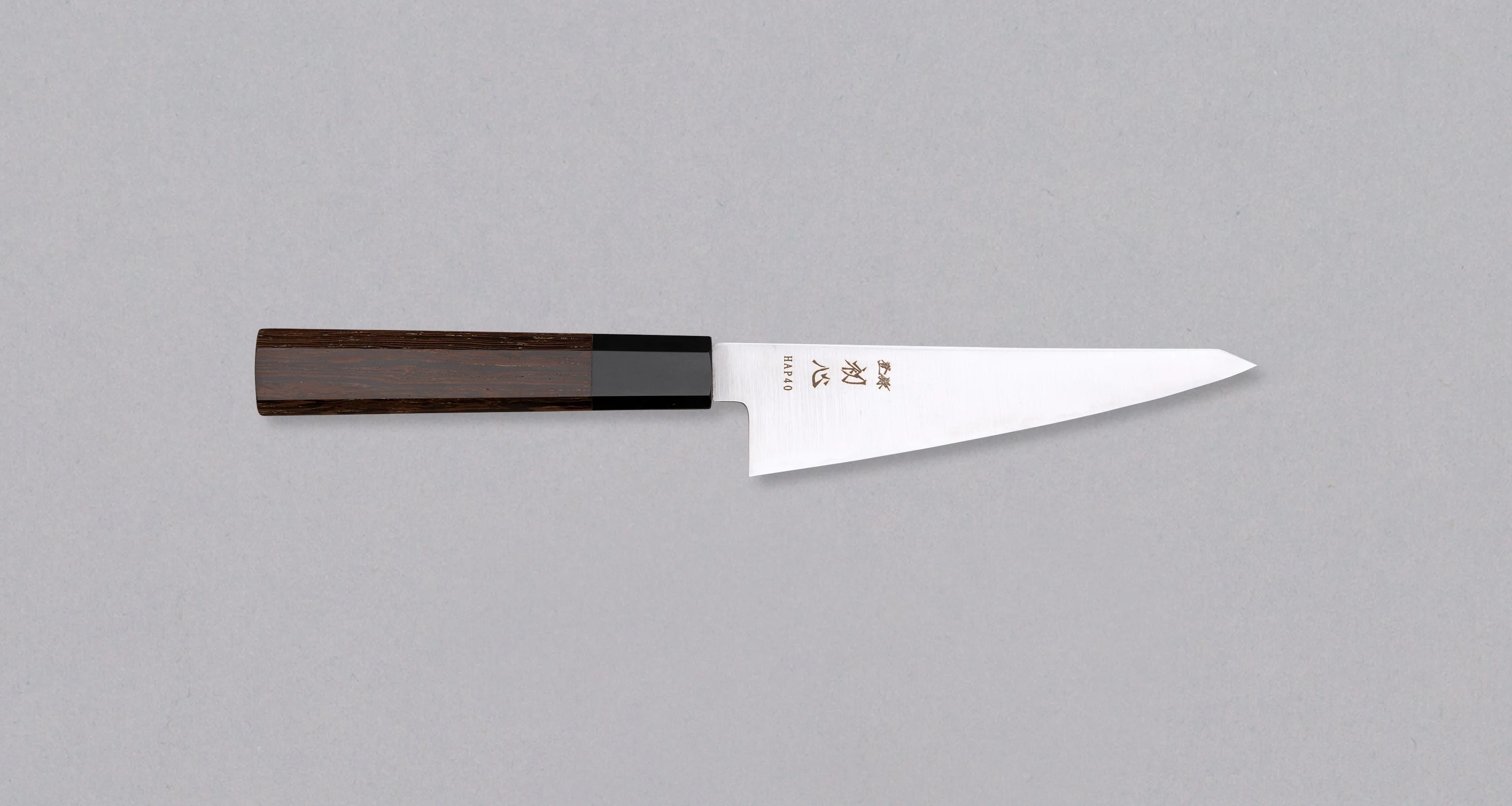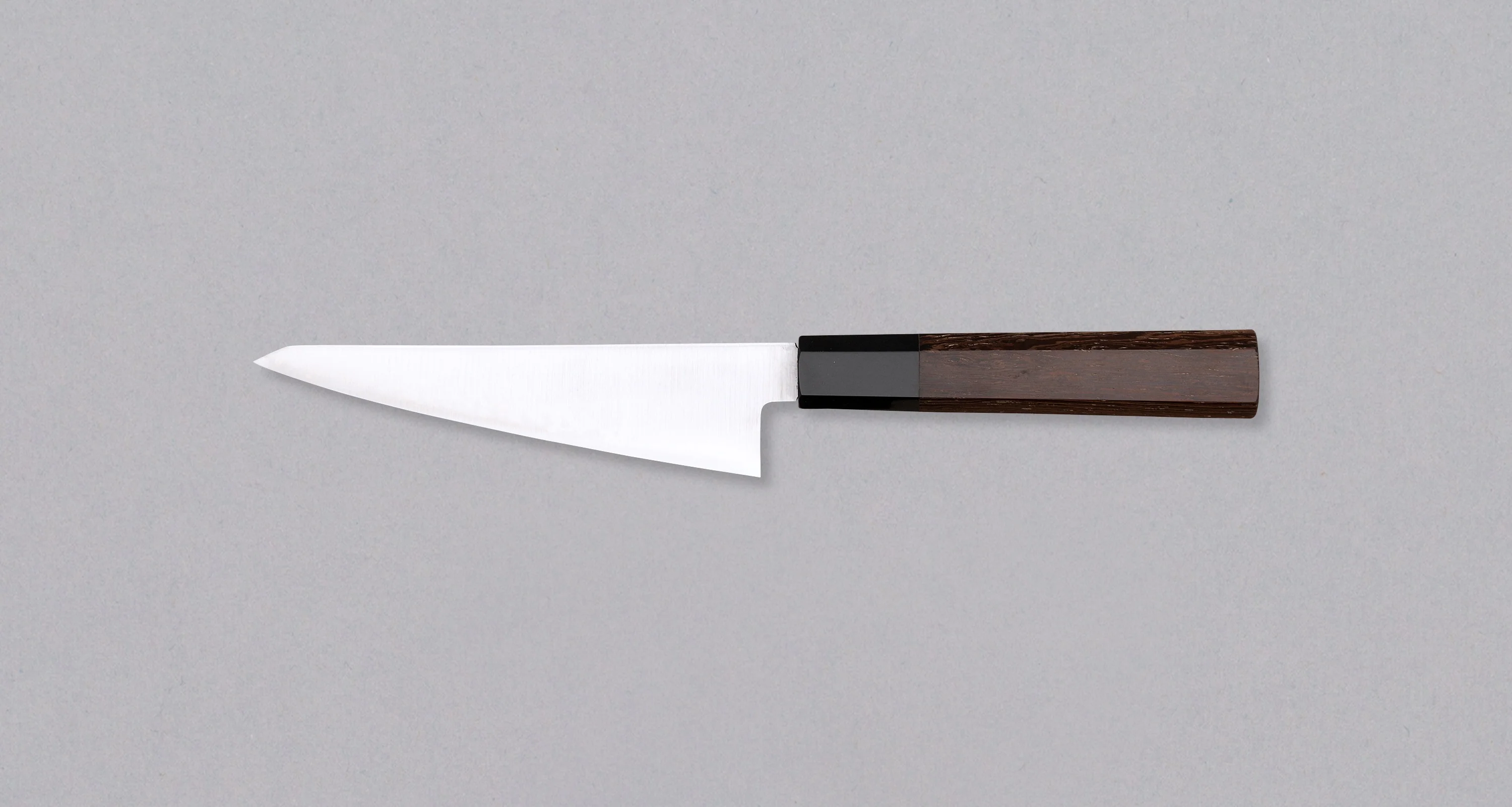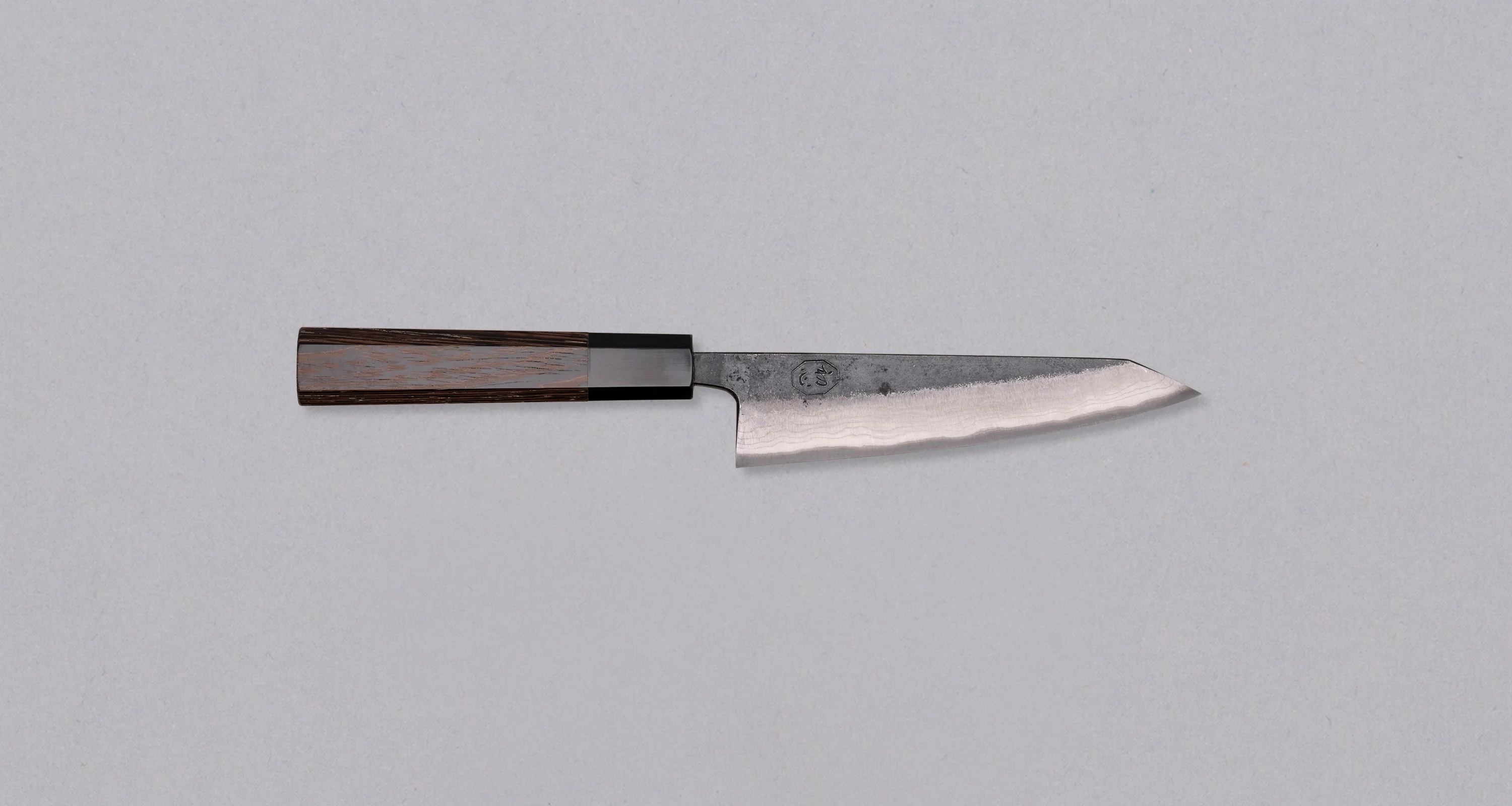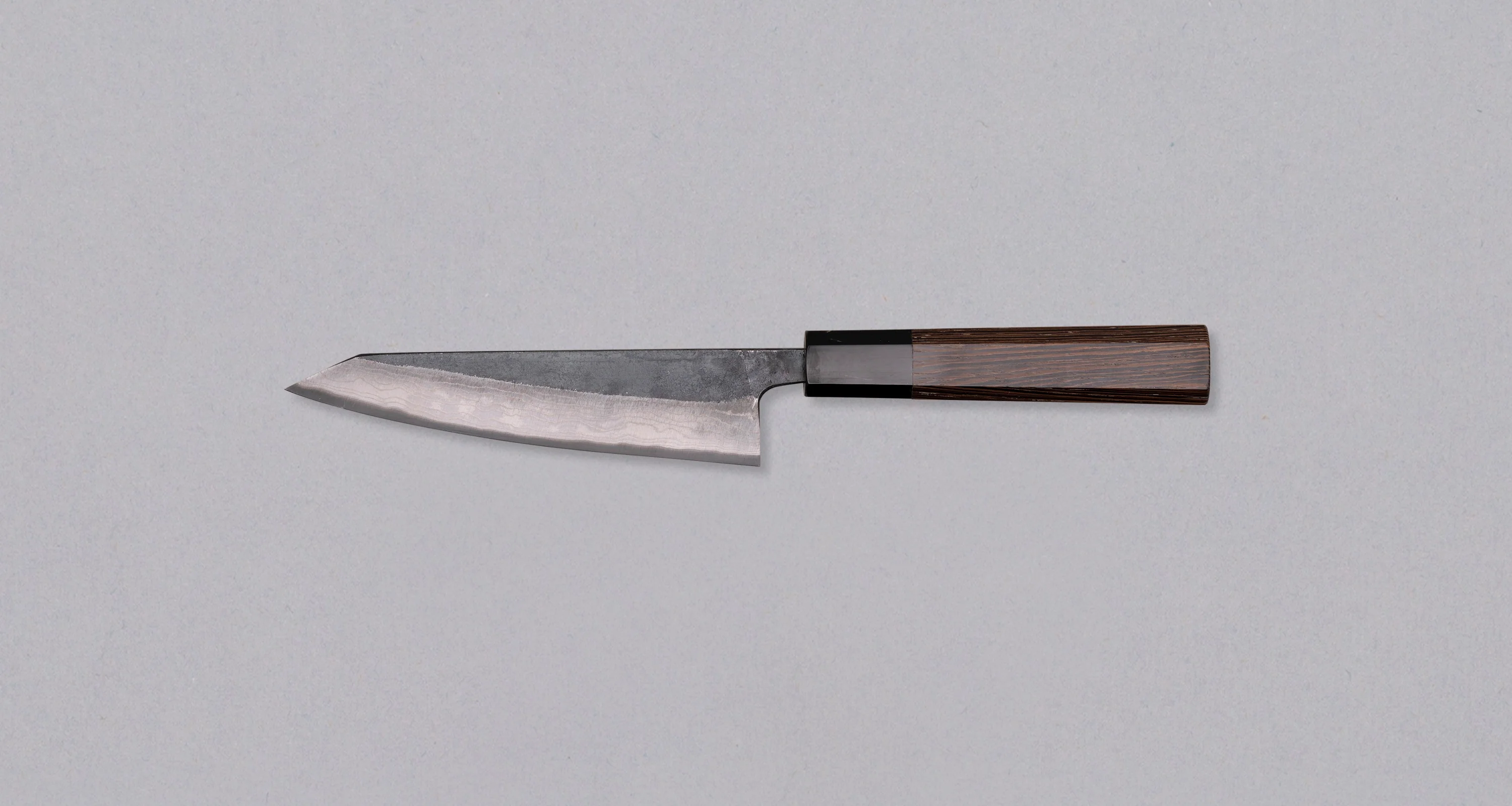
Tadafusa Honesuki SLD Polished Hammered 150mm (5.9")
Some knives just feel right in your hand. This Tadafusa is one of them. What makes it stand out is the remarkable balance and control provided by its geometry. It’s a masterclass in craftsmanship, performance, and aesthetics that punches well above its price point.
The blade features a dramatic distal taper running from the handle all the way to the tip. This design ensures excellent stability and control, whether you’re used to a Western-style grip or a pinch grip. The weight and construction of the forged tang stabilize the entire blade, creating a balance point that is less centered, or only slightly forward of the handle. Additionally, a generously shaped choil adds comfort and space for your fingers when using a pinch grip.
This thoughtful geometry gives the blade power and control, while keeping it thin and precise. This is crucial for preparing food with minimal damage to cellular membranes, which preserves the ingredient’s flavor and appearance. It is a stunning example of traditional Japanese design, engineered for flawless control, precise use, and simple maintenance.
BLADE SHAPE:
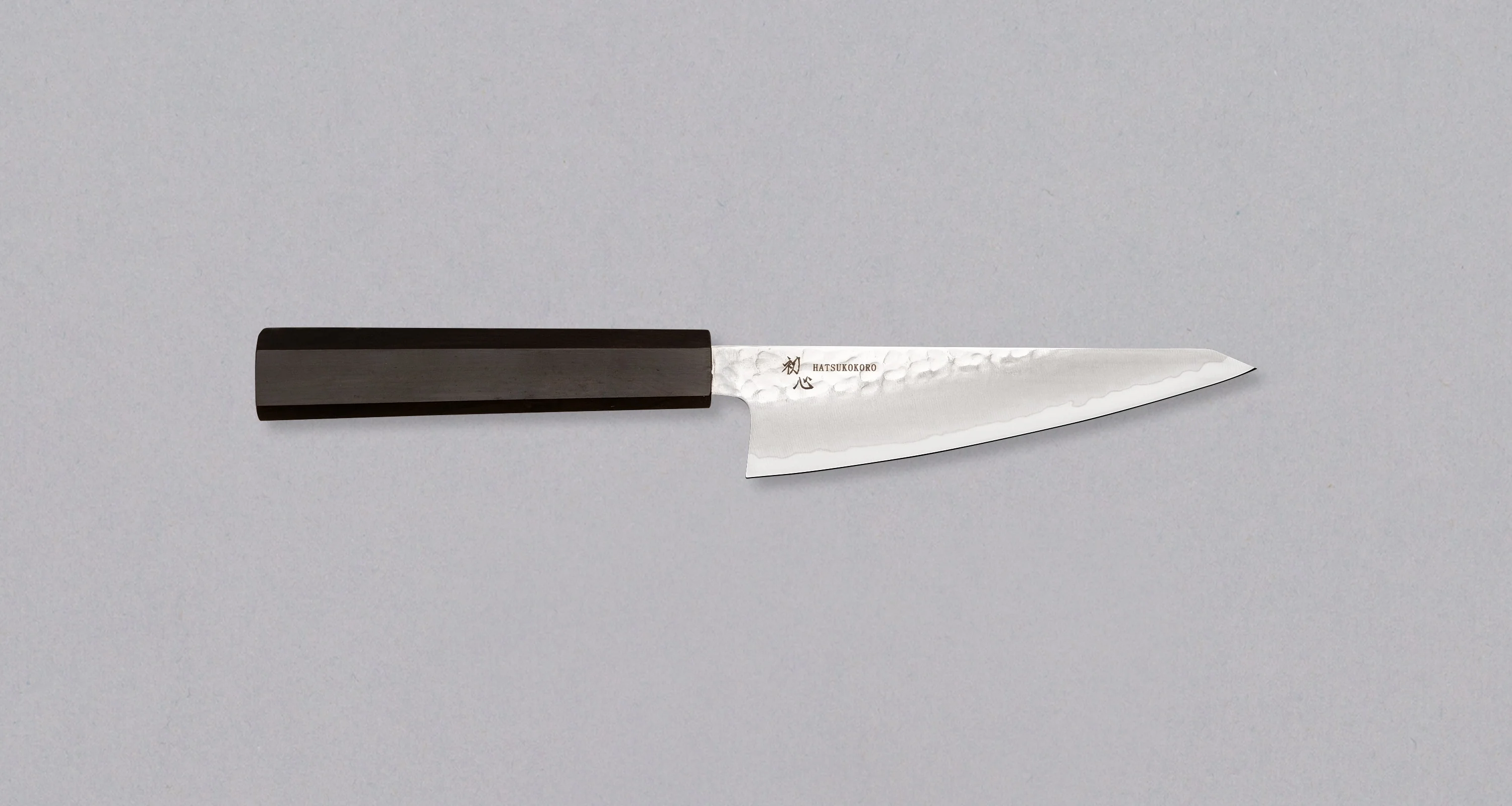
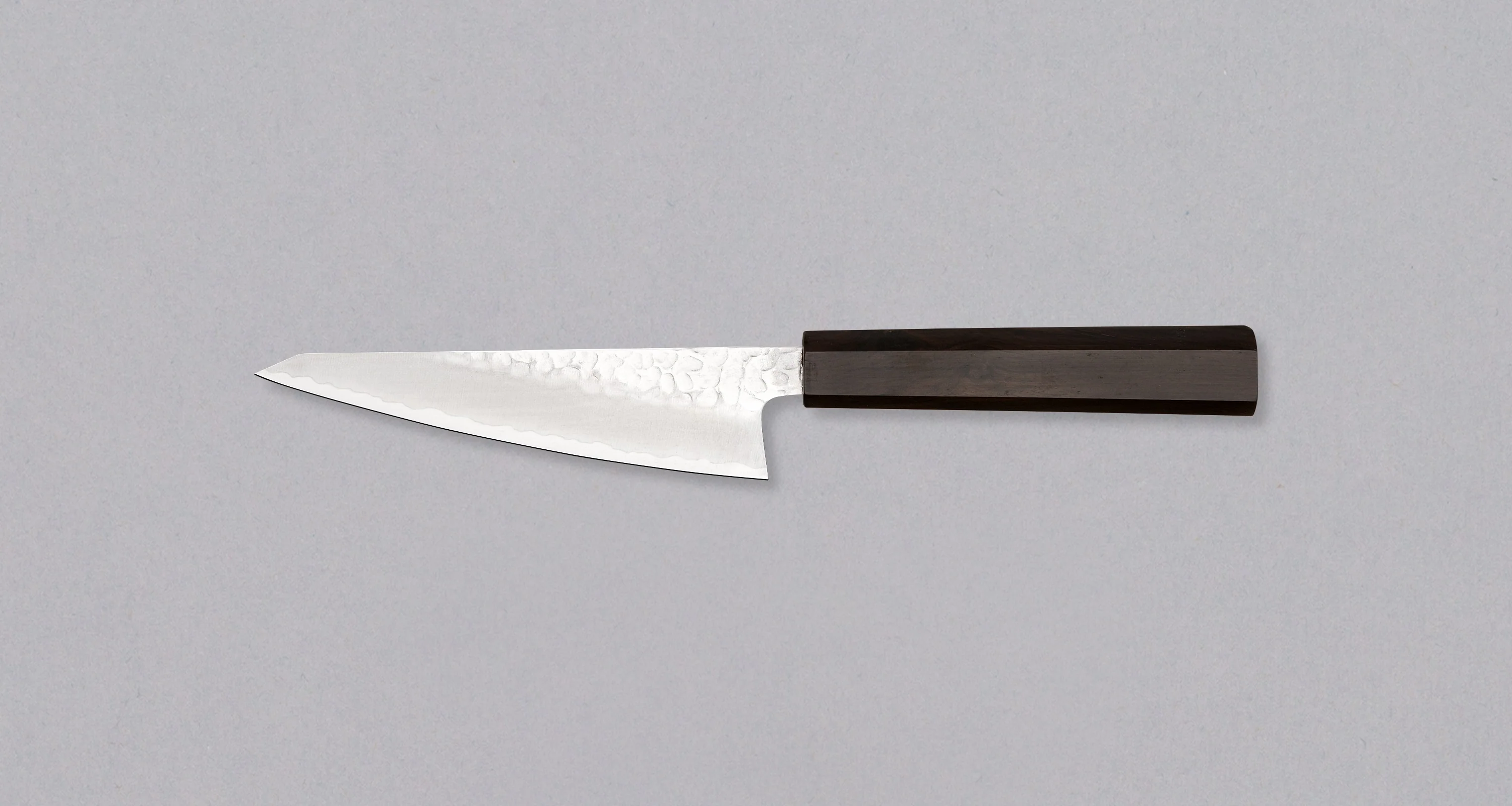
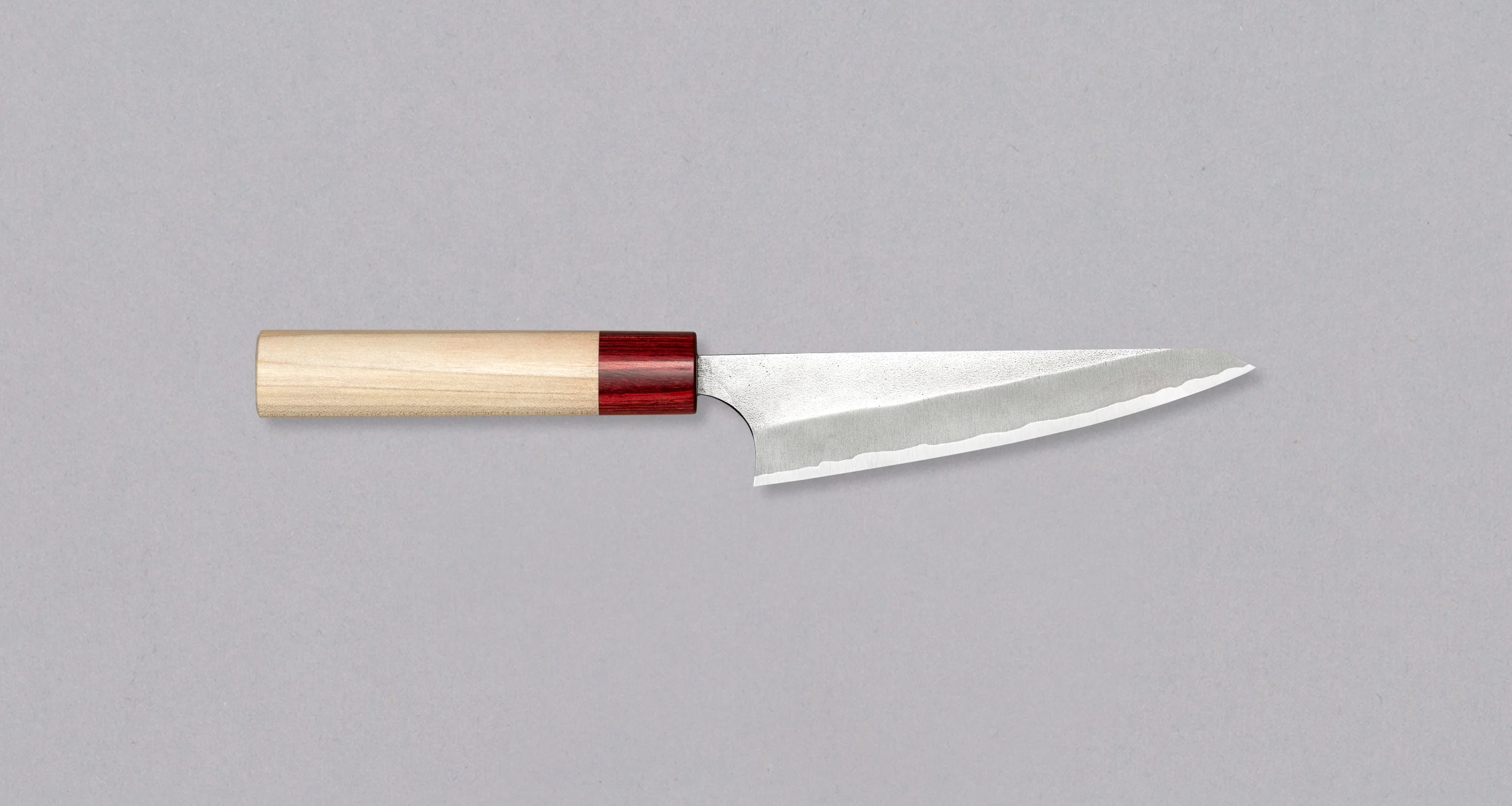
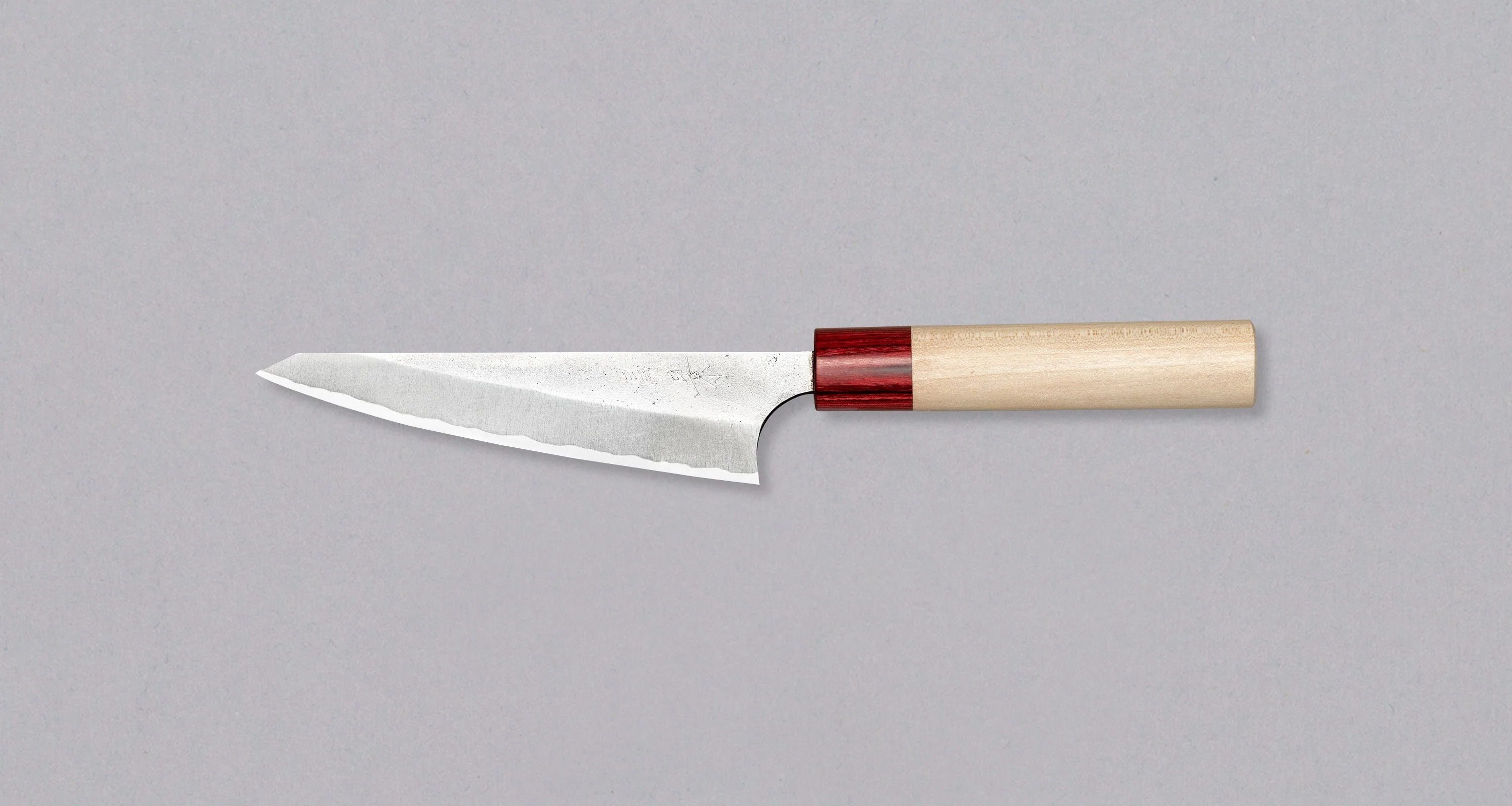
Originally intended for poultry and small animals (such as rabbits), the Honesuki is a Japanese-style knife that is highly effective for larger butchering and filleting of fish. Its blade features a thick heel that is ideal for scraping meat off bones, as well as a thinner tip that allows for precise cuts. While it is not advisable to use excessive force when cutting through bone with this knife, it is well-suited for separating tendons and cartilage.
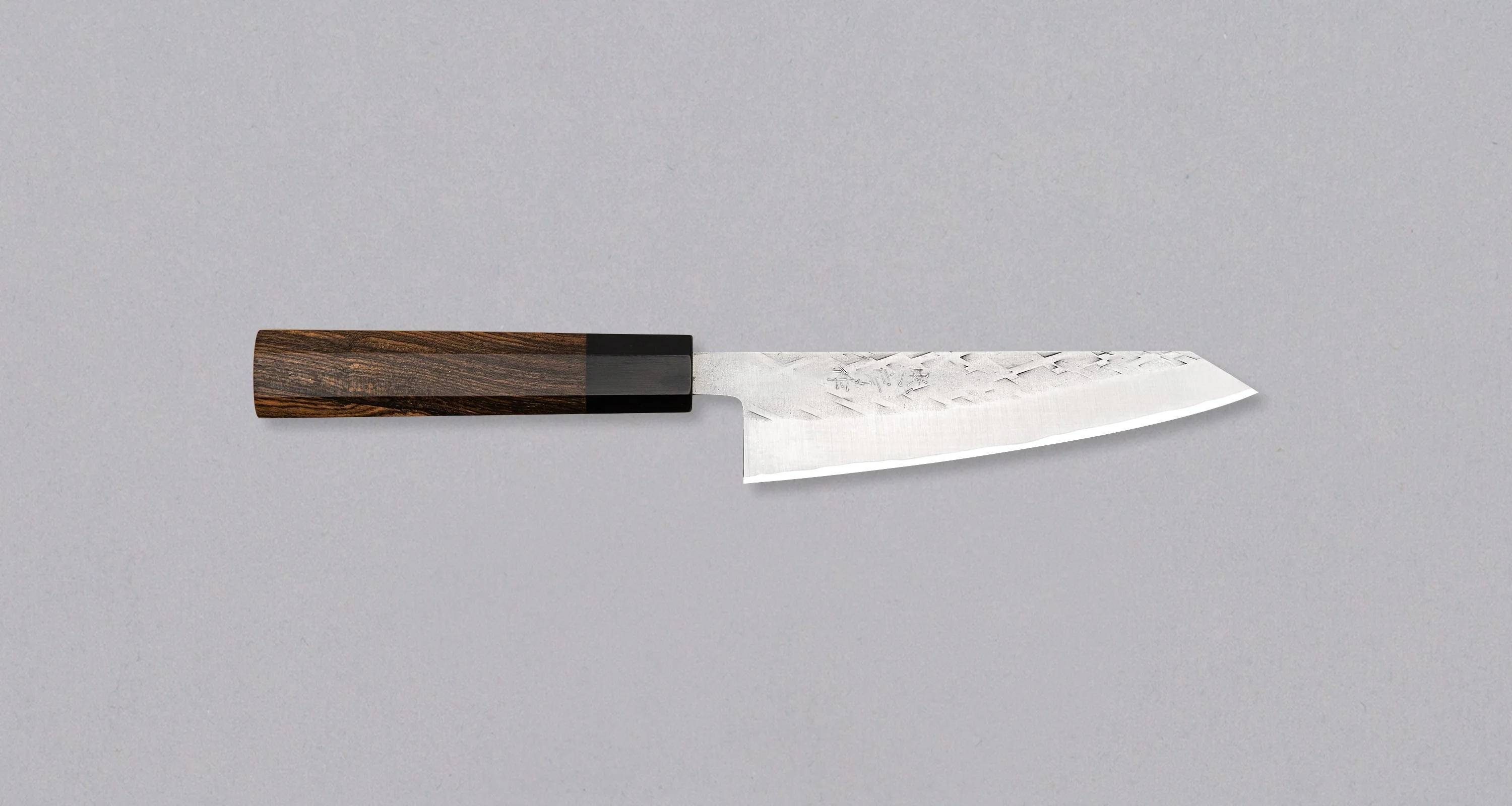
The "reverse tanto" tip design increases the strength of the tip, which can be used to easily pierce the skin, as well as to make precise cuts in tight spots, like the joints. Its shape also allows making quick turns, great for trimming away fat and connective tissue.
Standard honesuki knives have an asymmetrical grind, meaning they are usually suited only for right-handed users, while this one is sharpened to a 50/50 angle and fits both right and left-handed users.
STEEL:
For those who are in love with traditional high-carbon steel but don't have time for the extra maintenance, there is a perfect compromise: SLD semi-stainless steel. This steel offers the feel and sharpness of a "carbon steel knife," but saves you the worry and time required for care. It achieves a slightly better hardness than VG-10, allowing it to hold an edge for longer.
Please note: SLD steel isn’t fully stainless, so be sure to clean and dry the blade after each use.
GEOMETRY:
This knife features a double-bevel blade with a pronounced distal taper. This means the knife is heavier and stronger at the handle, gradually thinning and becoming more precise toward the tip. This design makes the blade more responsive and easier to maneuver, giving you excellent balance and a true feel of control. The strong heel lets you apply more pressure, while the thin tip is perfect for precise, delicate cuts.
The heavy forged tang and a handle made from dense wood give this knife a noticeably heftier feel than traditional Wa handles made from light magnolia. While it may feel a bit heavier than what enthusiasts of ultra-light Japanese knives prefer, this weight provides a confident, stable grip and adds power to every cut.
LAMINATION:
The blade’s core was laminated using the san-mai method to improve its structural integrity and subsequent ability to withstand impacts and prevent chipping.
BLADE FINISH:
The blade features a distinctive Tsuchime finish with a geometric diamond pattern. More than just a visual detail, the textured surface prevents food from sticking, allowing for cleaner, more efficient cuts.
HANDLE:
The octagonal Japanese handle provides a secure and firm grip. Its symmetrical shape makes it suitable for both right and left-handed users.
BLACKSMITH:
The Tadafusa smithy was founded in 1948 in Sanjo, Japan’s “town of blacksmiths.” With roots going back to the 17th century, Tadafusa first made tools and sickles before turning to kitchen knives. Today, their knives deliver precise, professional-grade sharpness with clean, functional design—blending centuries of tradition with modern performance.
Some knives just feel right in your hand. This Tadafusa is one of them. What makes it stand out is the remarkable balance and control provided by its geometry. It’s a masterclass in craftsmanship, performance, and aesthetics that punches well above its price point.
The blade features a dramatic distal taper running from the handle all the way to the tip. This design ensures excellent stability and control, whether you’re used to a Western-style grip or a pinch grip. The weight and construction of the forged tang stabilize the entire blade, creating a balance point that is less centered, or only slightly forward of the handle. Additionally, a generously shaped choil adds comfort and space for your fingers when using a pinch grip.
This thoughtful geometry gives the blade power and control, while keeping it thin and precise. This is crucial for preparing food with minimal damage to cellular membranes, which preserves the ingredient’s flavor and appearance. It is a stunning example of traditional Japanese design, engineered for flawless control, precise use, and simple maintenance.
BLADE SHAPE:
Originally intended for poultry and small animals (such as rabbits), the Honesuki is a Japanese-style knife that is highly effective for larger butchering and filleting of fish. Its blade features a thick heel that is ideal for scraping meat off bones, as well as a thinner tip that allows for precise cuts. While it is not advisable to use excessive force when cutting through bone with this knife, it is well-suited for separating tendons and cartilage.
The "reverse tanto" tip design increases the strength of the tip, which can be used to easily pierce the skin, as well as to make precise cuts in tight spots, like the joints. Its shape also allows making quick turns, great for trimming away fat and connective tissue.
Standard honesuki knives have an asymmetrical grind, meaning they are usually suited only for right-handed users, while this one is sharpened to a 50/50 angle and fits both right and left-handed users.
STEEL:
For those who are in love with traditional high-carbon steel but don't have time for the extra maintenance, there is a perfect compromise: SLD semi-stainless steel. This steel offers the feel and sharpness of a "carbon steel knife," but saves you the worry and time required for care. It achieves a slightly better hardness than VG-10, allowing it to hold an edge for longer.
Please note: SLD steel isn’t fully stainless, so be sure to clean and dry the blade after each use.
GEOMETRY:
This knife features a double-bevel blade with a pronounced distal taper. This means the knife is heavier and stronger at the handle, gradually thinning and becoming more precise toward the tip. This design makes the blade more responsive and easier to maneuver, giving you excellent balance and a true feel of control. The strong heel lets you apply more pressure, while the thin tip is perfect for precise, delicate cuts.
The heavy forged tang and a handle made from dense wood give this knife a noticeably heftier feel than traditional Wa handles made from light magnolia. While it may feel a bit heavier than what enthusiasts of ultra-light Japanese knives prefer, this weight provides a confident, stable grip and adds power to every cut.
LAMINATION:
The blade’s core was laminated using the san-mai method to improve its structural integrity and subsequent ability to withstand impacts and prevent chipping.
BLADE FINISH:
The blade features a distinctive Tsuchime finish with a geometric diamond pattern. More than just a visual detail, the textured surface prevents food from sticking, allowing for cleaner, more efficient cuts.
HANDLE:
The octagonal Japanese handle provides a secure and firm grip. Its symmetrical shape makes it suitable for both right and left-handed users.
BLACKSMITH:
The Tadafusa smithy was founded in 1948 in Sanjo, Japan’s “town of blacksmiths.” With roots going back to the 17th century, Tadafusa first made tools and sickles before turning to kitchen knives. Today, their knives deliver precise, professional-grade sharpness with clean, functional design—blending centuries of tradition with modern performance.
Original: $210.00
-70%$210.00
$63.00Description
Some knives just feel right in your hand. This Tadafusa is one of them. What makes it stand out is the remarkable balance and control provided by its geometry. It’s a masterclass in craftsmanship, performance, and aesthetics that punches well above its price point.
The blade features a dramatic distal taper running from the handle all the way to the tip. This design ensures excellent stability and control, whether you’re used to a Western-style grip or a pinch grip. The weight and construction of the forged tang stabilize the entire blade, creating a balance point that is less centered, or only slightly forward of the handle. Additionally, a generously shaped choil adds comfort and space for your fingers when using a pinch grip.
This thoughtful geometry gives the blade power and control, while keeping it thin and precise. This is crucial for preparing food with minimal damage to cellular membranes, which preserves the ingredient’s flavor and appearance. It is a stunning example of traditional Japanese design, engineered for flawless control, precise use, and simple maintenance.
BLADE SHAPE:
Originally intended for poultry and small animals (such as rabbits), the Honesuki is a Japanese-style knife that is highly effective for larger butchering and filleting of fish. Its blade features a thick heel that is ideal for scraping meat off bones, as well as a thinner tip that allows for precise cuts. While it is not advisable to use excessive force when cutting through bone with this knife, it is well-suited for separating tendons and cartilage.
The "reverse tanto" tip design increases the strength of the tip, which can be used to easily pierce the skin, as well as to make precise cuts in tight spots, like the joints. Its shape also allows making quick turns, great for trimming away fat and connective tissue.
Standard honesuki knives have an asymmetrical grind, meaning they are usually suited only for right-handed users, while this one is sharpened to a 50/50 angle and fits both right and left-handed users.
STEEL:
For those who are in love with traditional high-carbon steel but don't have time for the extra maintenance, there is a perfect compromise: SLD semi-stainless steel. This steel offers the feel and sharpness of a "carbon steel knife," but saves you the worry and time required for care. It achieves a slightly better hardness than VG-10, allowing it to hold an edge for longer.
Please note: SLD steel isn’t fully stainless, so be sure to clean and dry the blade after each use.
GEOMETRY:
This knife features a double-bevel blade with a pronounced distal taper. This means the knife is heavier and stronger at the handle, gradually thinning and becoming more precise toward the tip. This design makes the blade more responsive and easier to maneuver, giving you excellent balance and a true feel of control. The strong heel lets you apply more pressure, while the thin tip is perfect for precise, delicate cuts.
The heavy forged tang and a handle made from dense wood give this knife a noticeably heftier feel than traditional Wa handles made from light magnolia. While it may feel a bit heavier than what enthusiasts of ultra-light Japanese knives prefer, this weight provides a confident, stable grip and adds power to every cut.
LAMINATION:
The blade’s core was laminated using the san-mai method to improve its structural integrity and subsequent ability to withstand impacts and prevent chipping.
BLADE FINISH:
The blade features a distinctive Tsuchime finish with a geometric diamond pattern. More than just a visual detail, the textured surface prevents food from sticking, allowing for cleaner, more efficient cuts.
HANDLE:
The octagonal Japanese handle provides a secure and firm grip. Its symmetrical shape makes it suitable for both right and left-handed users.
BLACKSMITH:
The Tadafusa smithy was founded in 1948 in Sanjo, Japan’s “town of blacksmiths.” With roots going back to the 17th century, Tadafusa first made tools and sickles before turning to kitchen knives. Today, their knives deliver precise, professional-grade sharpness with clean, functional design—blending centuries of tradition with modern performance.